My Exploration Holiday in Granada, Spain’s Albayzin

Albayzin
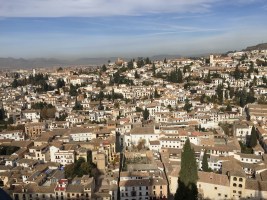
The View of old Albayzin from the Alhambra

Situated below the massive, historic Alhambra in Granada rests the compact, densely populated, ancient district of Albayzin. Inhabited initially by Romans, some say that people have been in the area prior to the 7th century BC. I stayed in Albayzin, a World Heritage Site during my recent exploration of Granada and the Alhambra. My blog about the Alhambra is available by clicking here.

I knew I was in a place quite different in Albayzin when the taxi driver dropped me off at the top of a hill and pointed to narrow, cobblestone steps as the route to take to find the place I had booked. Going through the narrow walkways was like being on a scavenger hunt in a maze looking for the street and door number where the GPS and mobile phone didn’t function.

There is much debate about the origin of the name and spelling of “Albayzin.” It is, however, certain to have a Moor context. The guide at the Alhambra said that the inhabitants are often referred to as “the miserables”… not to be confused with other “miserables” of France. His explanation wasn’t exactly adequate that “people are just miserable there.” I never did find out why.

For this community there is a major influence and feeling reminiscent of the Moors. The buildings are hundreds of years old. The narrow cobblestone “streets” are almost always only wide enough for pedestrians. Going up and down the hills requires that one be sure footed, have a sturdy pair of shoes with excellent soles, and remain focused for ever present steps and the time-worn slippery stones.

At night, the walkways take on an eerie feeling even though they have been brightened by modern street lighting. One can imagine ages past when an unfriendly encounter might be waiting just around a dark building corner.

FullSizeRender (3)
There are Numerous Flamenco Shows as Shown in the Poster

The Albayzin is small and exists on a hillside leading downward to the Darro River that runs between it and the hill on which the Alhambra sits. It is one of the oldest centers of Muslim culture in Granada and you can sense the cultural influences not only in the architectures but also in the food found in many modern restaurants where a flamenco show often comes with dinner.

Lunch
Lunch at El Trillo

I ate at wonderful reasonably-priced restaurants in the Albayzin. At one particular meal the taste sensations created through expert use of herbs and spices were delightful as pictured… rice with chicken curry, shrimp, asparagus, greens, and slices of oranges. At another restaurant I ate scrambled eggs with potatoes topped with dried Iberian ham and at yet a third I delighted in eating a “fowl stew with raisins and nuts in a light dough.” I have never experienced foods like these.

The architecture in the Albayzin is distinctive where plain wooden doors in the district disappear and are replaced by works of art typical of many European cities as you leave it. The buildings outside the Albayzin take on a traditional Spanish feel and and statues commemorate famous events that have changed our world (click on the photo for a description).

In the Alhambra there are water features everywhere reflecting the Moor past. There are fountains below the Alhambra but they tend to be massive while those developed by the Moors are much smaller in scale and simpler in design.
Mosque
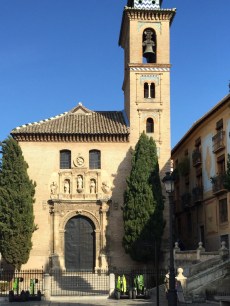
A Former Mosque Converted to be a Church

Just like in the Alhambra, each of Albayzin mosques that existed prior to the Christian monarchs’ “Reconquest of Spain” have been converted to Catholic churches like the one pictured. Note the bell tower was erected atop the mosque’s minaret.

On exiting the Albayzin area there are many tourist shops, coffee shops and places where young people hang out. These are mostly nonexistent in the Albayzin.

Overall, Granada with the spectacular Alhambra, Generalife, and Albayzin provide a rich Moorish past that is ever present even after 500 years following the Reconquest by Ferdinand and Isabella. In the city there is a complimentary blending of the Moor and Spanish cultures which makes Granada really special for me and very enjoyable for every visitor!
Alhambra – My Exploration in Granada, Espana

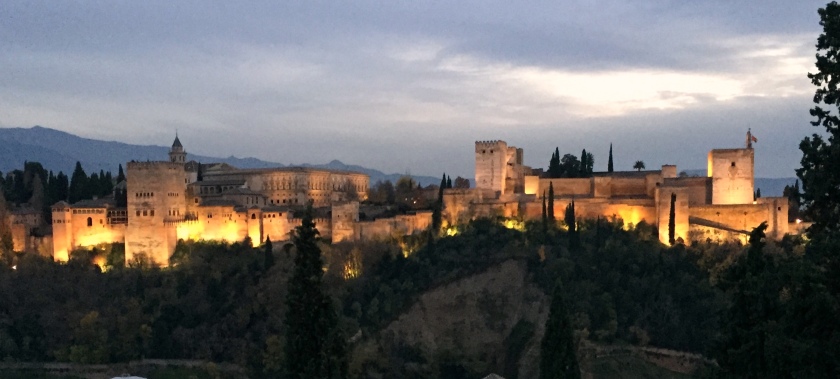
Towering over the city of Granada sits the spectacular Alhambra, a once great, self contained, red-walled city with palaces, mosques, and homes. With construction by the Moors beginning in the 9th century, the Alhambra (derived from Arabic meaning the “Red One”) overlooks the Albayzin, a World Heritage Site and the oldest part of Granada. The Alhambra has evolved through the centuries from its original Acazaba fortress (the right side of my photo) to be a seat of Iberian ruling power and authority for Muslim sultans and emirs and Spanish Christian kings and queens.

IMG_3648
The Alhambra at Dusk

Today the Alhambra is Granada’s jewel with an average of 10,000 visitors every day. This World Heritage Site has seen numerous notables come and go as well as physical changes over the centuries. In many cases, we can only imagine the Moor’s mosques, schools, houses, baths, gardens, and government buildings. Many structures have disappeared from neglect, war, vandalism, or, as in the case of the mosque, replaced by other buildings such as the Catholic church and another Palace built by Carlos V.

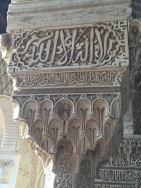
Generalife Column
Column Inscription at Generalife Palace

Following the conclusion of the “Reconquest of Spain” from the Moors in 1492, Queen Isabella and King Ferdinand set up a residence at the Alhambra. In the same year Columbus came to the Alhambra to seek financial support for his adventures which was eventually granted as we all know. Napoleon had soldiers quartered within the Alhambra city walls during the Spanish War of Independence. As the troops withdrew in 1812 they blew up several structures thus destroying an important part of the world’s heritage.

Generalife
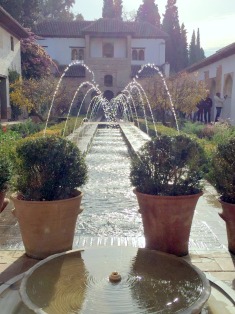
Water Flows Naturally Through Man-made Fountains and Pools in Alhambra and Generalife

The rich Alhambra architecture combines Moorish and Renaissance Spanish with numerous water features and gardens that have been preserved and meticulously restored. The emirs even had their summer palace and rural getaway estate and gardens called “Generalife” which means “Architect’s Garden.” Generalife is adjacent to and outside the Alhambra city walls. It also is a World Heritage Site with its picturesque small park with trees, gardens and several man-made water features on the grounds of a simple-looking palace with many ornate interior wall decorations.

While walking through the grounds I could see how their construction met its objective for providing a calming place for the rulers to relax and unwind from their responsibilities. The park has several very old trees as well as newer plantings which was intended so the park would forever evolve. In the summer vegetables are grown in the Generalife.

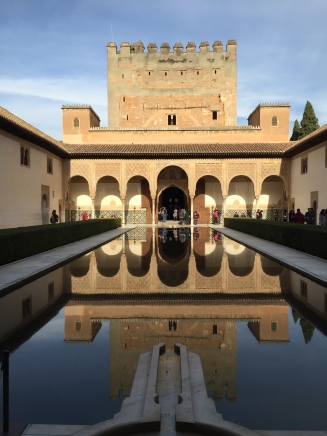
Reflective Pool
The Throne Room is at the Far End of this Reflective Pool Inside the Alhambra Palace

In addition to Generalife, the nature themes of plants, water features, and gardens are inside the Alhambra also. All of the water flows naturally through a system of small aqueducts that bring fresh water from the nearby mountains. Water features are everywhere and are important to the Muslims. The plants and trees inside the Alhambra are meticulously maintained. Water is always in the center of each building in courtyards except for those built by the Christians.

In 1492 when the Moors surrendered following a siege of the Alhambra, Ferdinand and Isabella moved into the Alhambra as a residence. Where the sultan once held court, the Spanish monarchs then did in the same room.

Entrance
The Palace Residence Entrance is Stunning

The entrance into the residential area of the palace is very ornate. The sultan’s palace rooms are jaw-dropping beautiful as are his “first wife’s” rooms. The sultan’s “first wife” is not numerically determined by marriage date but rather the first with whom he has a male heir. A courtyard with an interesting fountain is between the sultan’s suite and the first wife’s suite. The fountain was given to the sultan 700 years ago by a local Jew and represents the tribes of Israel. The tour guide said that in past ages the relationships between Jews and Muslims were much different than today.

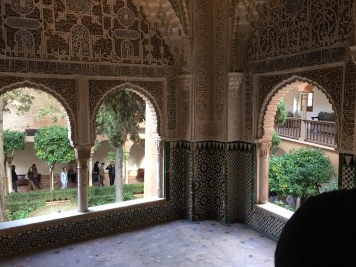
Queens Room
A “First Wife” Room and View

Views of nature are present from each room in the palace. There are numerous walkways through gardens and water features are everywhere. The existing grounds are quite special today and one can imagine what they were like when the Alhambra was a bustling city.

My exploration of the Alhambra was exceptional and there is so much more to see here. Things we learned in school are only a very small part of the exciting (and often sad) history of Spain and the influence that past has for us today. In my blog about the Albayzin district (click here) I describe my exploration of Granada outside of the Alhambra walls where history there also impacts our American way of life.

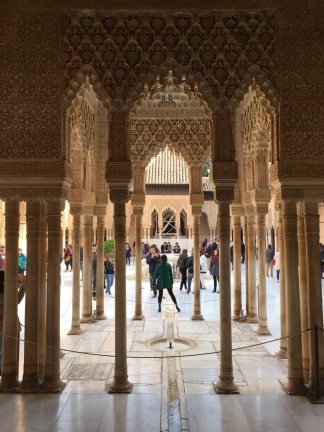
Here are a few additional photos that I hope you enjoy. The photos are the church built over the Muslim mosque, the ceiling in the sutan’s residence, a walkway through the Generalife retreat, the fountain given to the sultan representing the Tribes of Israel, and the entrance to the Alcazaba fortress.

My Explorations Move from Austria to Spain

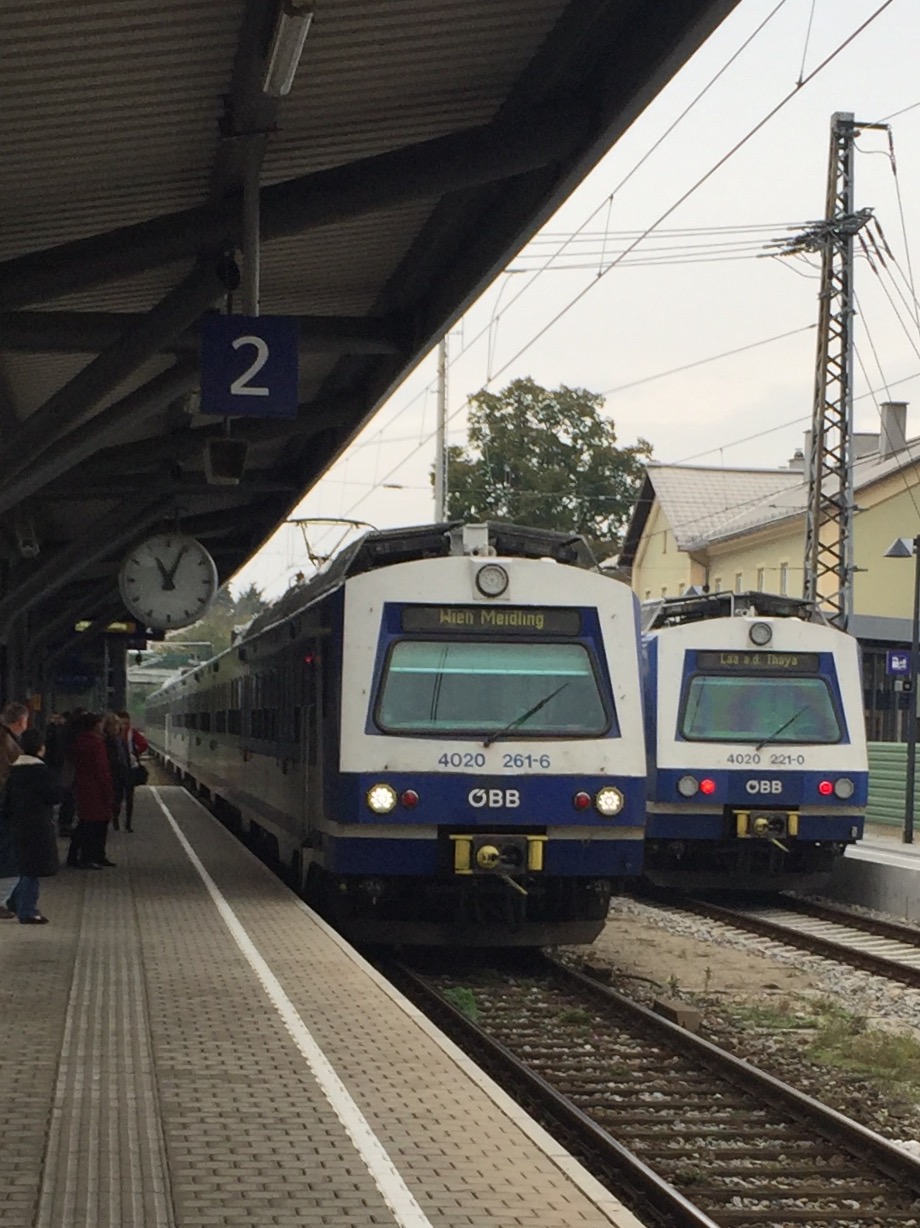
The train arrived to take me to the Vienna Airport

Yesterday was my departure day from Austria and the conclusion of my current exploration there. I am returning to Spain from my holiday and I am heading to the Costa del Sol, Sun Coast, on the Mediterranean Sea. Once again I will reside in Mijas Pueblo through winter because the temperature doesn’t approach freezing and, most importantly, the choice to be in snow is mine. I choose NOT!

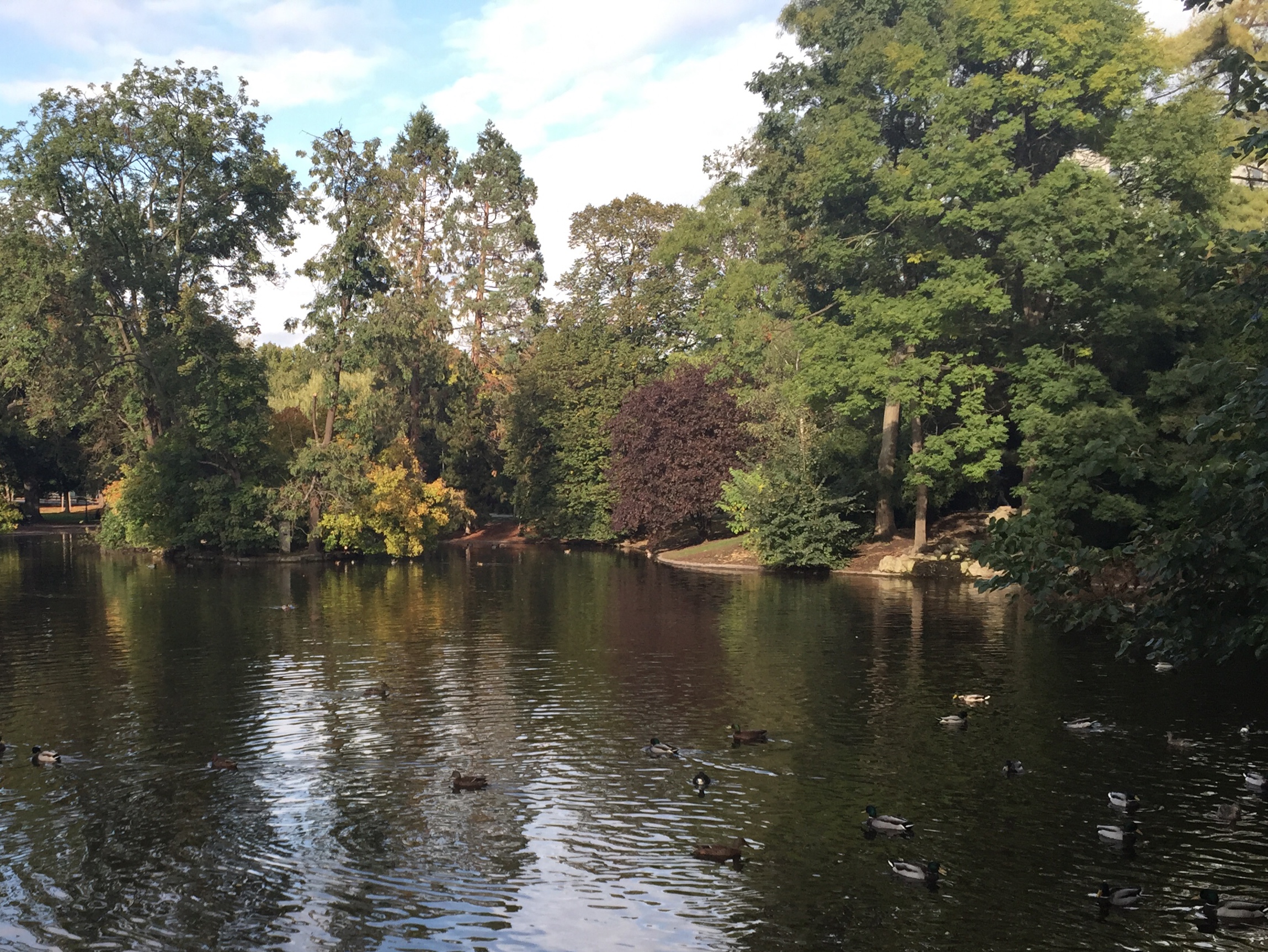
During my last few weeks in Austria I have been reflective of my exploration and the people, places, and culture which I have blogged about and reminisced through photos on Facebook. Before leaving Austria I went to Stadtpark, City Park, in Vienna one final time. It became one of my favorite places in Austria. Envisioned by Emperor Franz Josef, the center city park was set aside for people like me and future generations to enjoy the wooded paths, the pond and the wildfowl that take to it, and the serene escape that comes with it. Classical music from Shubert, Strauss, Mozart, and many others is celebrated in the park with memorials lining the walking paths.

Leaves are beginning to change color near the pond at Stadtpark, Vienna

With autumn in Austria, the evening light is dwindling, leaves are turning colors, and the reflections in the pond foretell the coming of snow and cold. On my last park exploration I stood by a child tossing bread to the ducks and enjoyed watching people snapping photos. I saw an elderly gentleman with a heavy tan blanket on his lap, confined to a wheelchair and his wife standing behind him watching the activity. Although his expression didn’t change you could see the same joy I felt as I looked into his eyes.

As evening approached the woman wheeled her husband from the park as the chill in the air intensified; it became time for me to leave. I made my way back to Wolkersdorf to enjoy the warmth and glow of the fireplace one more time. I will return to this wonderful Austrian city again. But for now, I will continue my exploration from the warmth of the Spanish Mediterranean coast where more adventures await in Marbella, Palma, Tenerife, and many other places.

Vienna – City of Dreams

Johann Strauss
Johann Strauss

Vienna, the “City of Dreams,” is much more than Freud’s dream studies in Vienna. In Vienna, dreams are much more expansive and expressive than his work alone. The ever-changing, diverse city holds dear all forms of artistic culture. The visions of dreamers extend into every aspect of the city at the Staatsoper Opera House and numerous concert venues. Mozart’s, Strauss’ and Schubert’s dreams of beautiful music come alive in Vienna. And native son Klimt’s paintings adorn the city along with Austrian masterpieces in the Belvedere.

Dreams leap to the present from the imperial past and the stately palaces at Hofburg and Schönbrunn and numerous museums depicting Austria’s past and dreams for the future. Public places depict the dreams of emperors from the bustle on the Ringstrasse to the relaxing calm at Stadtpark. Dreams brought to reality are exhibited in numerous festivals like the Film Fest held outdoors at the Rathaus town hall and numerous other sites that attract people from around the world to both visit and to stay.

Stadtpark
Stadtpark calm and beauty

The visions of past Vienna dreamers have affected and continue to shape the future of Austria and the world. The city continues to set an example for quality of living as it is identified as #1 in the world according to the latest Mercer “Quality of Living Survey.”

During August 2015 I experienced many of these dreams and the quality of life as I lived in the city and have seen how, over time, the dreams have become reality in this City of Dreams.

St Stephen's Cathedral built in the 14th Century
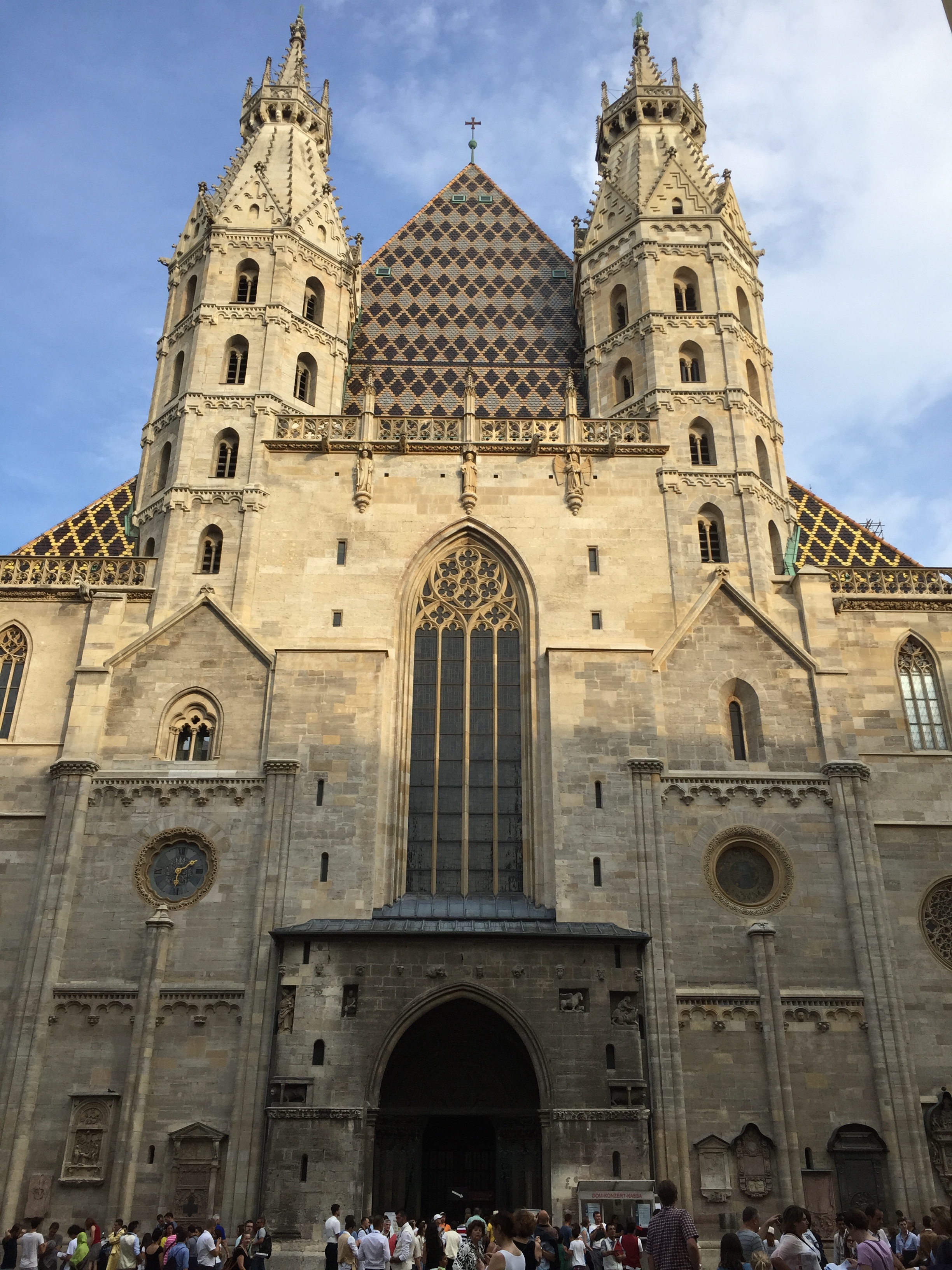
St Stephen’s Cathedral built in the 14th Century

The Vienna dreamers emphasize remembering the past and you see it everywhere. Be it simple as enjoying a latte in Stephansplatz with Saint Stephen’s Cathedral’s bells tolling or a visit to the multitude of museums, it is evident that the dreamers for this city want to leave their mark as a commitment to past memories so that future generations will learn from the city’s past. The Technical Museum is a fine example of this where the emphasis on industrialization and dreams for bettering life live on.

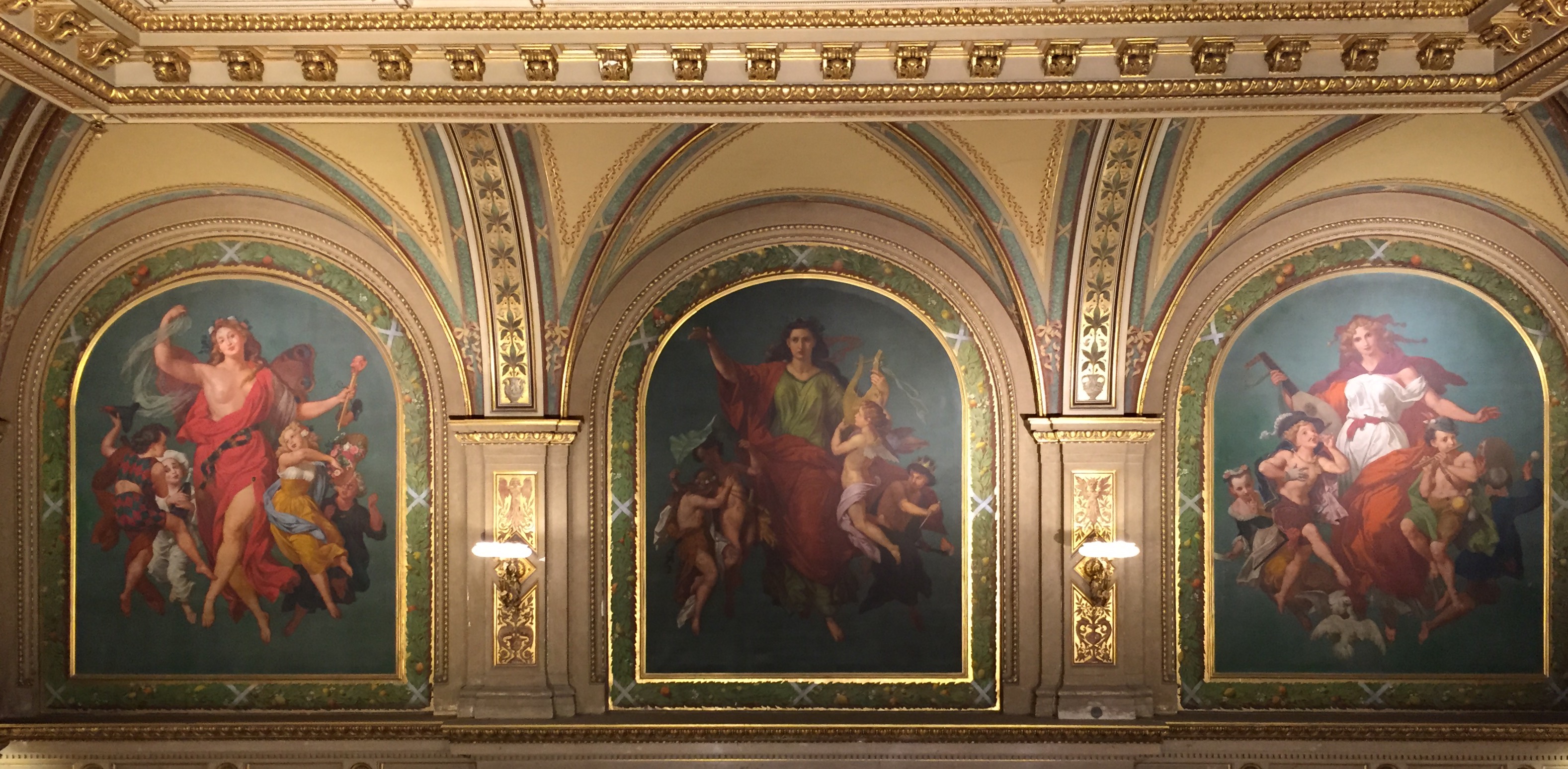
As mentioned previously, music and art abound in the city. Monuments to song and dance reside many places and have been left by past visionaries. The most notable of these monuments is the Staatsoper Opera House where beautiful paintings adorn the luxurious grand stairway and patrons delight as one senses the sounds and sights of beautiful music and dance.

Paintings representing Ballet, Comic Opera and Tragic Opera above the Grand Staircase at the Opera House

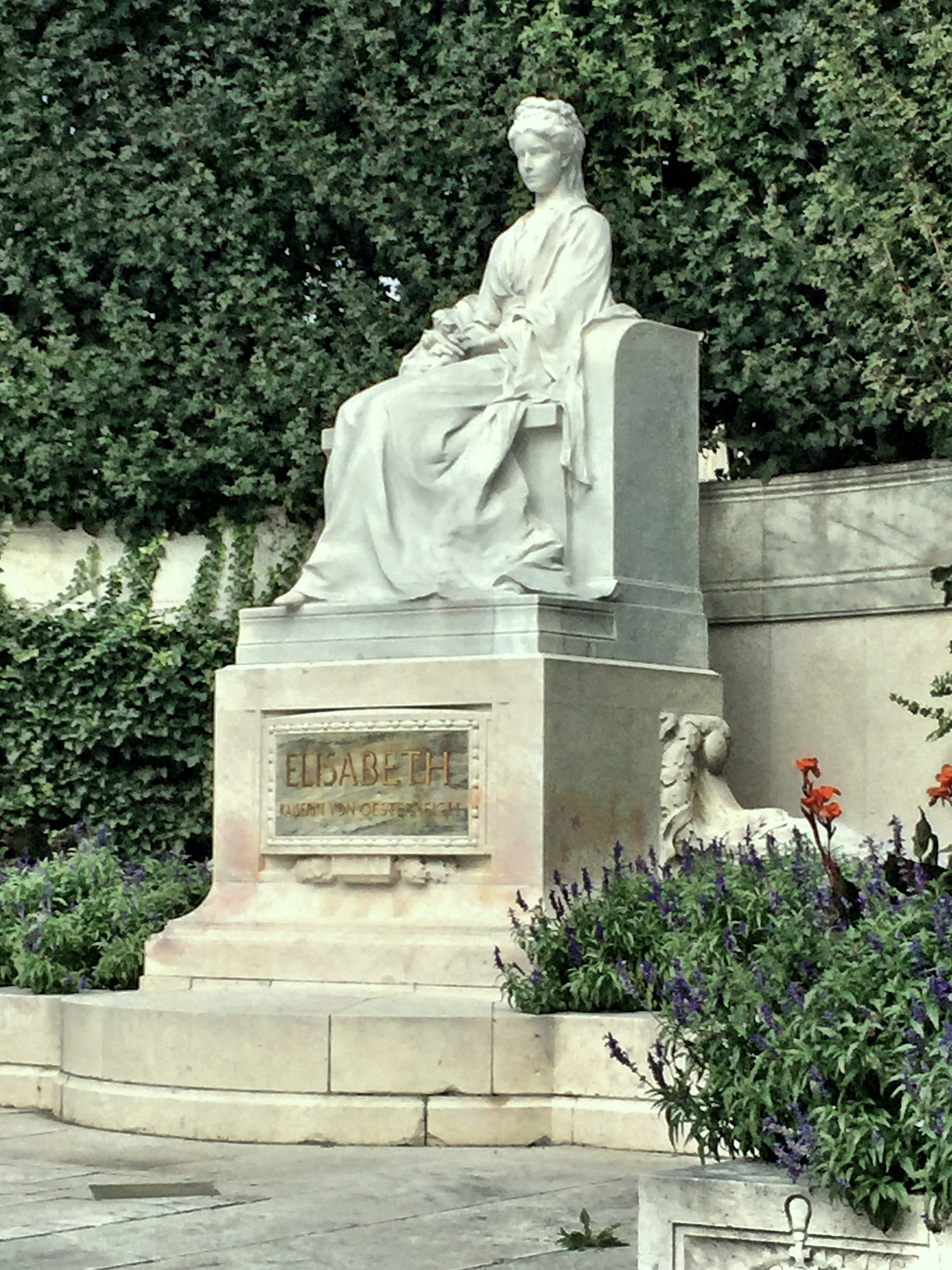
Dreams are also found in the political history of Austria as it was once was the capital of the Austro-Hungarian Empire. There are grand stories of the dreams of Emperor Franz Josef and his Empress Elisabeth. While Franz Josef was the visionary for much of the way we see the city today, the impression left to us by Elisabeth is quite interesting.

Empress Elisabeth
Empress Elisabeth

Known as “Sisi,” Elisabeth dreamed of not being tied to royal expectations of court life and lived her dreams by traveling. Her story is fascinating and worth writing a blog about her but I will save that for another time.

Vienna is an enchanting city and it is understandable to be called the “City of Dreams.” One can just feel the presence of the past and the visions of many and their contributions for now and the future. If you have a bucket list item to visit Europe, Vienna is your necessary stop to be embraced by the City of Dreams.

One Too Many

Sometimes I think of my blog as just a place to ramble on about things that are interesting or curious to me. I write it for myself and if others read it, that’s fine but it isn’t why I create it. This story, however, some of my former DuPont colleagues may find interesting. When I worked for DuPont for 23 years I was within a unique corporate culture where safety was of utmost importance. Knowing that, decisions I make (even today) are influenced by the ingrained safety culture. That makes the following story more understandable while the title may have raised your curiosity.

Vines in the Wachau Valley, Austria

Presently, I am in the heart of Austrian wine country. Just about all of the grapes in the Wachau Valley are Gruner Vetliner which makes a dry white wine. Austrian wine is serious business… right at the pinnacle of national culinary importance just above beer, schnitzel, and strudel. Wine is sacred with two millennia of history and strict attention to growing techniques and quality.

So, here I am in wine country. I think it would be reasonable to have a few glasses of wine now and then. Well, my story is titled “One Too Many” for good reason as I describe my following experience.

Cafe
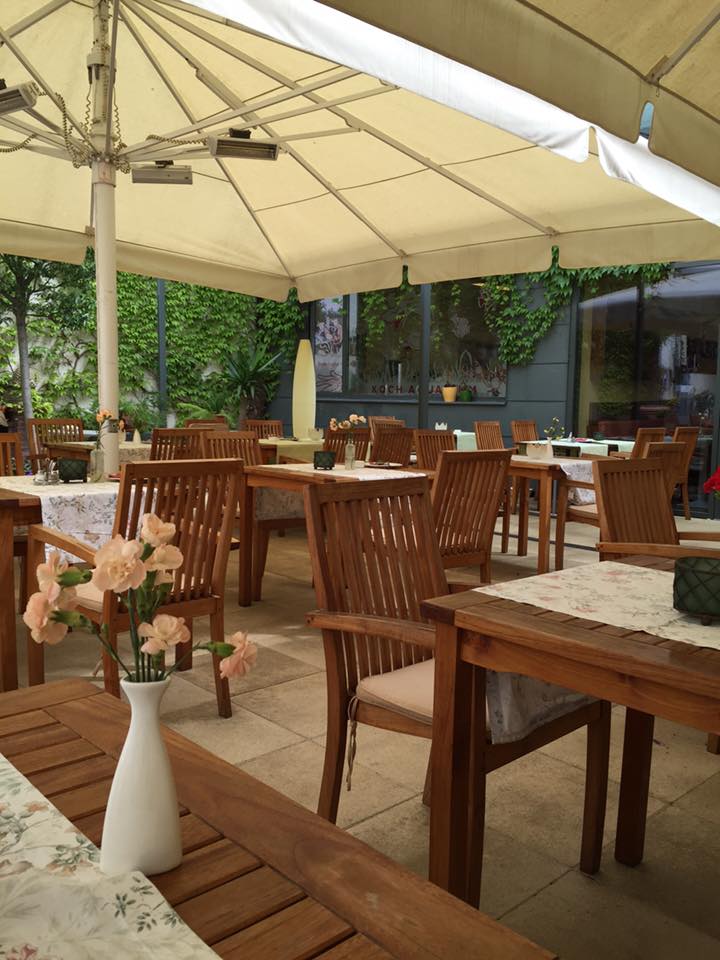
A very nice cafe

Several weeks ago I decided to travel to Rosenburg, Austria. Rosenberg is a tiny community about 60 kilometers from where I was staying in Melk. I wanted to visit a particular castle there. It was a rather humid, hot day around 37 degrees in Rosenberg. I was thirsty but not for a beer and the cafe next to the train station was open. So, being in wine country I thought that there was a possibility to avoid the popular cold white and get a cold sweet red. I know that sounds sacrilegious for those who know about serving a red cold; you must be cringing. But I have known that some Austrian establishments sell a cold red as an alternative for many like myself.

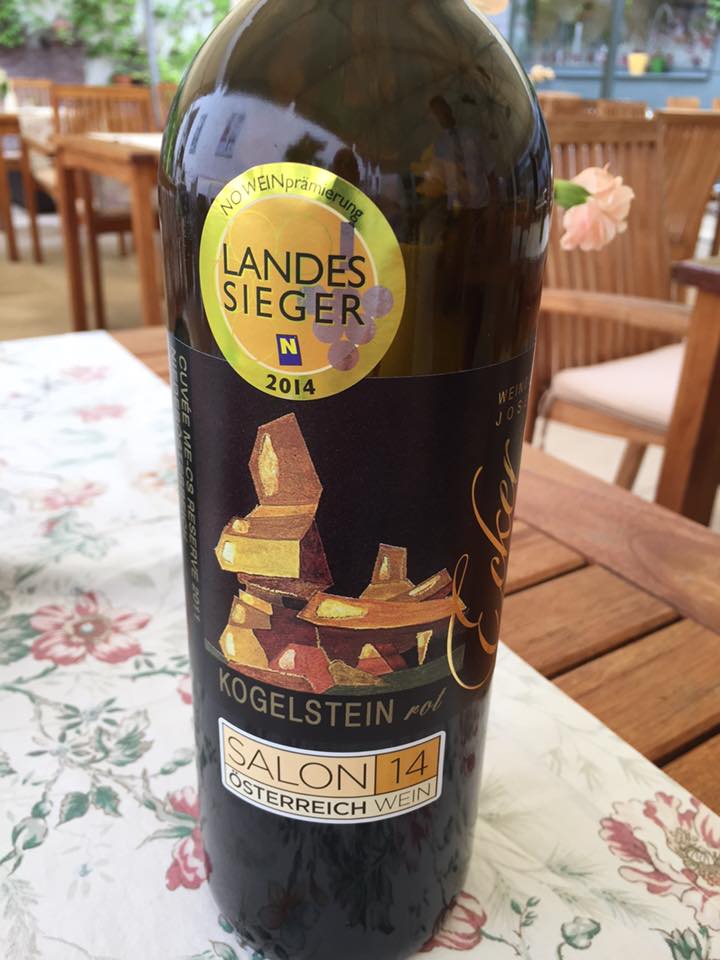
The "Culprit"
The “Culprit”

I enjoyed my robust red wine, paid my bill, and was off to the castle. Even though the castle was right outside on a cliff overlooking the cafe, to get there, one must hike along a highway for about a kilometer and then climb up a sloped hill for about another kilometer. Less than 50 meters into the walk I felt so light-headed that I had to sit on a bench along the highway. Thinking that the situation was ridiculous, I soon got going and could hardly wait to hug the next bench about 50 meters away. I have rarely been drunk but I recognized the feeling!

Fortunately, my DuPont safety awareness kicked in. I ruled out going anywhere near a cliff. Next, I decided to sit for a while… that was really boring! Then I decided that I likely wasn’t going anywhere other than the direction back to the train station, no more than 150 meters. I consciously arrived at the station to find that the next train wasn’t for an hour and forty minutes!

So for the next hour and forty minutes I found myself doing a variety of things. I thought I could walk along the train track to the next train station. Hummm, if a train were to come, there was nowhere for me to escape so I stopped doing that. Then I decided I could take a well-marked hiking trail to the other train station. The trail went over a swaying foot bridge over a rapidly running stream that seemed like Category Five rapids (but really wasn’t). Oh, in case you have never tried it, that’s a bad decision when your stomach is already feeling like you are riding the tilt-a-whirl, so I paused and held onto the swaying bridge for a few moments and went back from where I came and settled in at the train station.

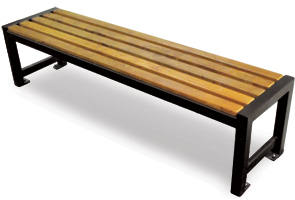
benchI made it to the station once again and I was feeling worse so I sat on a bench. Similar to this photo from the web, the seat was more rustic and made of a series of wood slats of approximately 25 X 50 mm stock with about a 25 mm gap. I sat there and my head began to swirl and throb. Was I going to fall to the ground? Thinking that I might, I put my head toward my knees so that if I were to fall that would shorten the distance (How about that safety thinking?). Fortunately, I didn’t fall but I was beginning to get sick at my stomach (the swirling water on a swaying foot bridge didn’t help) and I was developing a brain-splitting headache. I decided to lay down.

Only OneRecall that the station bench is about 25 mm wide boards followed by a 25 mm gap. Oh, that is medieval-rack-torture uncomfortable to lay on but I stayed there thinking that was best to do. Meanwhile, Johann, a neighbor by the station, must have been amused and came over to check on me. He spoke minimal English and I speak no German (except for a few words) but somehow I understood he was asking if I was okay. About this time I was becoming more cognizant and the spinning and throbbing had ceased. I told him I was okay as he pointed to his house for what I thought was his way of saying “American, if you can’t handle our wine, at least come inside and be safe.”

The train soon came and I made my way back to Melk. I am still here to tell the story of drinking one too many in my adventure. So here is the precious gem in this story. As it turns out on this particular day it was one too many but it was only one! Yes, one too many.

Salzburg: 50 Years After “The Sound of Music”

IMG_1852 (1)
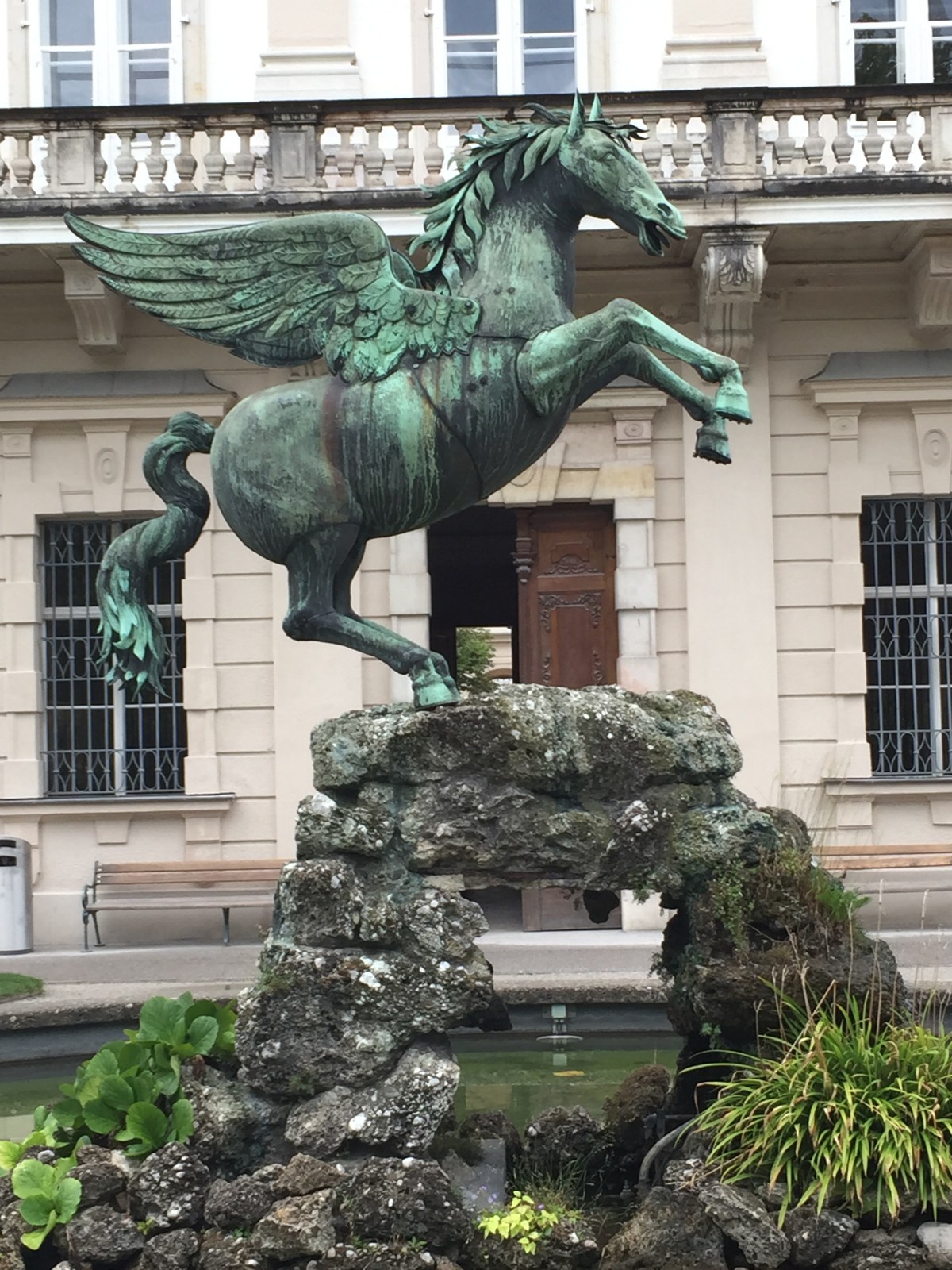
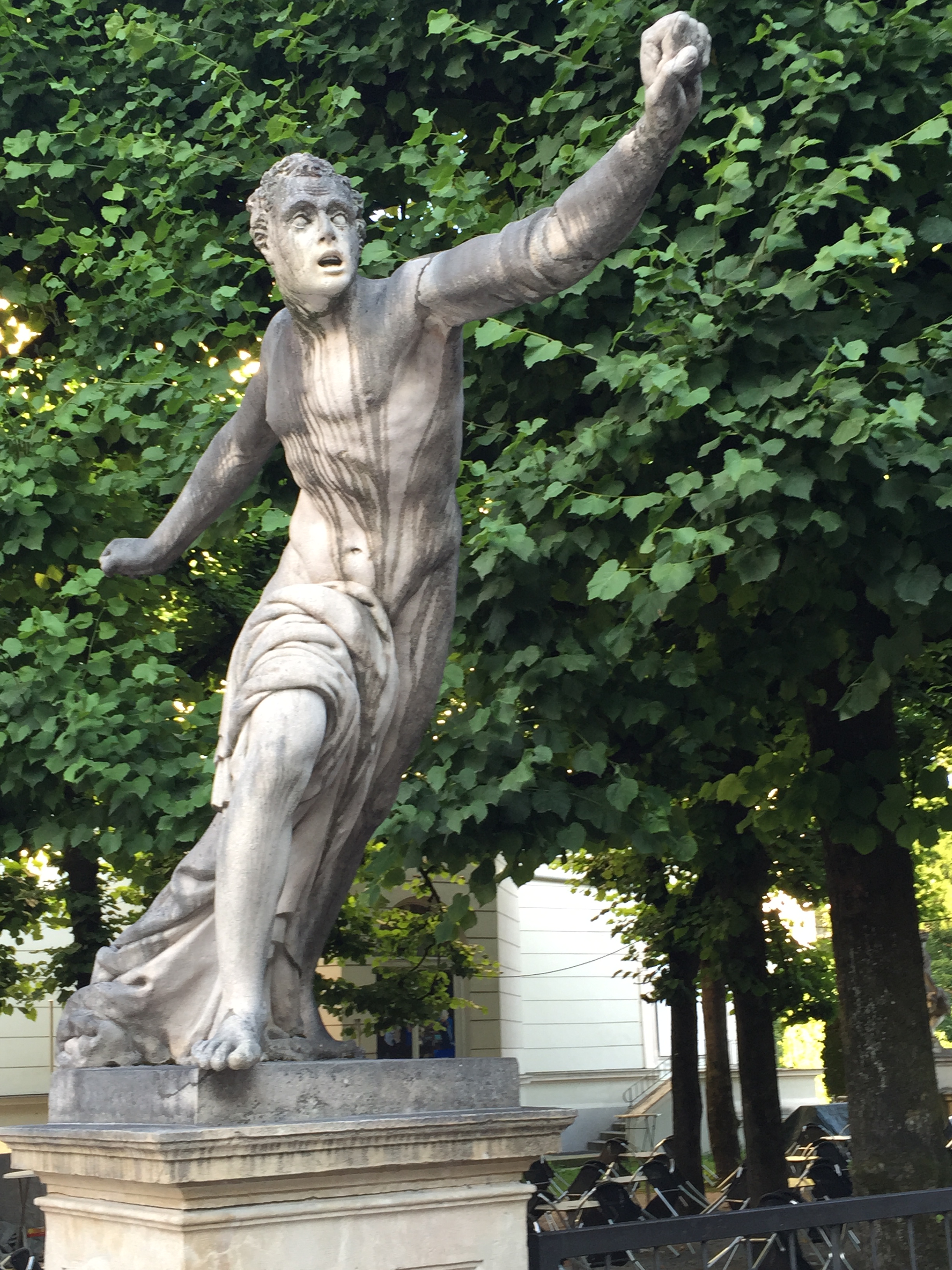
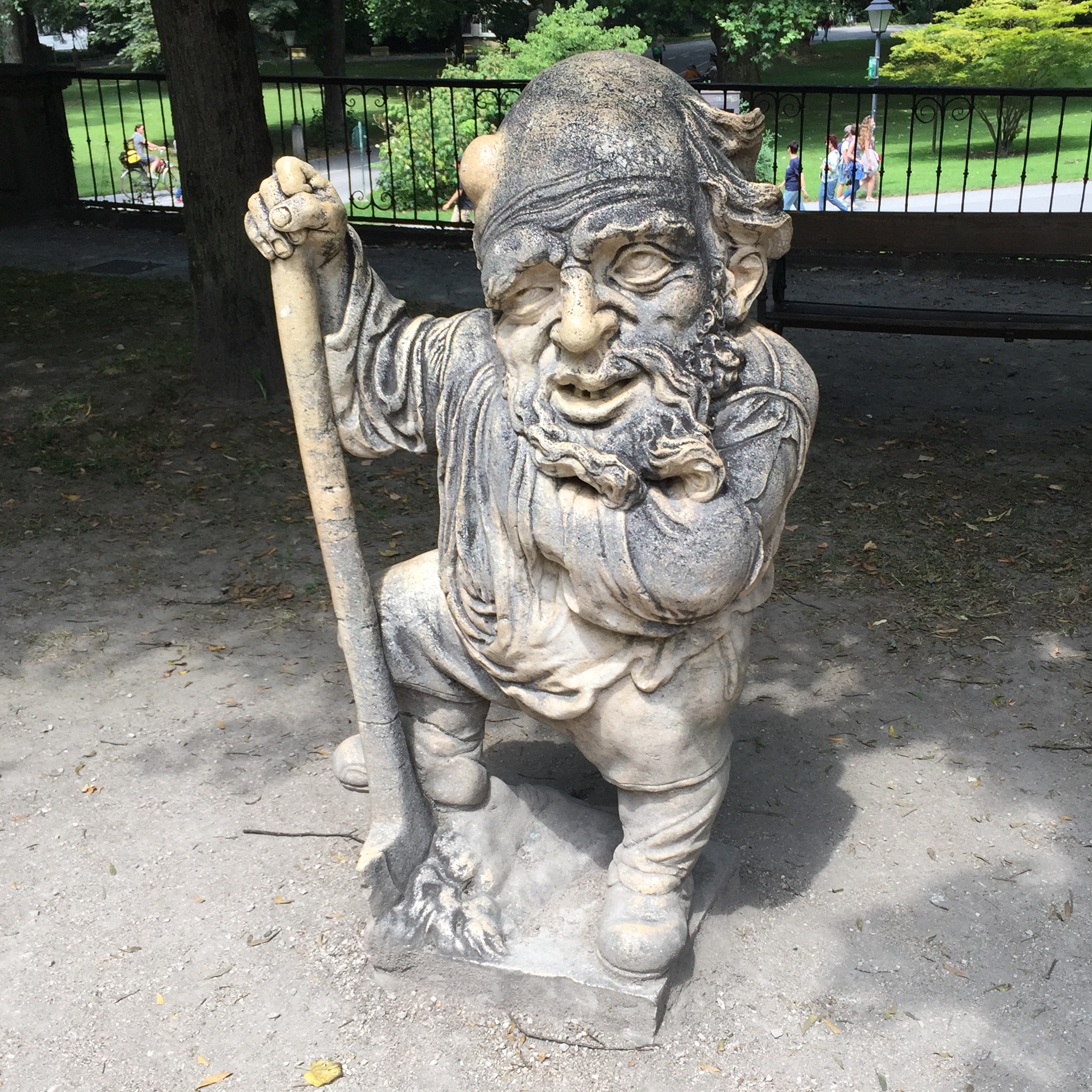
Mirabell Garden Statue (also in The Sound of Music)

Salzburg, Austria is forever etched into our memories as a place of natural and man-made artistic beauty and as a cultural center. The rich history of this city is evident at the turn of every street corner and throughout the nearby lakes and hills. The movie The Sound of Music embraces Salzburg in the late 1930’s. This year we celebrate the 50th anniversary of the film and I have been fortunate to have recently visited Salzburg. In this blog I not only share some thoughts about the movie but also many other things that are evident to me in this vibrant area.

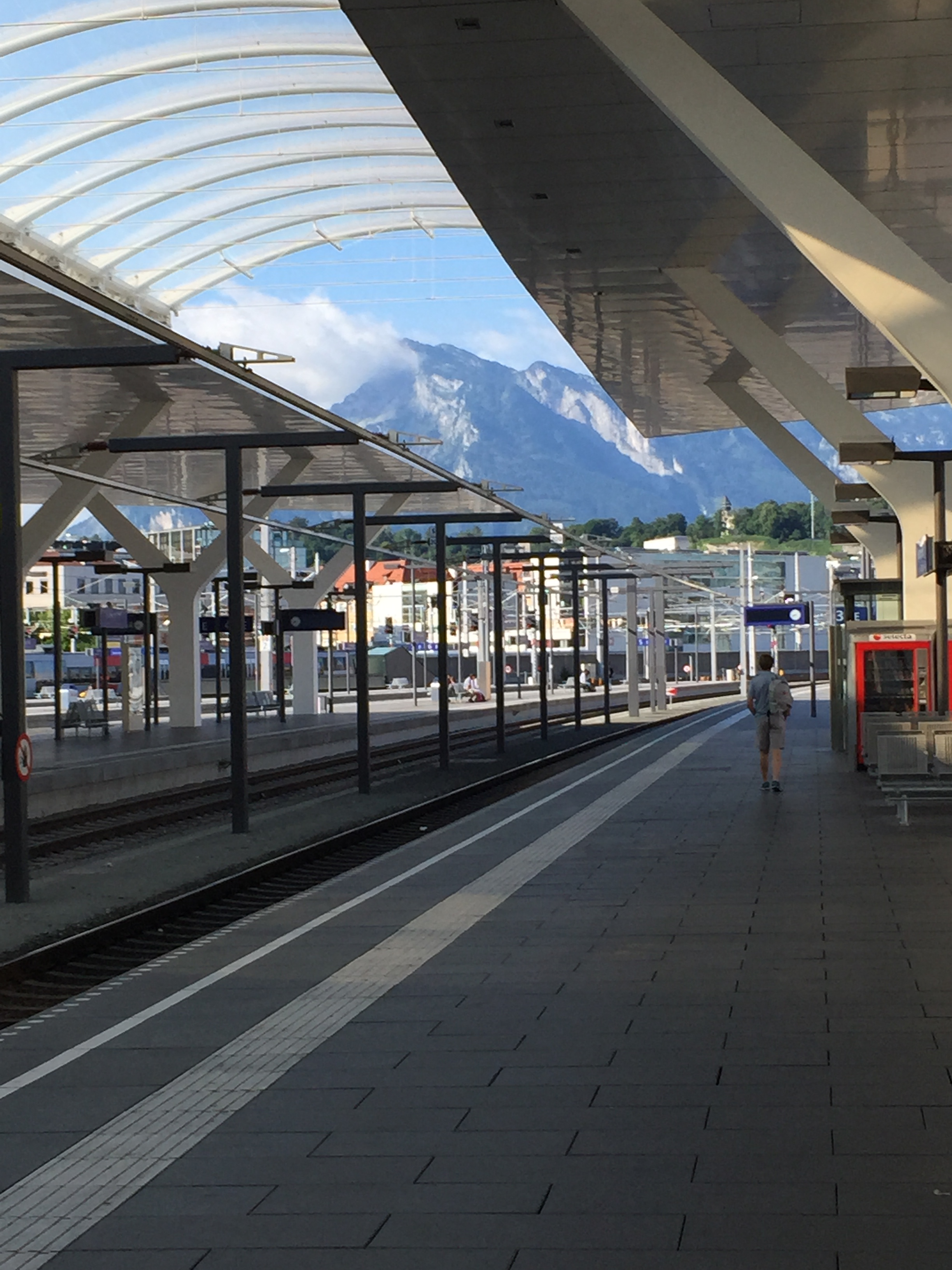
In comparison, much larger ViennaIMG_1853 (1) is majestic and bold but in seeking Austria’s soul, it would be found in Salzburg. On arriving by train, you can immediately look up and sense grandeur in the mountains. Yes, these are the “hills” that Maria sang about in the movie. The hills and the city are alive and in your mind you can hear her singing!

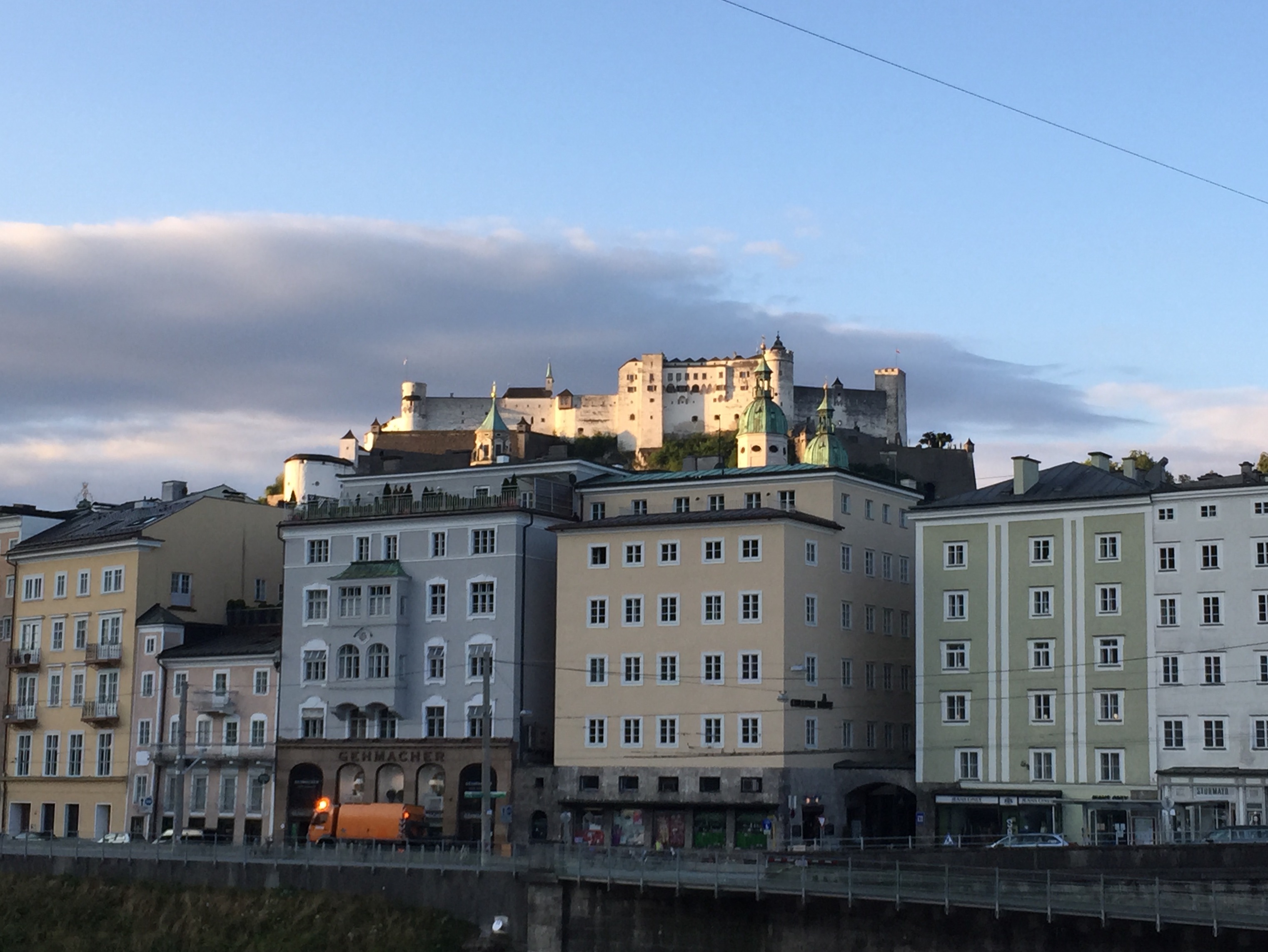
Fortress Hohensalzburg crowns the city

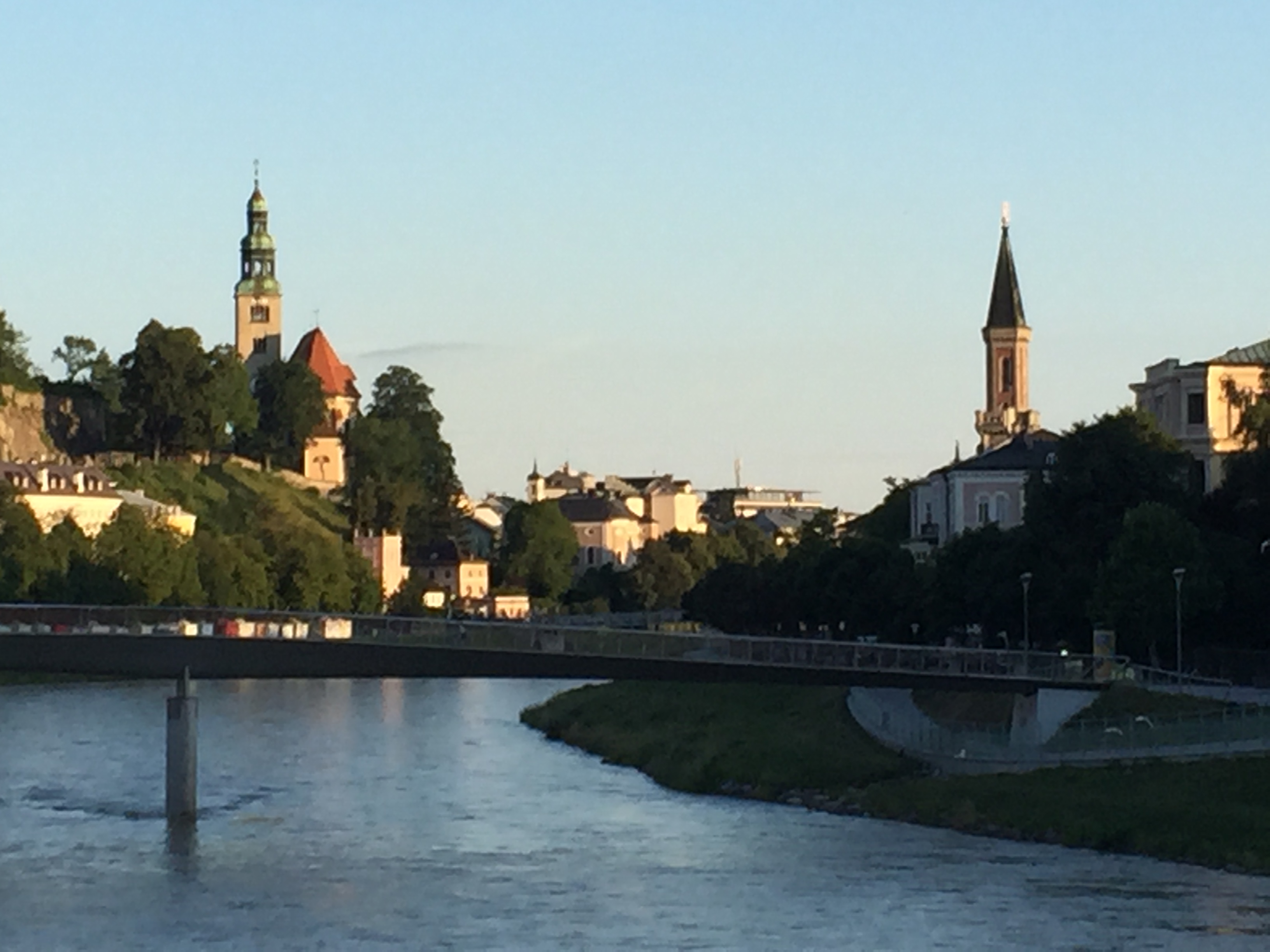
Journeying through the city, one can see boats on the Salzach River, lovers expressing their forever love by attaching their locks to the bridges, Mozart’s birthplace, the Fortress Hohensalzburg crowning “Old Town,” Mirabell Gardens with Pegasus dancing at its center, the Mozart Bridge the children ran across to play, and the small towns of Sankt Gilgen and Monsee on the shores of Lake Wolfgang… everywhere there are visions and sounds from the movie that surge into my memory!

My first visit was to Mirabell Gardens across the street from the hotel. With the Pegasus fountain centrally located, everyone was taking the “perfect” shot not only as reminiscent of the movie but also because it is a beautiful artwork. The garden’s colors just explode and several statues found there are in the movie.

FullSizeRender (42)

IMG_1651

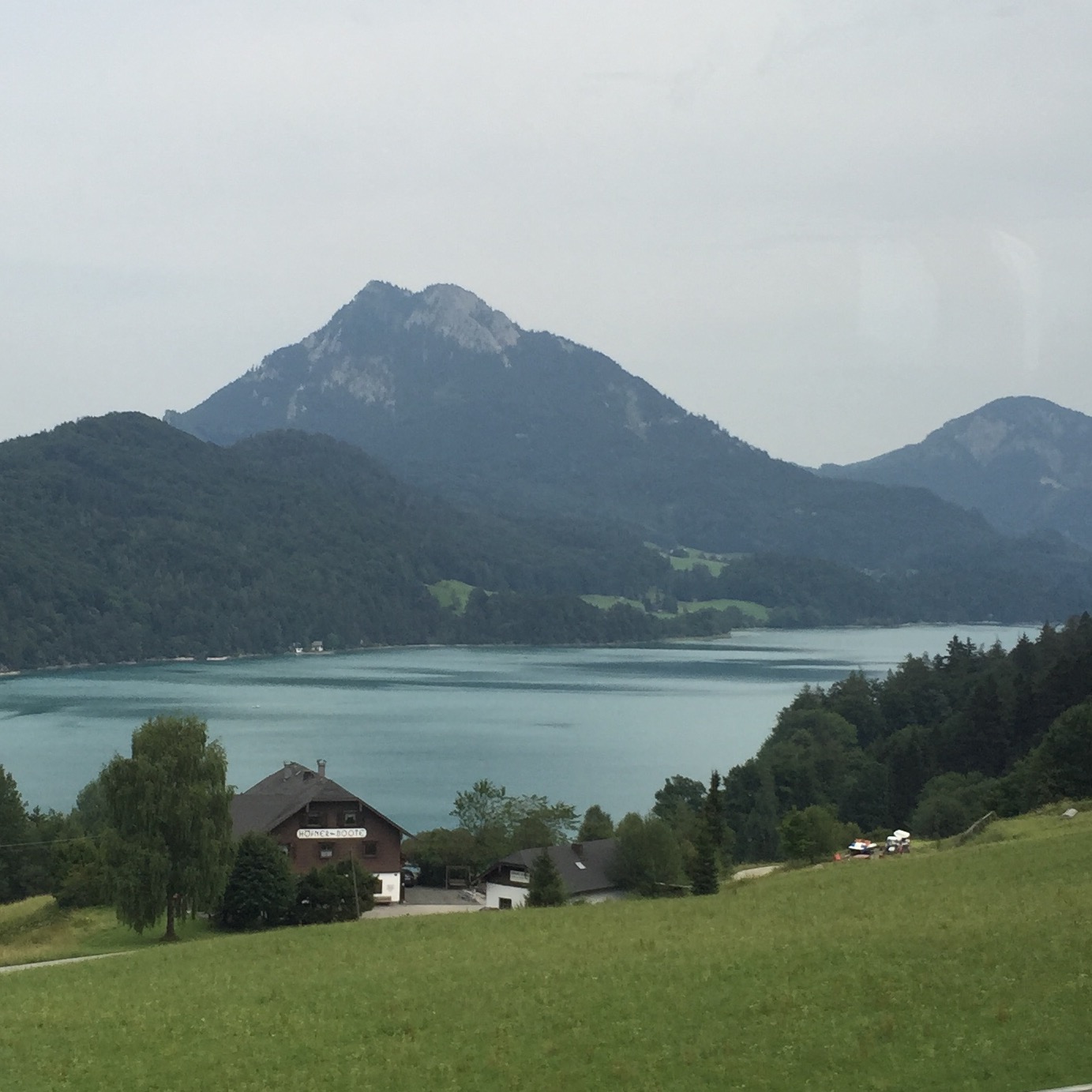
An entire blog could be dedicated to the Mirabell Gardens but I journeyed to the Lake District to see Sankt Gilgen, Sankt Wolfgang, Monsee, and Lakes Fuschl and Wolfgang. Each of these locations were included in The Sound of Music.

People were camping around, sailing on, and swimming in Lake Wolfgang and Lake Fuschl. The mountains around the lakes provide a perfect backdrop for a superb holiday in the region. And who can forget the sweeping images of these places at the beginning of the movie?

FullSizeRender (44)
Lake Fuschl as in the opening scene from The Sound of Music

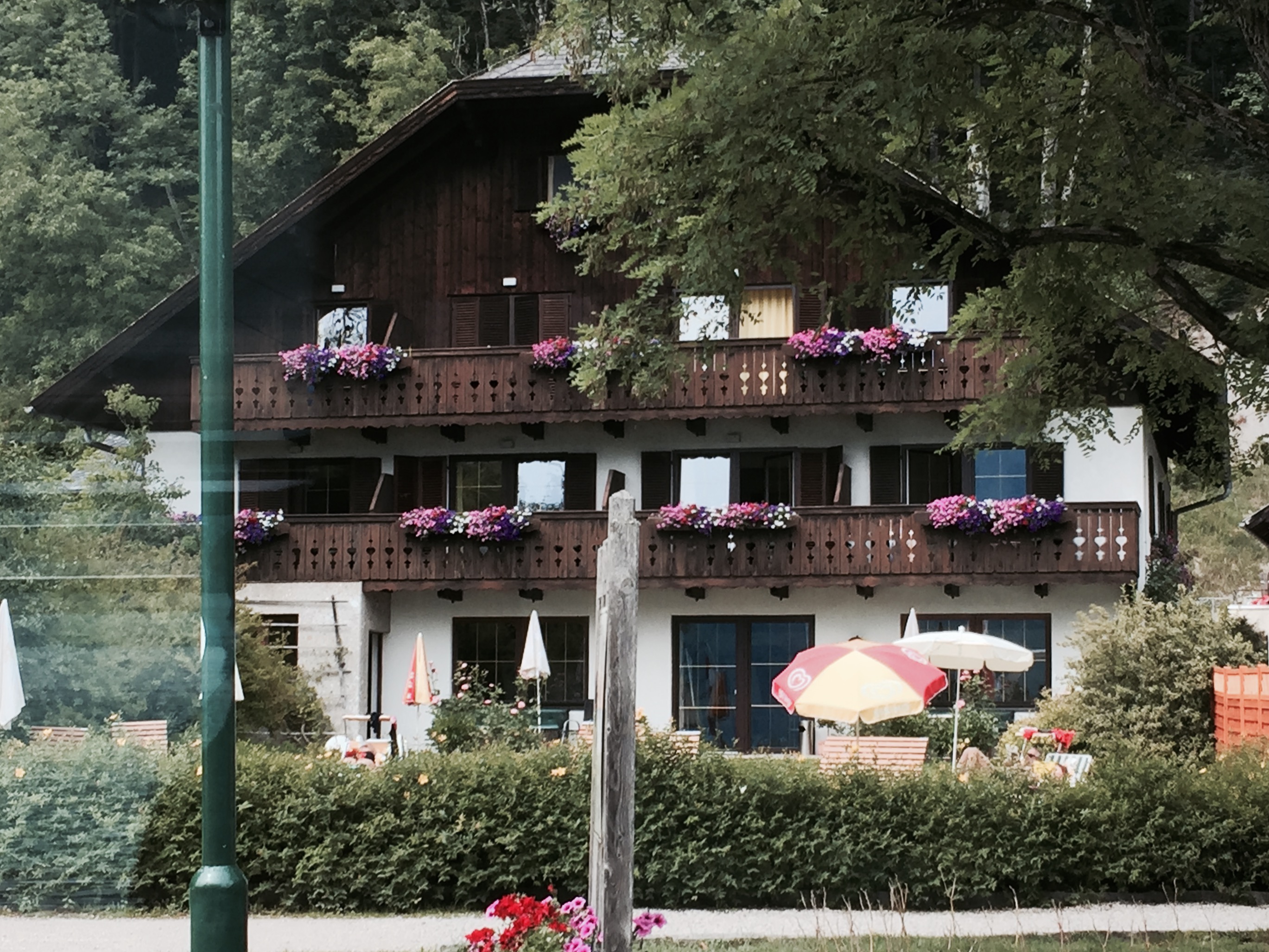
Quaint, traditional buildings in Monsee and Sankt Wolfgang are like time capsules with their large overhanging roofs and decorations of flower boxes attached to the upper levels. Each house has its own large supply of firewood to prepare for heating during the harsh Winters that come to this area. The mountains and the lakes are breathtaking and it is easy to see why these places were chosen for the movie.

FullSizeRender (48)
Traditional House at Sankt Wolfgang

Of course the city and area have so much to offer as they pose for the camera’s eye. I endeavor to keep my blog entries to a reasonable length and know that this one doesn’t adequately recount my memories of this vibrant city, the home to The Sound of Music and Mozart.

Looking Downriver at Sunrise

Salzburg is one place that I highly recommend be included in your travel bucket list. Salzburg is an extravaganza for your soul!

There are so many more places to see from The Sound of Music and I know that these few memories of the city will be just my initial ones as I will return several more times.

FullSizeRender (39)
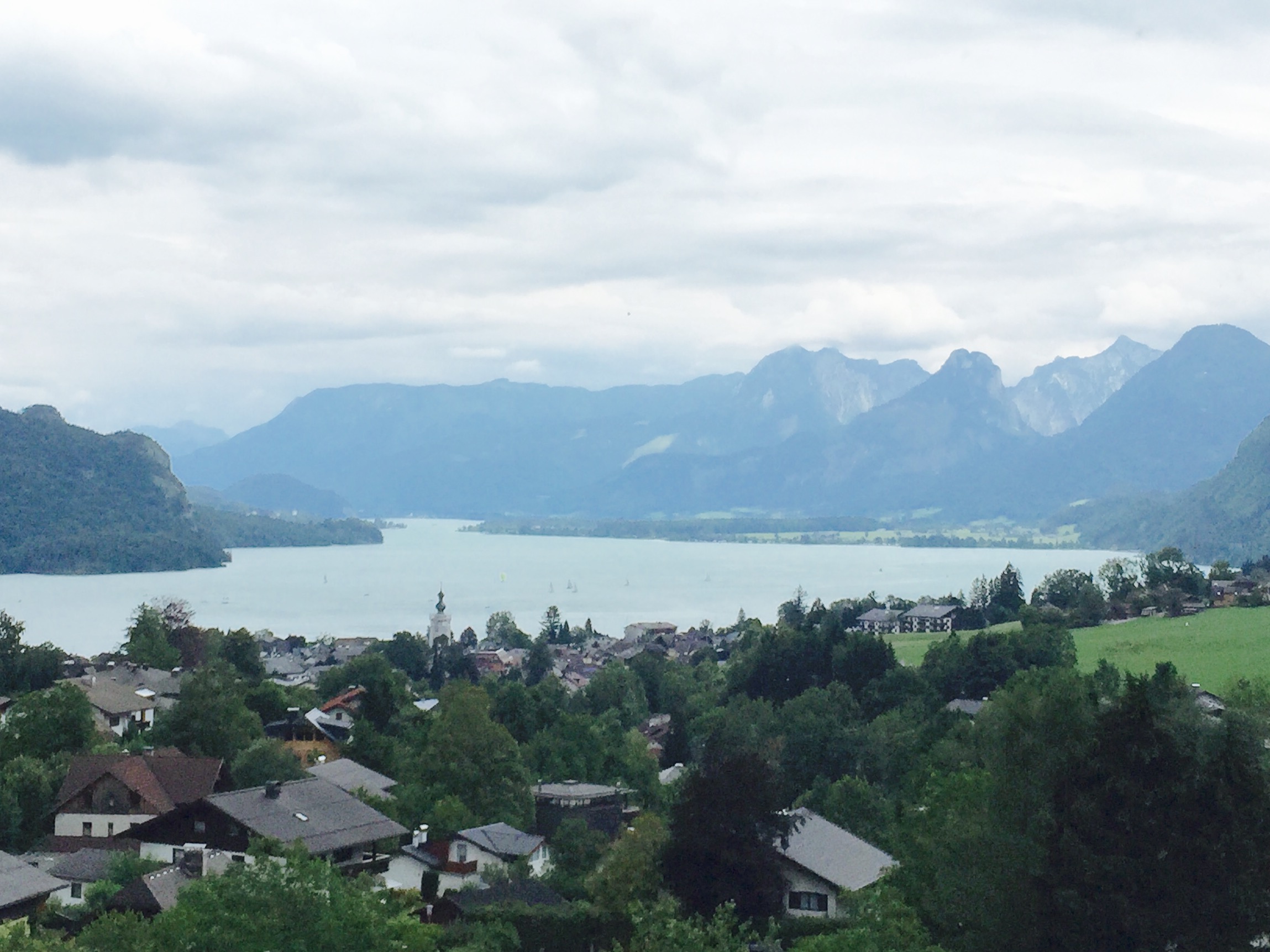
Sankt Gilgen on Lake Wolfgang as in The Sound of Music
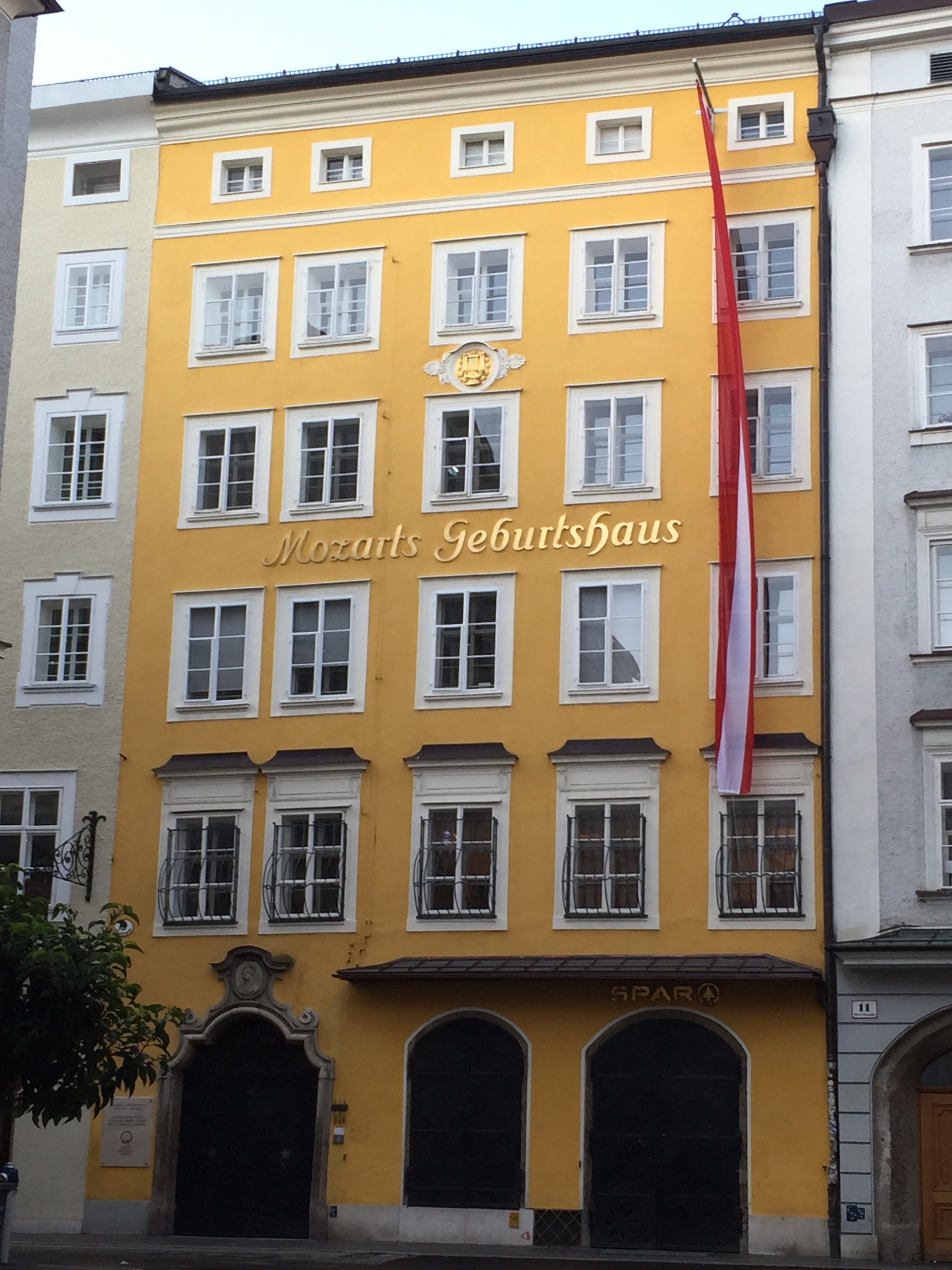
Mozart's Birthplace
Mozart’s Birthplace

I hope you enjoyed sharing in my adventure to Salzburg and that it encourages you to want to come and visit!

My Visit to Hitler’s Kehlsteinhaus “Eagle’s Nest”

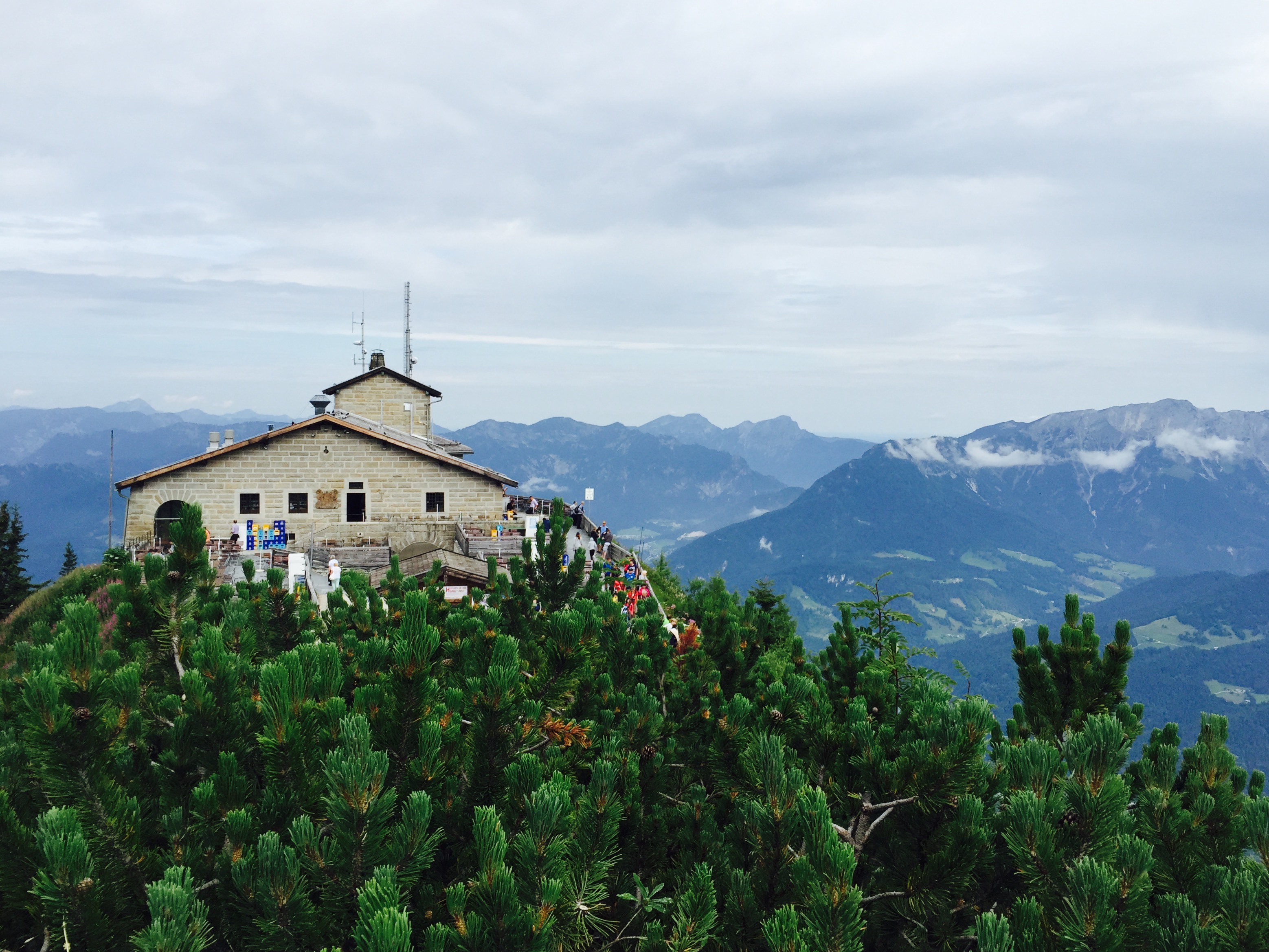
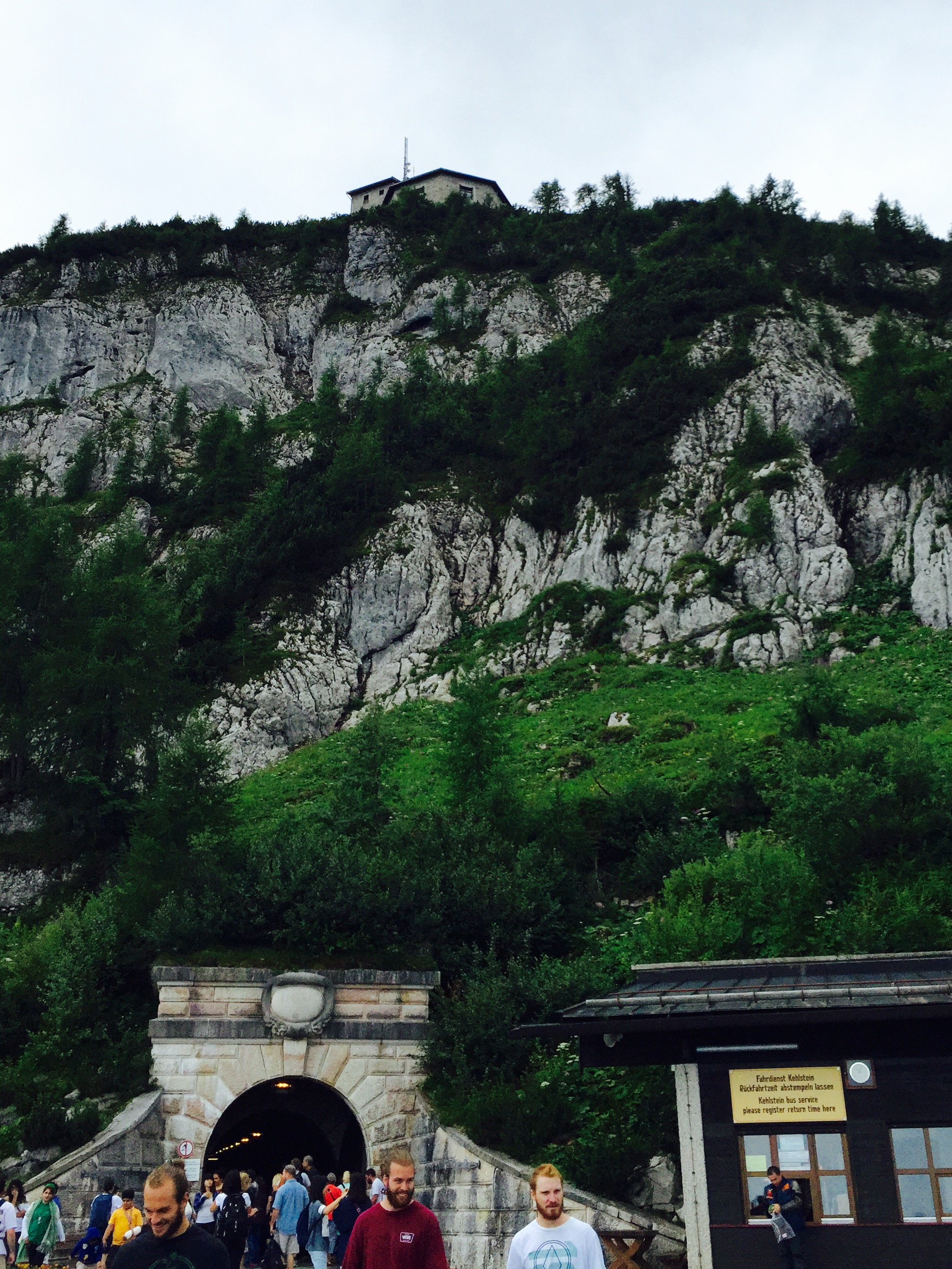
Eagle's Nest from Outside
Kehlsteinhaus from the Outside

Last week I traveled to Salzburg, Austria because I had heard so much about its beauty, artistic value and historic significance. One of the historic places I am attracted to is Hitler’s “Kehlsteinhaus” (a.k.a “Eagle’s Nest” by English-speaking people) overlooking Berchtesgaden, Germany in the Bavarian Alps.

FullSizeRender (27)
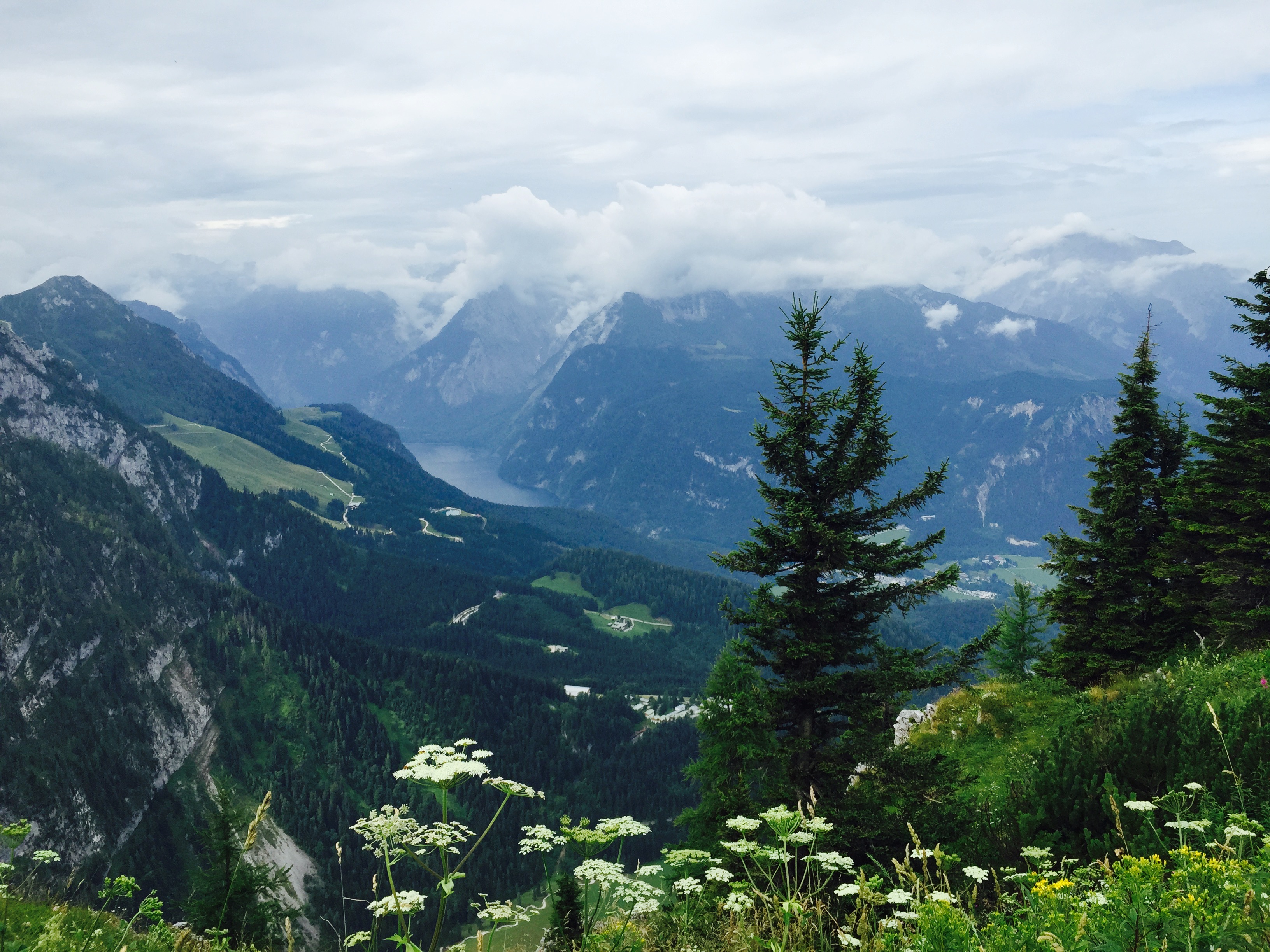
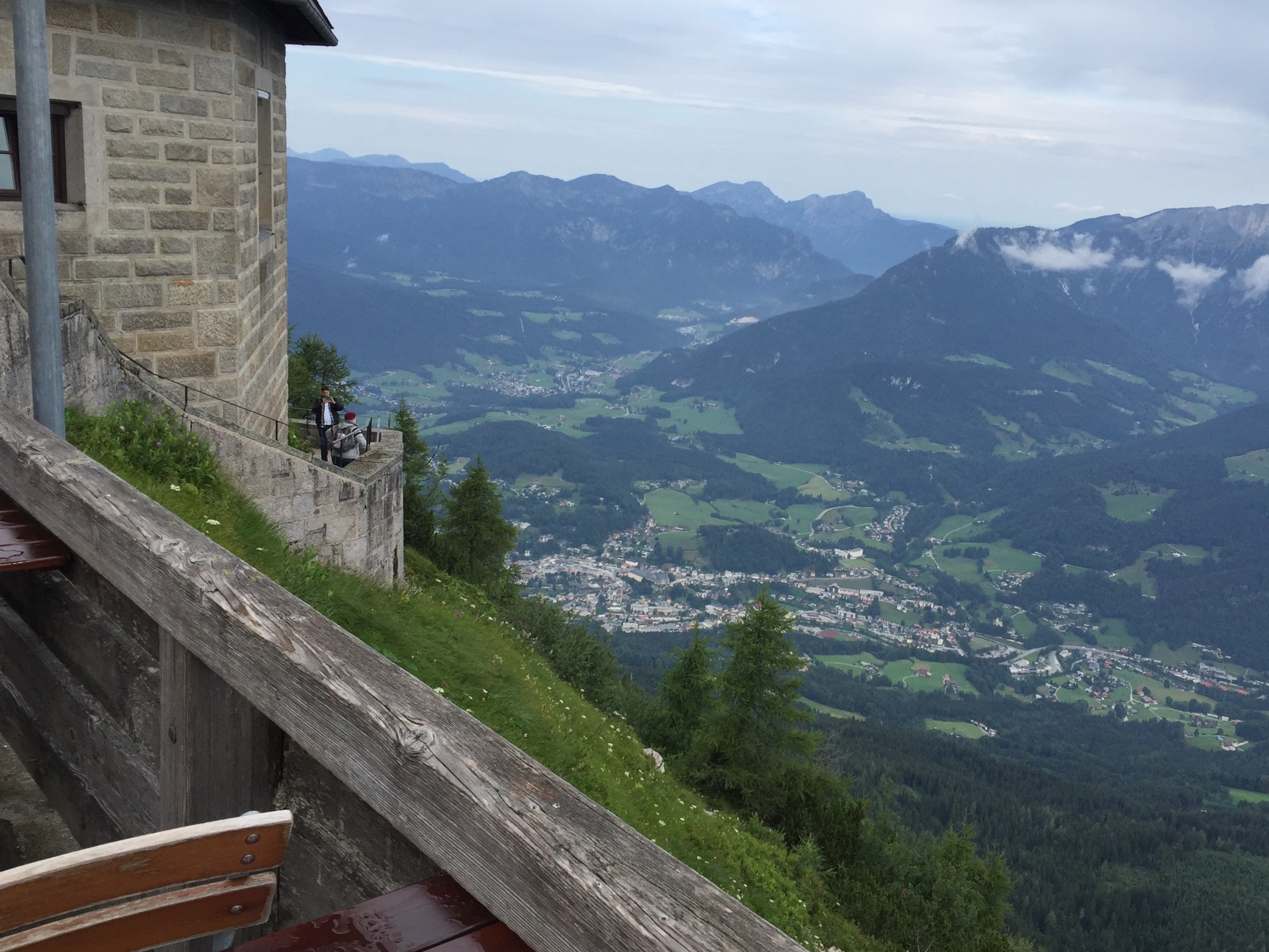
View from Eva Braun’s Tea Room where she entertained diplomatic spouses

Kehlsteinhaus was intended to be a diplomatic reception place for dignitaries and general planning. In 1938 the NAZI Party paid for constructing Eagle’s Nest as a present for Adolph Hitler for his 50th birthday. It is a bit odd to give Hitler such a present because he was afraid of heights and at over 1800 meters above sea level, Eagles Nest is at a significant height with astonishing views. Supposedly, Hitler used Kehlsteinhaus less than 15 times and usually for very brief periods less than an hour. Other than for the guards, there are no sleeping accommodations. There was then a full service kitchen as there is today. Now, Eagle’s Nest is primarily a tourist attraction with spectacular views, a magnet for history buffs, and a restaurant that is open except in Winter.

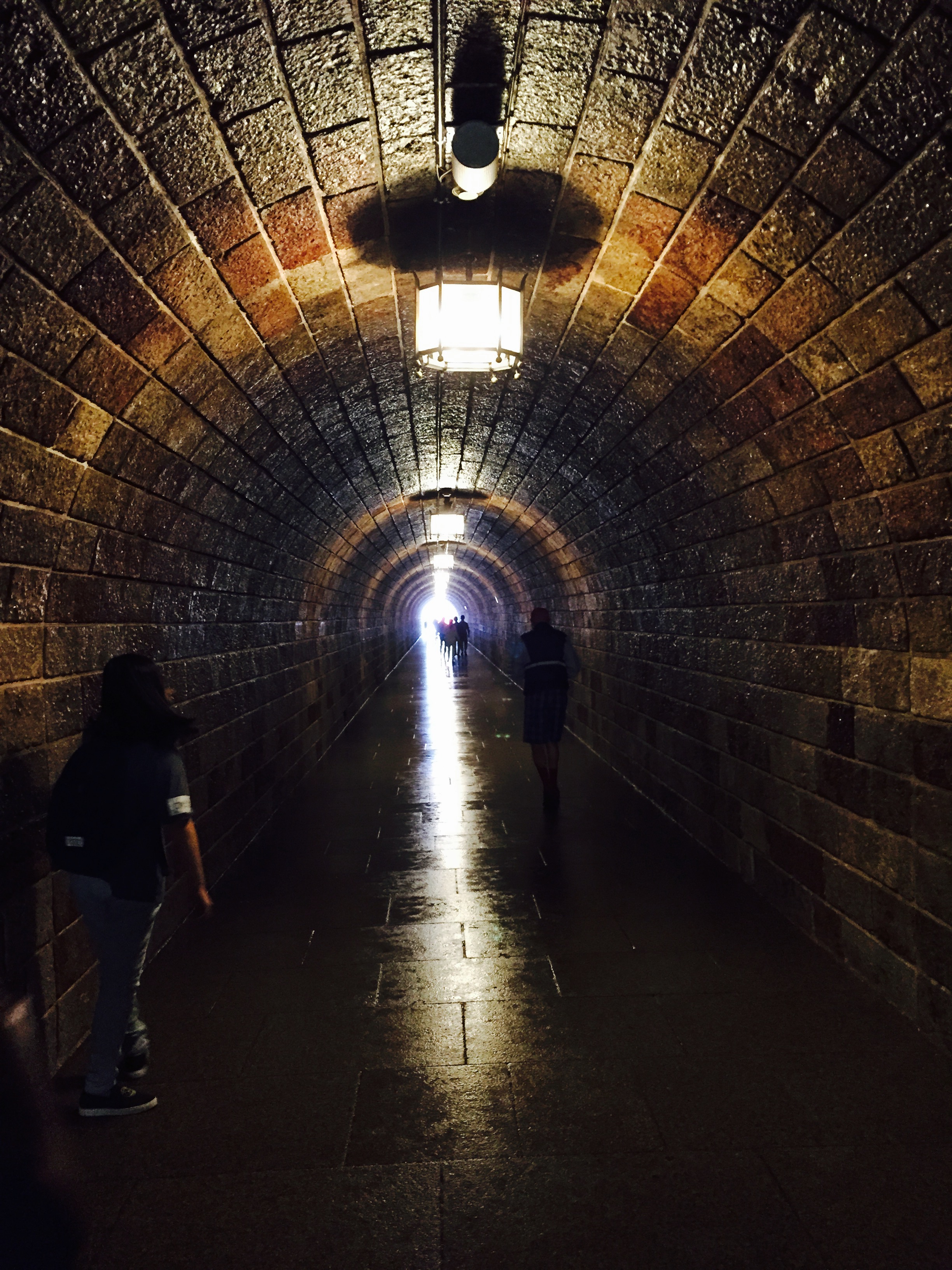
Tunnel access to the elevator to go up into Eagle's Nest
Tunnel access to the elevator to go up into Eagle’s Nest from the upper parking lot

Access to Eagles Nest from the lower parking lot is by bus to the upper lot and then through a tunnel to get to the elevator for the final 124 meters. Constructing the building and creating access to get to it was a substantial achievement. And the stone work done by Italian masons for the building and tunnel is exceptional. The single lane road to the upper lot is up to 26 degrees which is really steep (I seem to recall that the original section of the Pennsylvania Turnpike is no more than 4 degrees). Each bus goes up or down in a group because the road is only 4 meters wide and the drop off is sheer. Given Hitler’s concern with heights, this narrow road with five tunnels and a switch back must have been problematic for him.

Looking to the outside through the elevator tunnel

I found it interesting to have an elevator to get into the building. The access tunnel from the upper lot is wide enough for a car and when Hitler came, the driver took the car directly into the tunnel to the elevator, backed out after Hitler got out, and then backed in to be ready when Hitler was to depart. Hitler also was apparently claustrophobic so the walls in the elevator are polished brass that makes a mirror effect that the elevator inside is much larger than it really is. The elevator moves quickly and traverses the final 124 meters in 46 seconds.

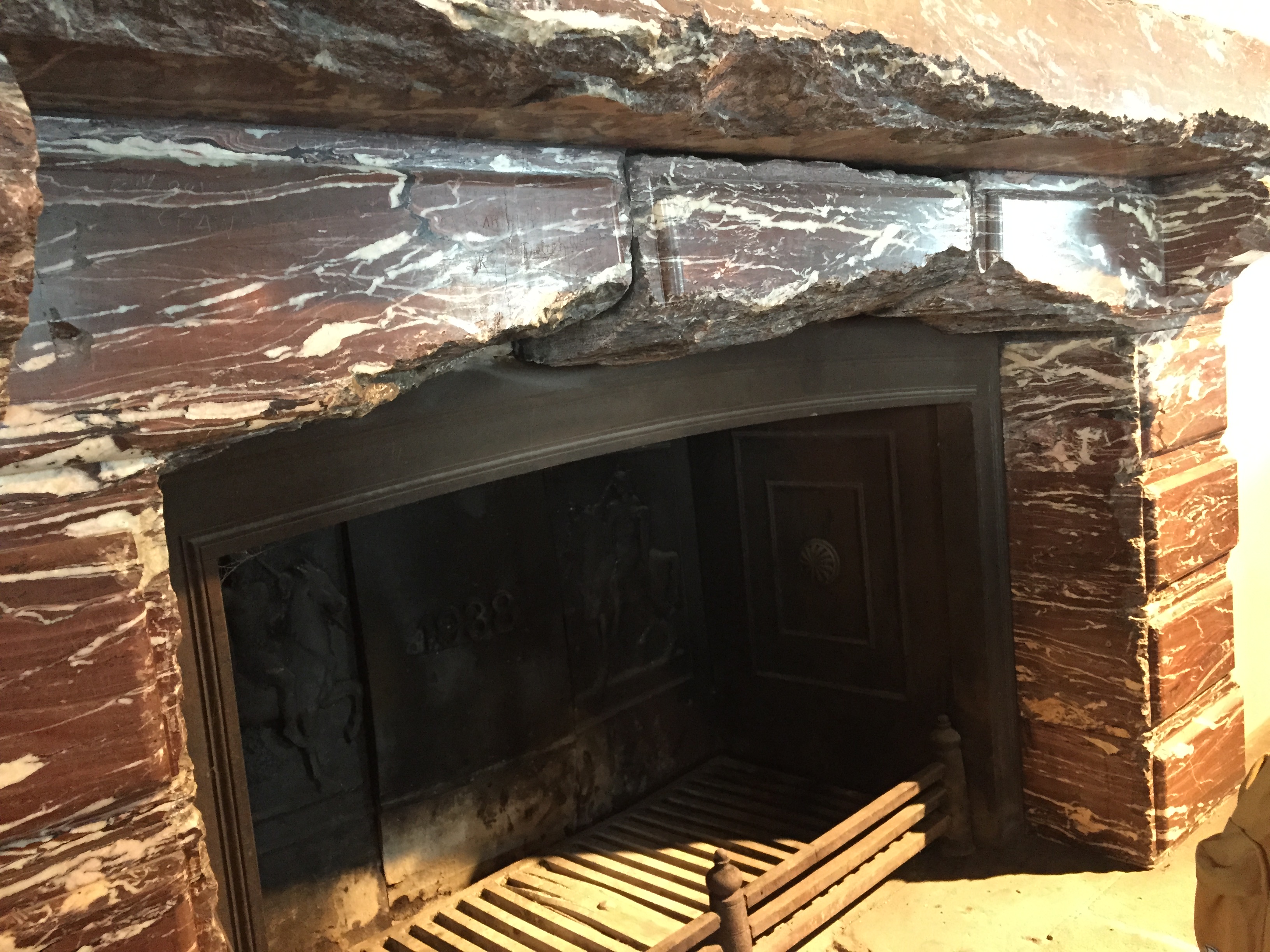
The fireplace given by Mussolini is at the head of the conference room, today a restaurant

In today’s restaurant you can see the fine Italian marble fireplace which was given by Italian dictator (and Hitler’s ally), Benito Mussolini. The restaurant formerly was the main conference room. The large fireplace has been severely damaged by American soldiers smashing off pieces as war souvenirs and etching names and graffiti into the stone. The damage is evident in the photo.

Damaged Marble Fireplace

Which military unit was first to reach Eagle’s Nest? Contrary to the movie “Band of Brothers” in which the U.S. 101st Airborne “Screaming Eagles” were first to arrive, it is not precisely known but it is believed that on 4 May 1945 that the U.S. 7th Army, the U.S. 101st Airborne, and the French 2nd Armored all seem to have been there.

A view from Outside
A view from Outside

Recently I found out that PFC Benedict Vinzani, Senior’s (from my hometown and parent of two of my Facebook friends) final duty station during World War II was in Salzburg. He was a member of 33rd Armored which is recorded to have been part of the 101st. It is unknown if he went to Eagle’s Nest but he served in the area as a member of the “Greatest Generation.” I think it is important that we remember those who contributed to Hitler losing the war and how different the world would be had that generation not risen to the need and challenges. I am forever grateful for them.

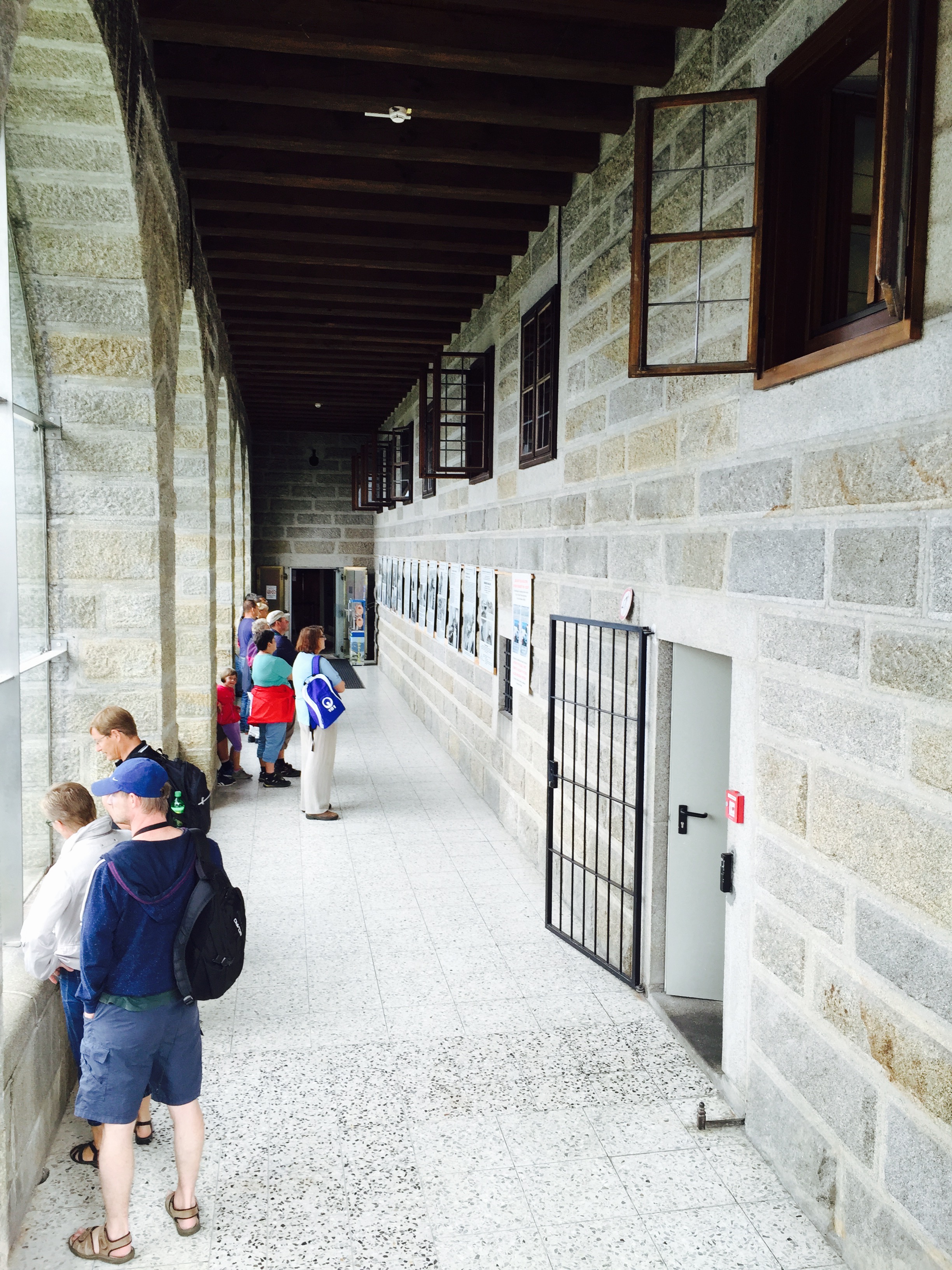
Inside view on a walkway

Today, Kehlsteinhaus it is operated by the Bavarian German State and revenue generated in excess of operating expenses is given to charity.  Last year more than 300,000 people visited Eagle’s Nest. Hitler was an awful, evil, cruel man. I am pleased that charity is benefiting from a remnant of that time. Eagle’s Nest could have been obliterated in the final days of the war but it was spared and I hope that it remains as a reminder of lessons from a very tragic time in history

Are You “Regular?”

Okay, everyone… I am sure this is a topic that few blog about and I do understand the very personal nature of the subject. I will endeavor to keep this blog story at an appropriate level of discretion.

I am certain that many of you recall TV commercials in our youth about Ex-Lax,  the likely parental discussion we had as children about what it meant to be “regular,” and the specific purpose of a laxative. I recall my dad putting it into terms that I would readily understand… “A laxative helps make you poop!”

Indeed throughout our lives, we of a certain age have learned that our bodies respond to different FullSizeRender (24)foods in curious ways. Gone are the days in which we discuss these effects only attributed to prunes! Some could say there is a movement beyond that created by prunes. The laxative responses we get to various fruits and other foods leads me to conclude that doctors and others giving medicinal advice have their favorite remedies to keep us “regular.”

In February I had hernia surgery in Spain. My care was excellent and very efficient. That is certainly a topic for another blog as my surgical experience was quite different from what is done in the U.S. Regardless, the prescription from the Mijas town doctor following surgery was to eat two kiwis a day even though I told him that orange juice would work just as well! He is a determined, friendly man so I enjoyed two kiwis a day as well as a glass of orange juice!

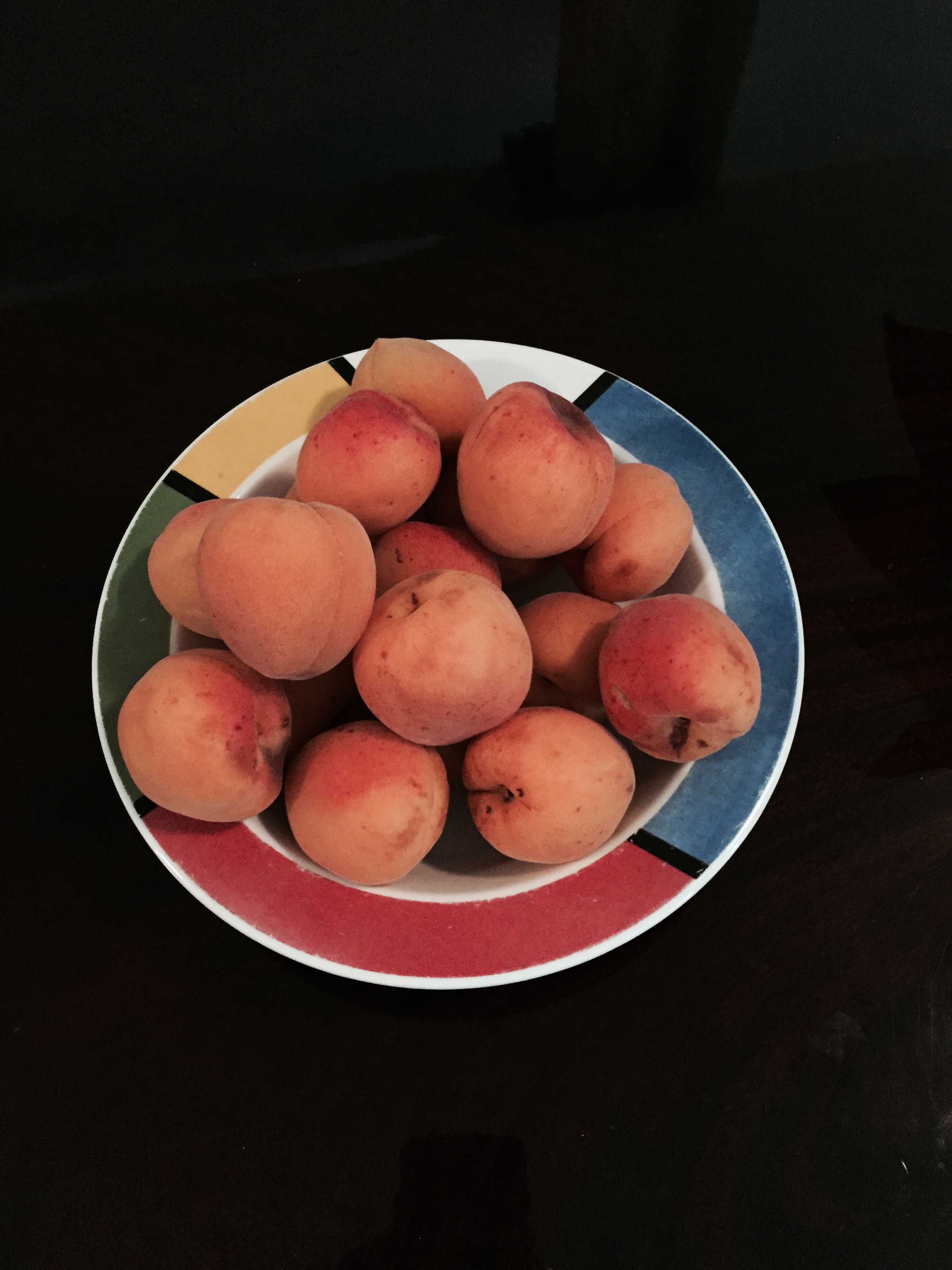
My fresh apricots
My fresh apricots

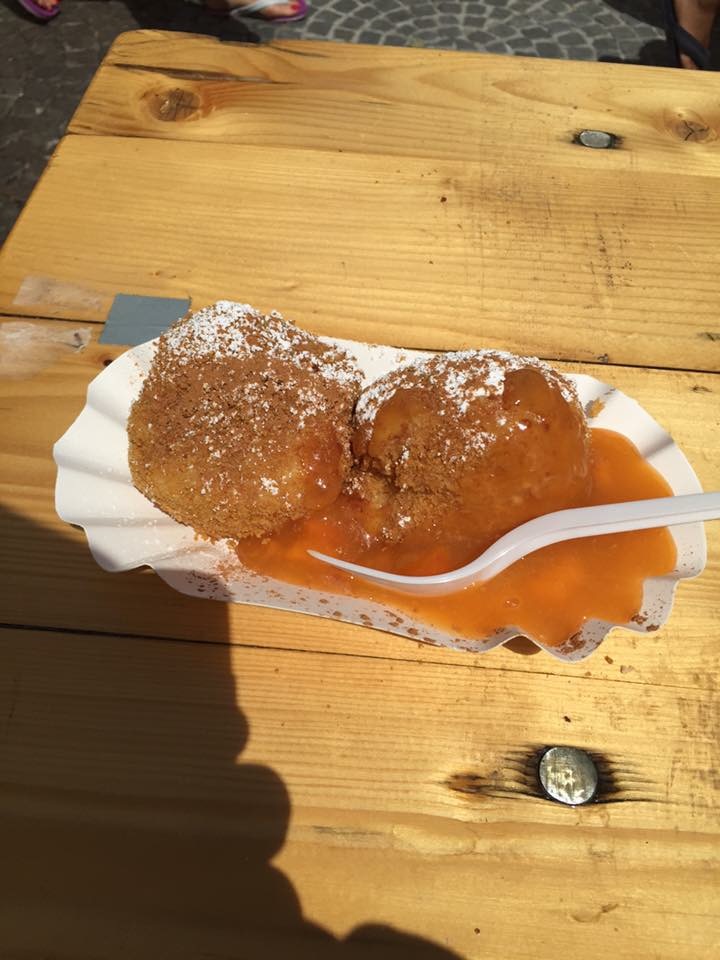
I have discovered a new fruit that also does the trick!! It was a bit difficult to narrow it down as there is currently an abundance of fresh strawberries and cherries at the end of their season and the beginning of apricot time in Austria. However, through process of elimination (I proudly chuckle at my choice of words) I have found the magical properties to exist with apricots! Yes, they keep me “regular” and running (I chuckle once again) to the nearest toilet. Last week as I enjoyed fresh apricots, apricot dumplings, apricot liquor, apricot jam, and so on, I made sure to always be aware of the location of the nearest toilet…just in case!

Fresh apricots (“marille”) are wonderful and abundant now in Austria.They are sold at weekly town markets in Melk, Spitz and Krems,  in grocery stores, and in roadside stands throughout the Wachau Valley. What a special time to be here and experience the “Apricot Mile” near Rosaatz! I hope you enjoy this story…and I send along my wishes for your regularity!

Apricot Dumplings
Apricot Dumplings

My Melk Holiday

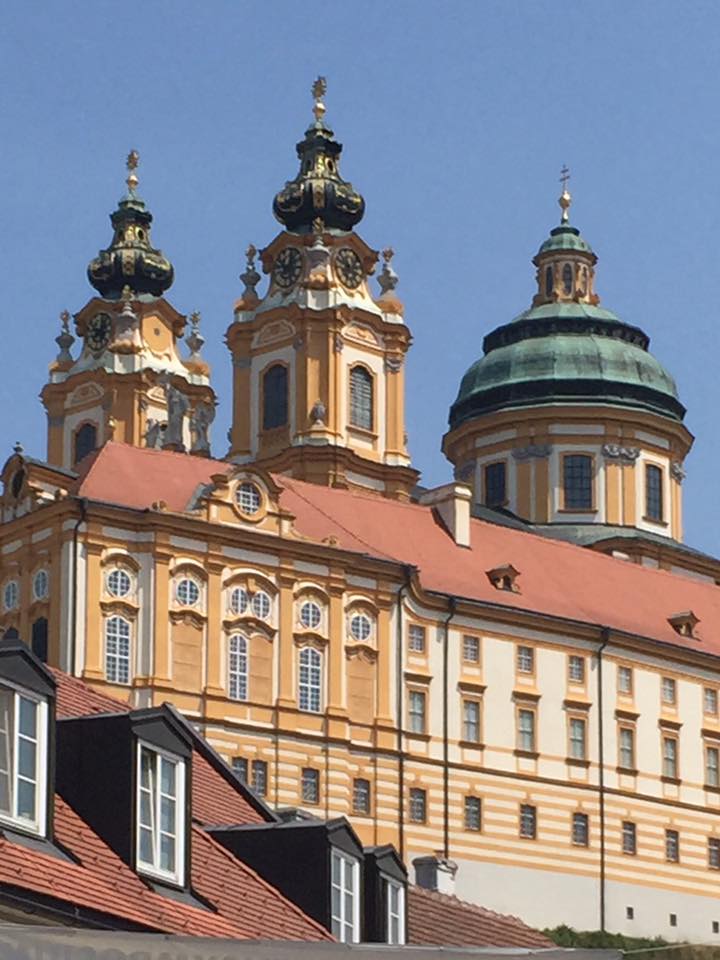
Melk Abbey towers
Melk Abbey towers

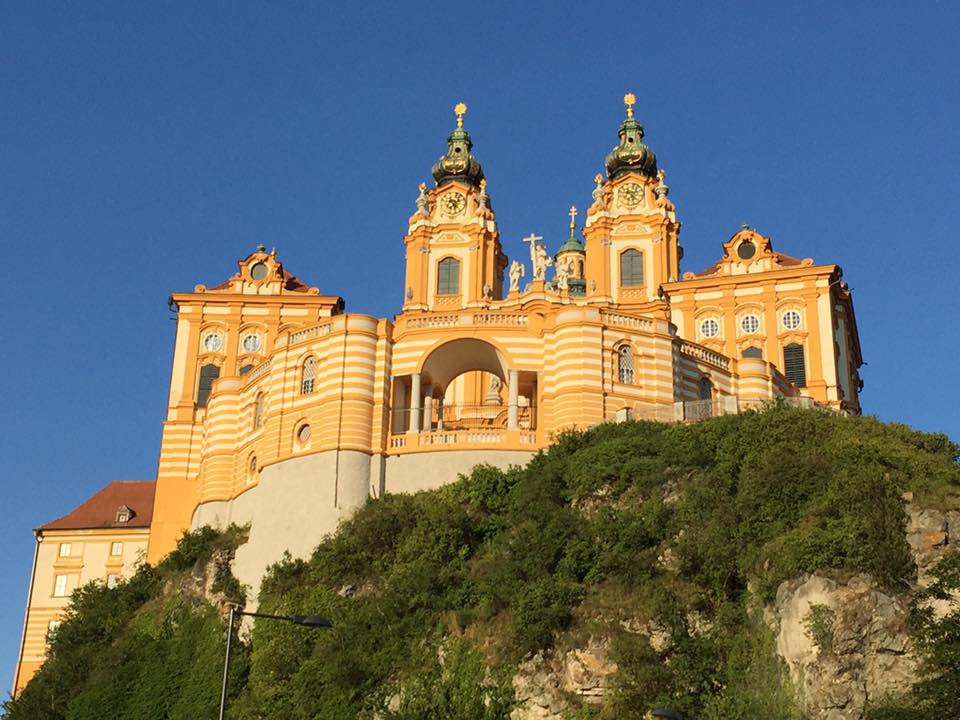
I extended my stay in the Austrian Wachau Valley where I am now exploring in and around the town of Melk an der Donau. Melk is at the beginning of the gorgeous Wachau Valley with the Danube River running through it. The Wachau extends about 35 kilometers down river to Krems. Melk is a small community of about 5000 and is dominated by the picturesque 11th century Benedictine Monastery, Melk Abbey (German: Stift Melk).

The Abbey is the principle tourist destination for the numerous Danube River cruise tours that tie-up here enroute from Amsterdam and elsewhere to Vienna, Budapest, and beyond. My apartment is in the older part of the town with the massive Abbey immediately behind me.

Overlooking the Danube, the Melk Abbey has a long history. It was founded in 1089. You can read more about the Abbey and the history of Melk here. For now, though, I am going to share with you some of my pictures and my observations.

Abbey 1
Melk Abbey sitting above the Danube River

The town has a rich history and the town government provides numerous placards (in German and English) throughout Melk that provide the tourist with a great deal of information about the early inhabitants, their relationship to the Catholic church, the influence of the reformation, the first ruling dynasty in Austria, the impact of World War II, the buildings, the town growth, and the flooding of the Danube in recent times as well as the recording of the massive flooding in 1501.

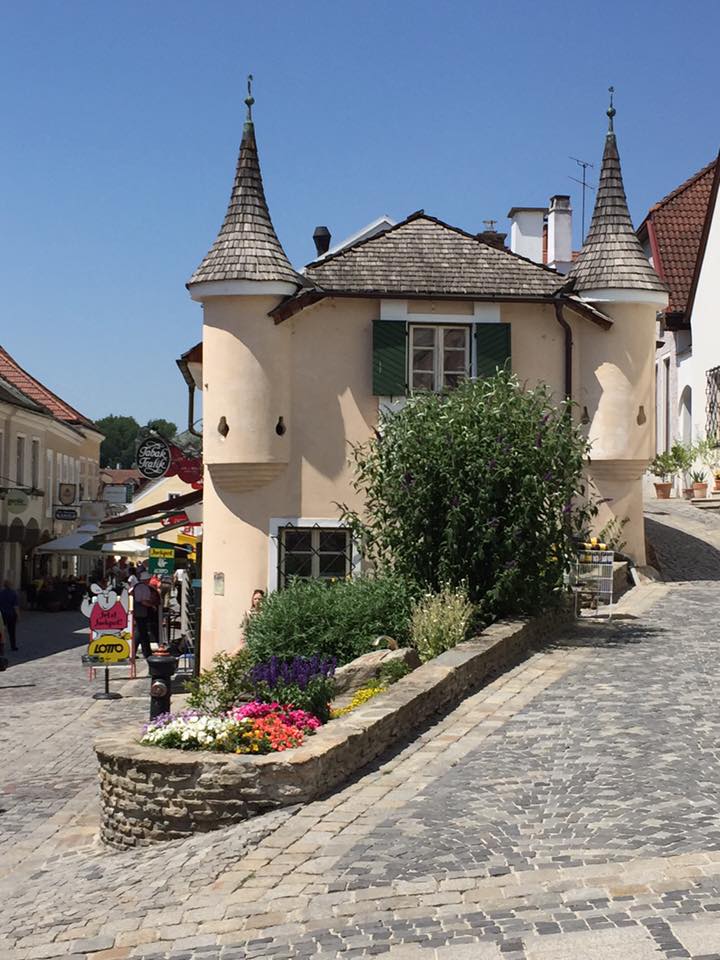
Bakers
From the 13th century when bakers sold their wares from this little building

Melk is a chameleon. It takes on a typical tourist hot spot in the daytime as tourists flock to the Abbey. There are many places to have a coffee as well as a good wine and schnitzel. In the evenings, however, the tour groups from the river boats are mostly gone and those in town are residents and numerous bicycle riders who have stopped for the night.

Weekly there are band concerts with participants in traditional Austrian dress playing music on the Rathausplatz. This is when the community just sits back and relaxes with a large beer-in-hand and listens to the music and occasionally sings along.

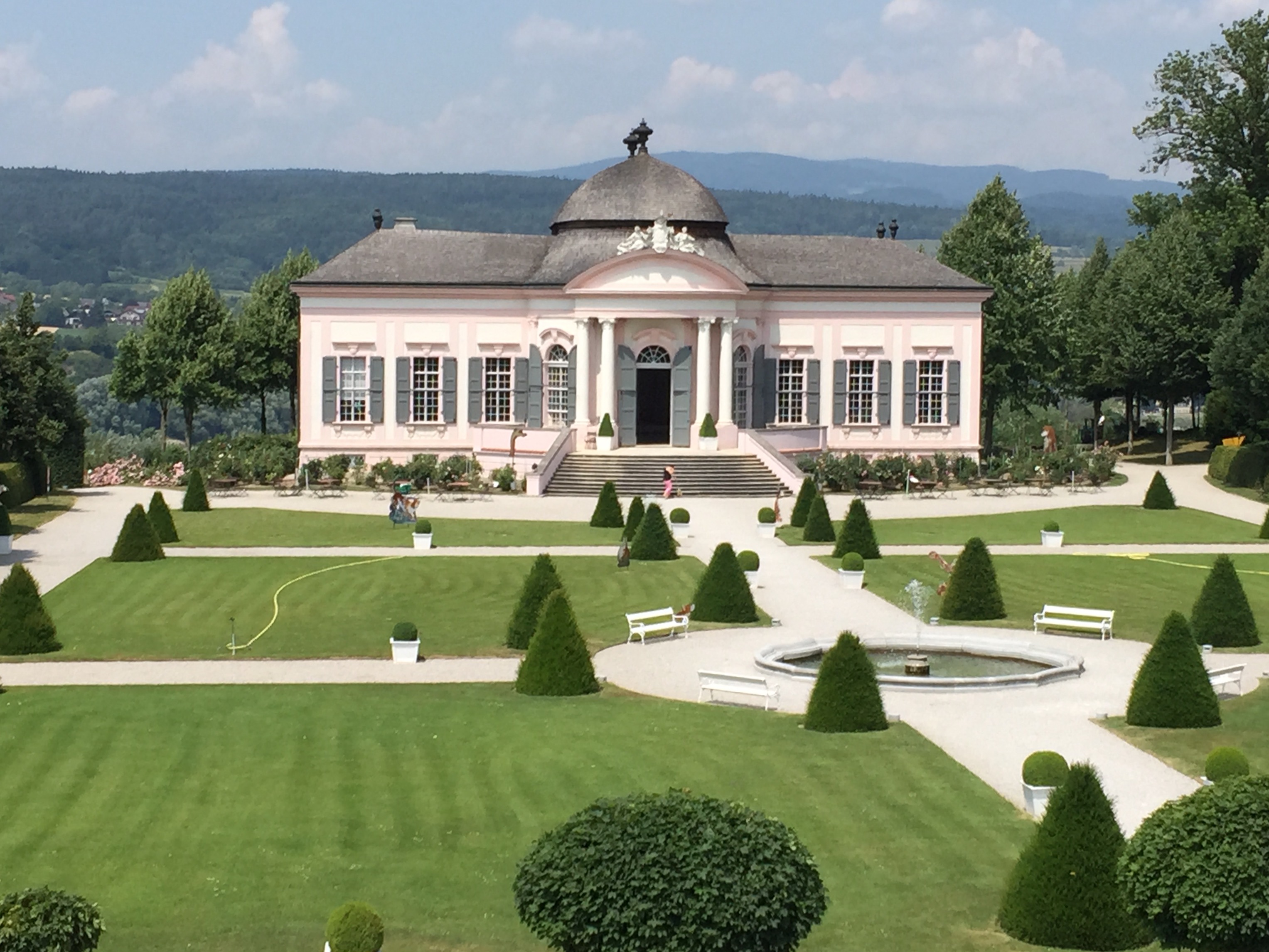
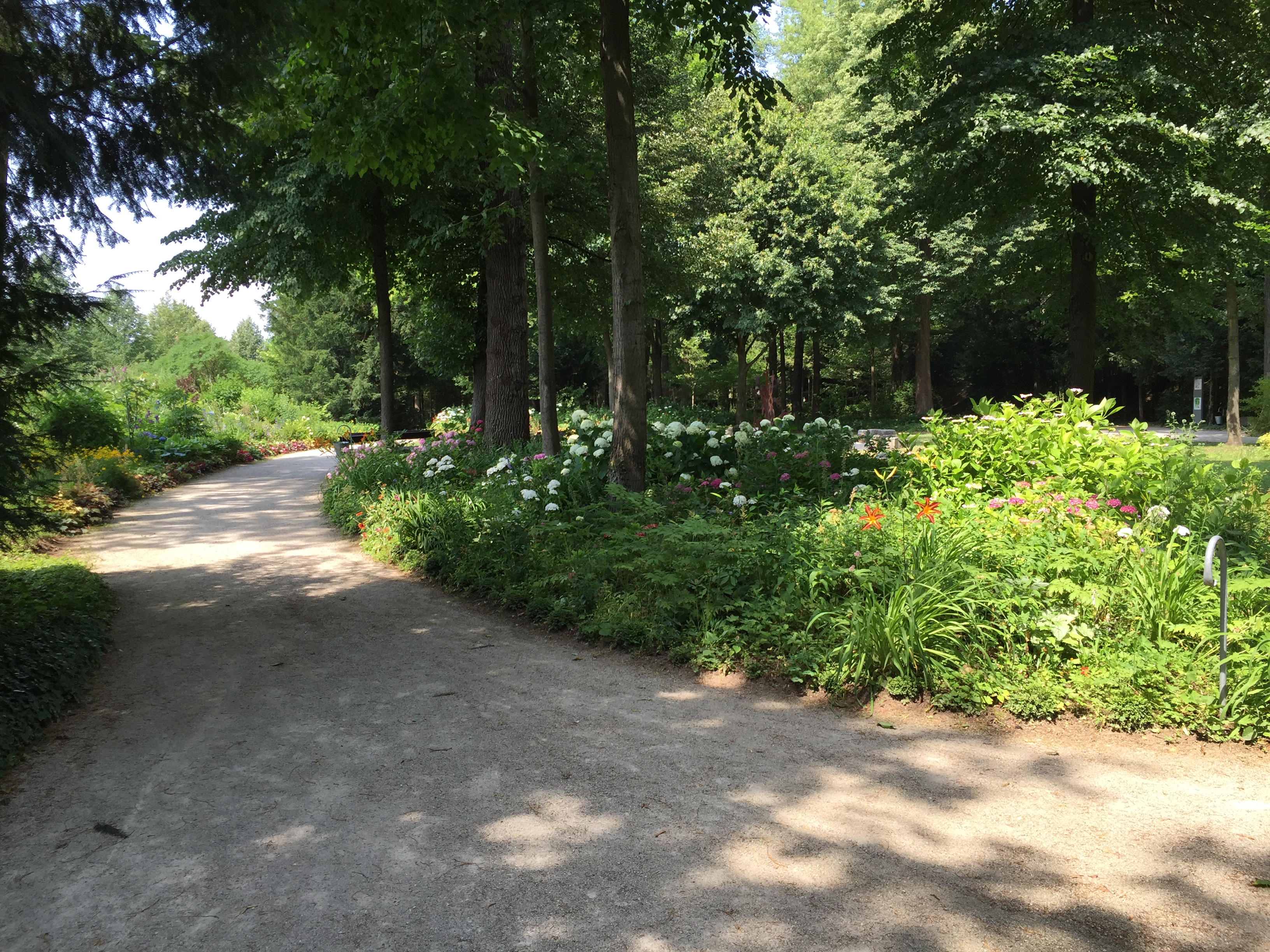
Abbey tourists enjoy the massive old library, paintings of royalty and old world leaders, statues, and the beautiful artwork of the church interior. The Abbey is beautiful both on the interior as well as the exterior. With a bit of luck you can hear musical rehearsals which in themselves are spectacular. But for me, the exterior gardens are quite special and a place that is often overlooked by the tourists who are visiting with very limited time to absorb the grandeur of the Abbey, the town and the area.

I have found the groomed walkways in the Abbey gardens to be nice but the peace and solitude FullSizeRender (22)found in the garden woods is very special. The smell of evergreens add to this place high over the Danube River flowing by. It is an ideal spot for me to contemplate, listen to nothing except for a few birds and the breeze in the trees. It is a great place to relax in the shade… my next destination.

IMG_1429

My Kremser Experience

IMG_0181
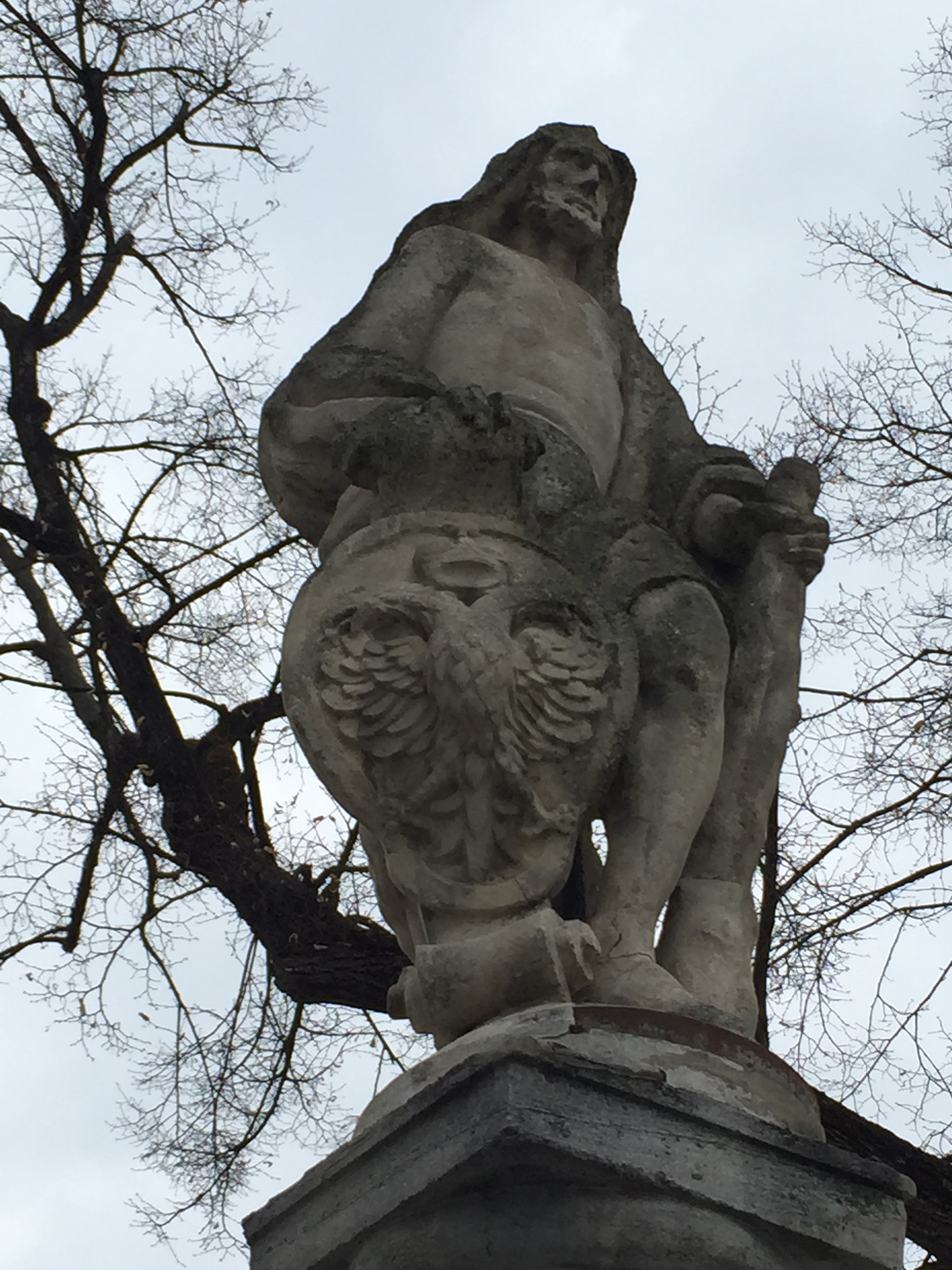
Statue (1682) to returning crusaders

Stunning medieval architecture and extraordinarily beautiful countryside is found throughout Lower Austria. Captured in photos of Aggstein, Durnstein, Rosaatz, and Melk I have shared on Facebook many of the old structures, castle ruins, monuments, stone-terraced vineyards, and the picturesque Danube River that make the World Heritage Site of the Wachau Valley unique and special.

While many find the charm of Austria to revolve about Vienna, I have opted for a more rural area in which to holiday for the past three months. My residence has centered on Krems an der Donau, maybe the oldest of communities in all of Austria. Here people are referred to as “Kremsers.”

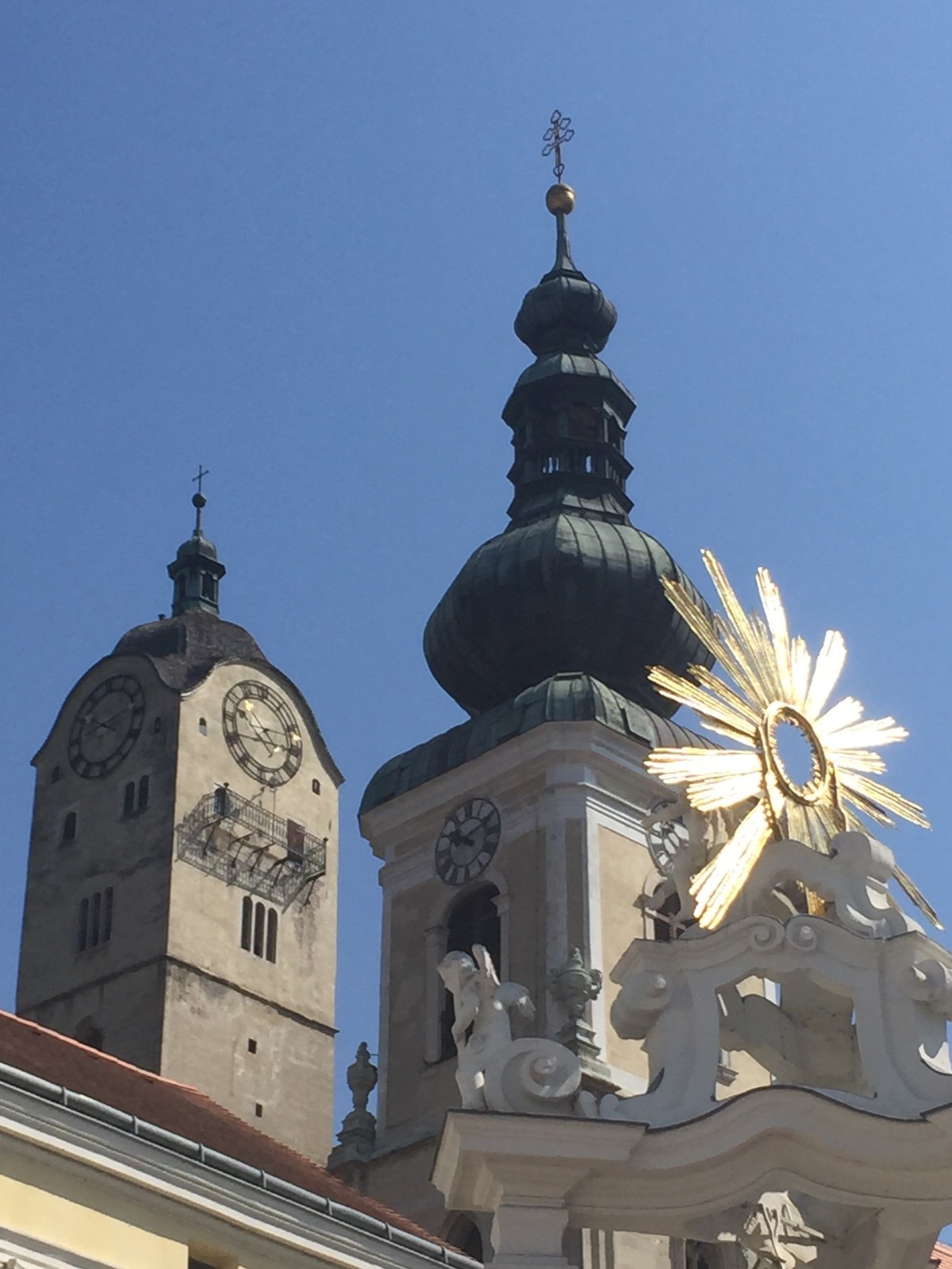
Part of the Rathaus 1452

Located down river at the end of the Wachau Valley, the town of 25,000 inhabitants even today remembers and celebrates ancestors from the Middle Ages and their influence in creating Krems. The town is very long on memory, pride, and tradition including personal dress, food, wine, religion, and music.

In this blog I am primarily sharing photographs. While I can tell stories, the photos speak! They shout of the history and pride that Kremsers feel for their community, their ancestors, their architecture, their food and drink, their traditions…their way of life.

As I enjoy a slice of cinnamon-sweet apple strudel at my favorite outdoor cafe, I pause to listen to the chimes of the Steiner Tor. I hear the commuter trains in the background. I see lovers holding hands and smell roasted coffee which beckons me to sip a caramel latte. I hope you enjoy my reminiscences about Krems and can envision the beauty that makes Krems a wonderful place to feel the past while in the present.

Old Testament scenes etched in 1561

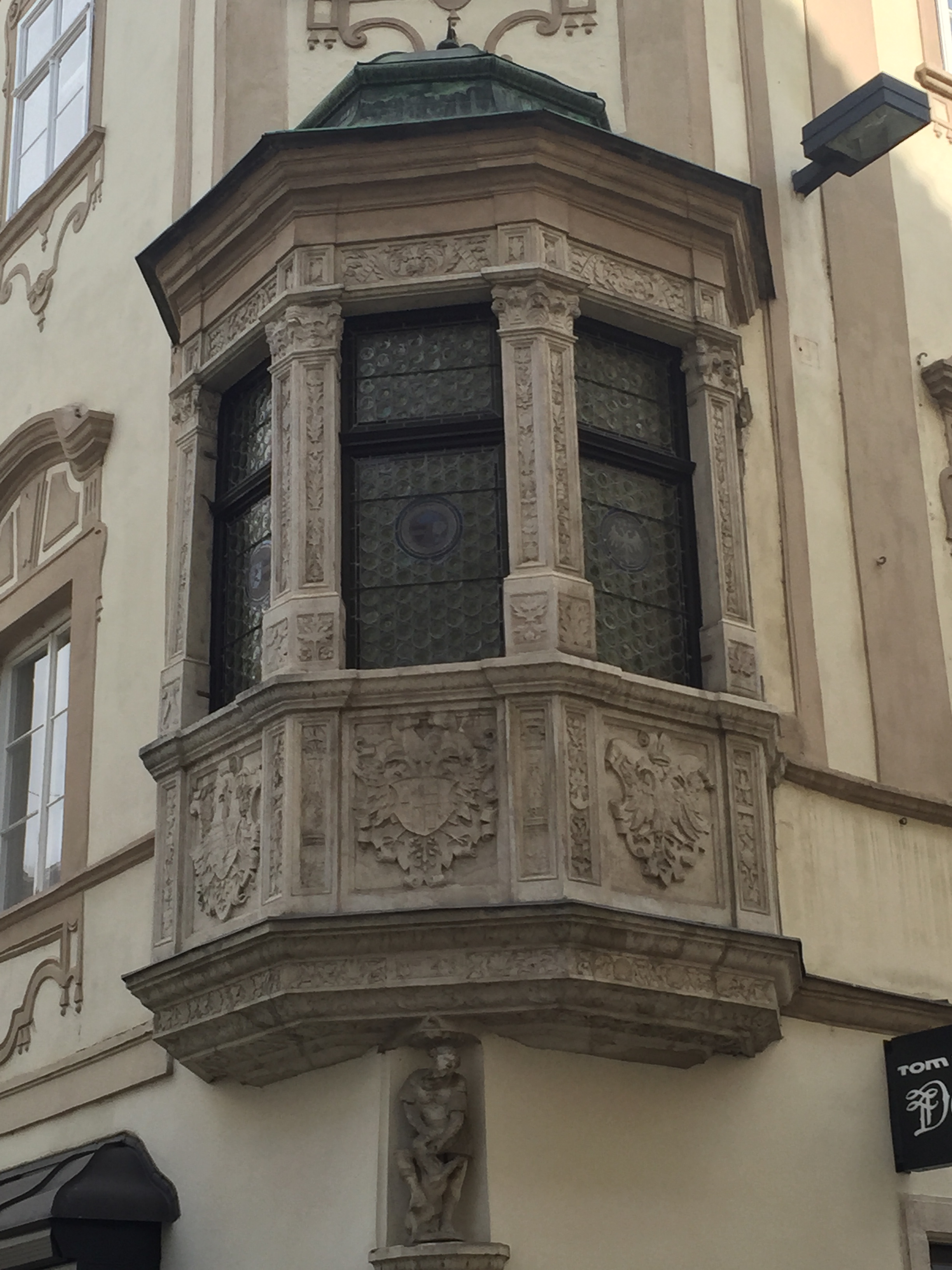
I have deeply absorbed Krems’ preservation. It is there for the taking by Kremsers, me, and future generations. The soul of this community is in, and its voices come from, its landmarks, traditions, and people. So gathered here is my collection of photographs that I have found particularly interesting to these ends as I explain in captions.

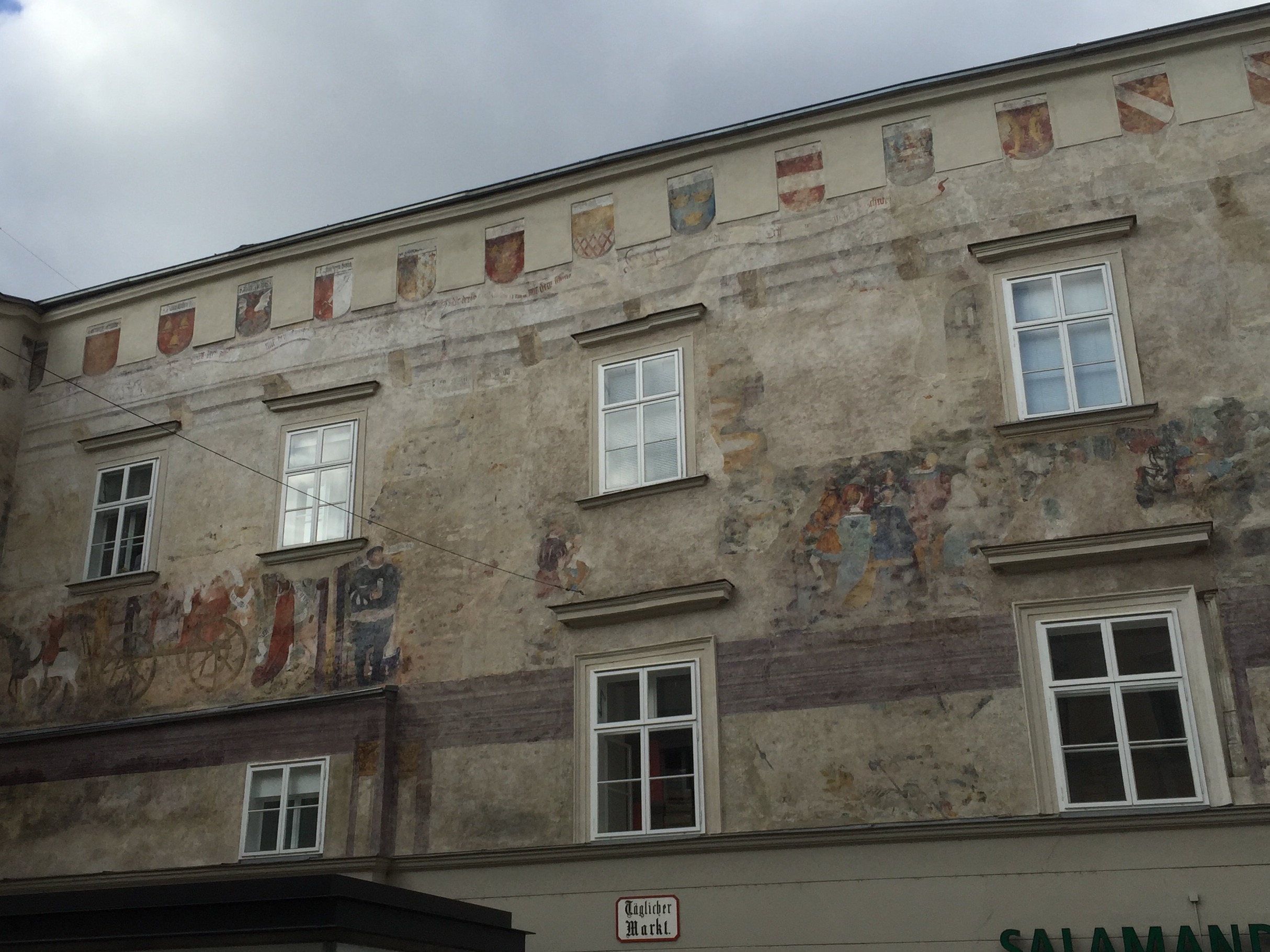
Medieval mural in Krems center
Bell tower in Krems Stein
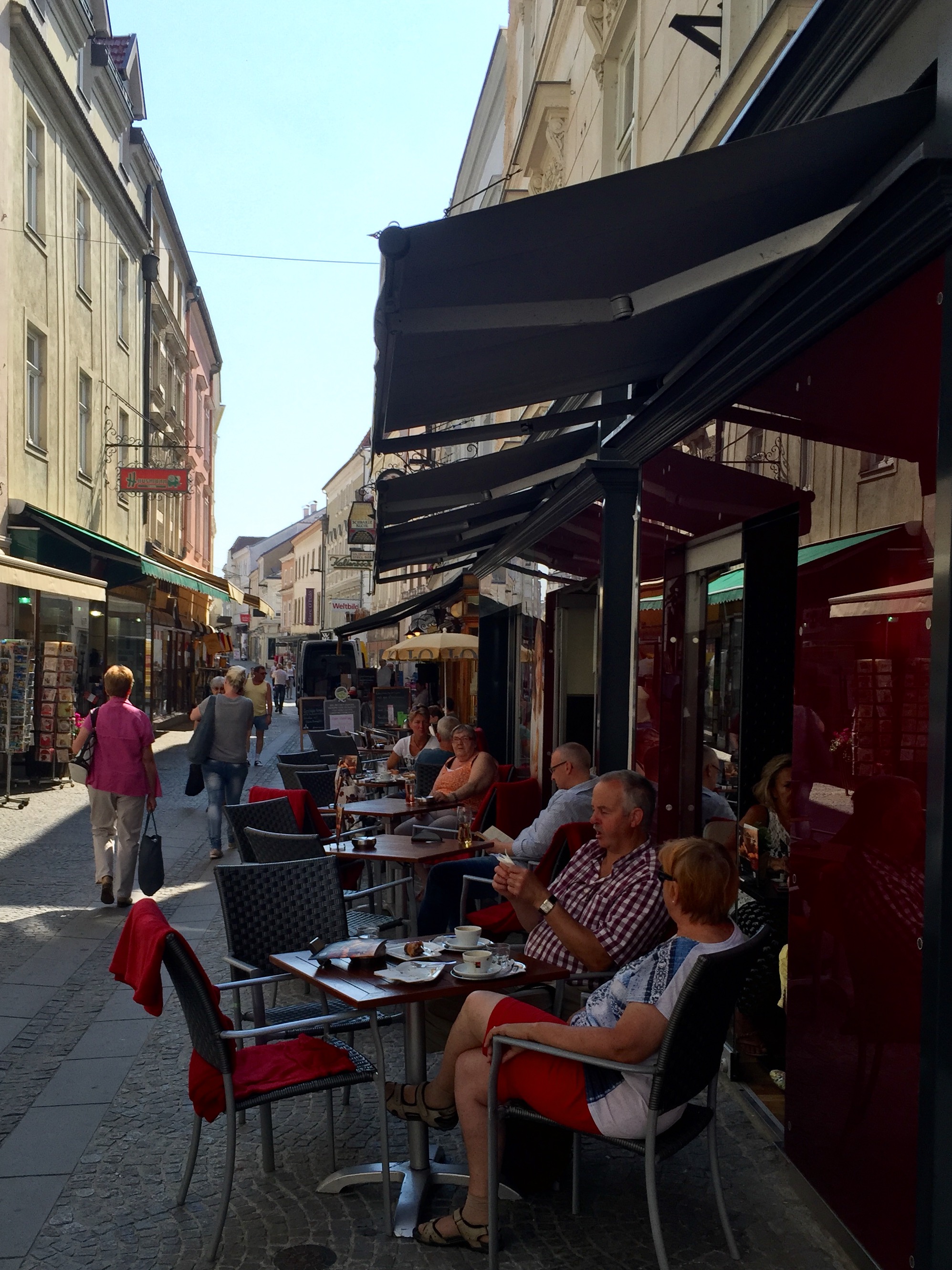
A typical Krems street
A favorite stop for coffee and strudel
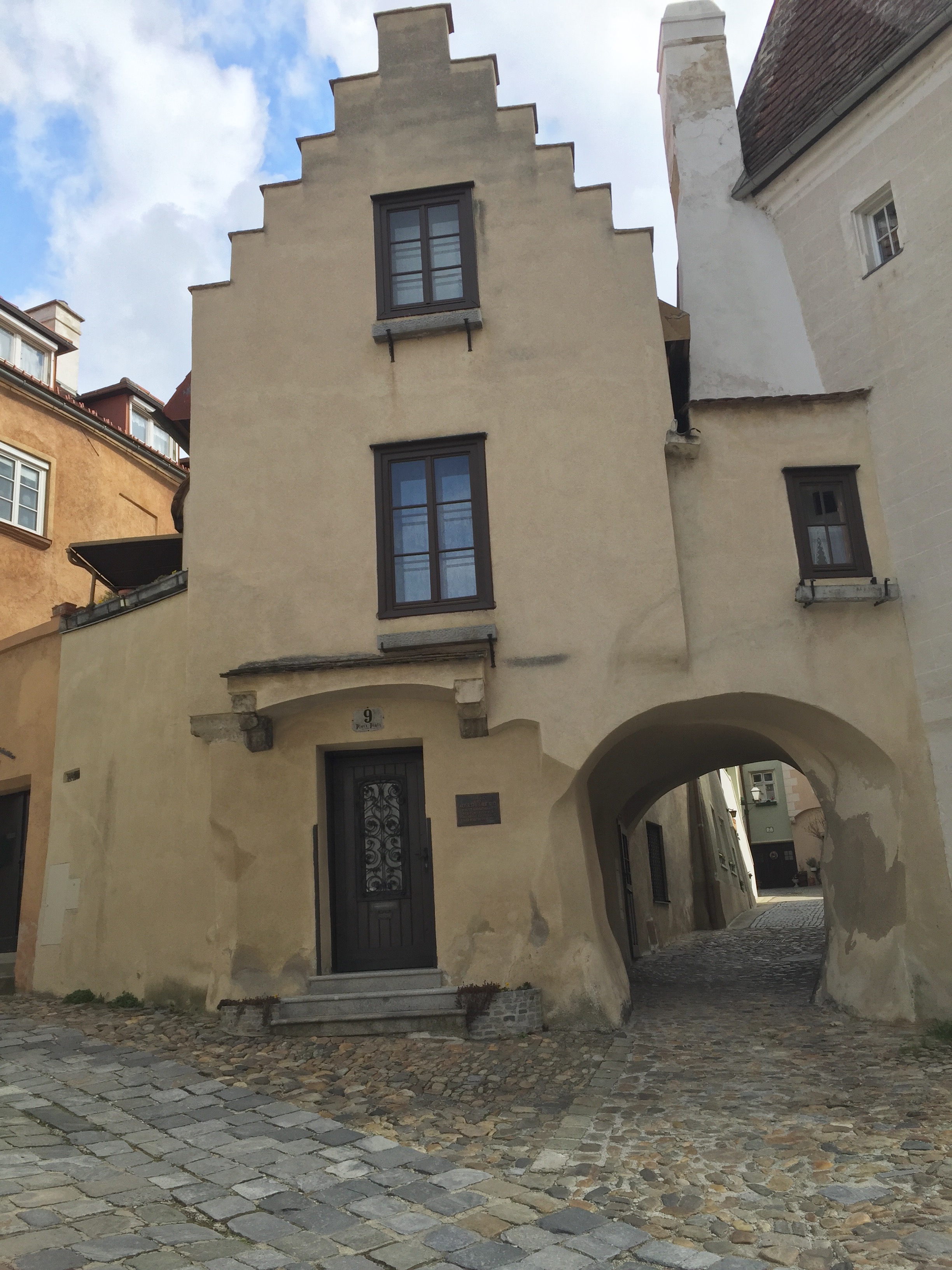
House built in 1210
House built in 1210
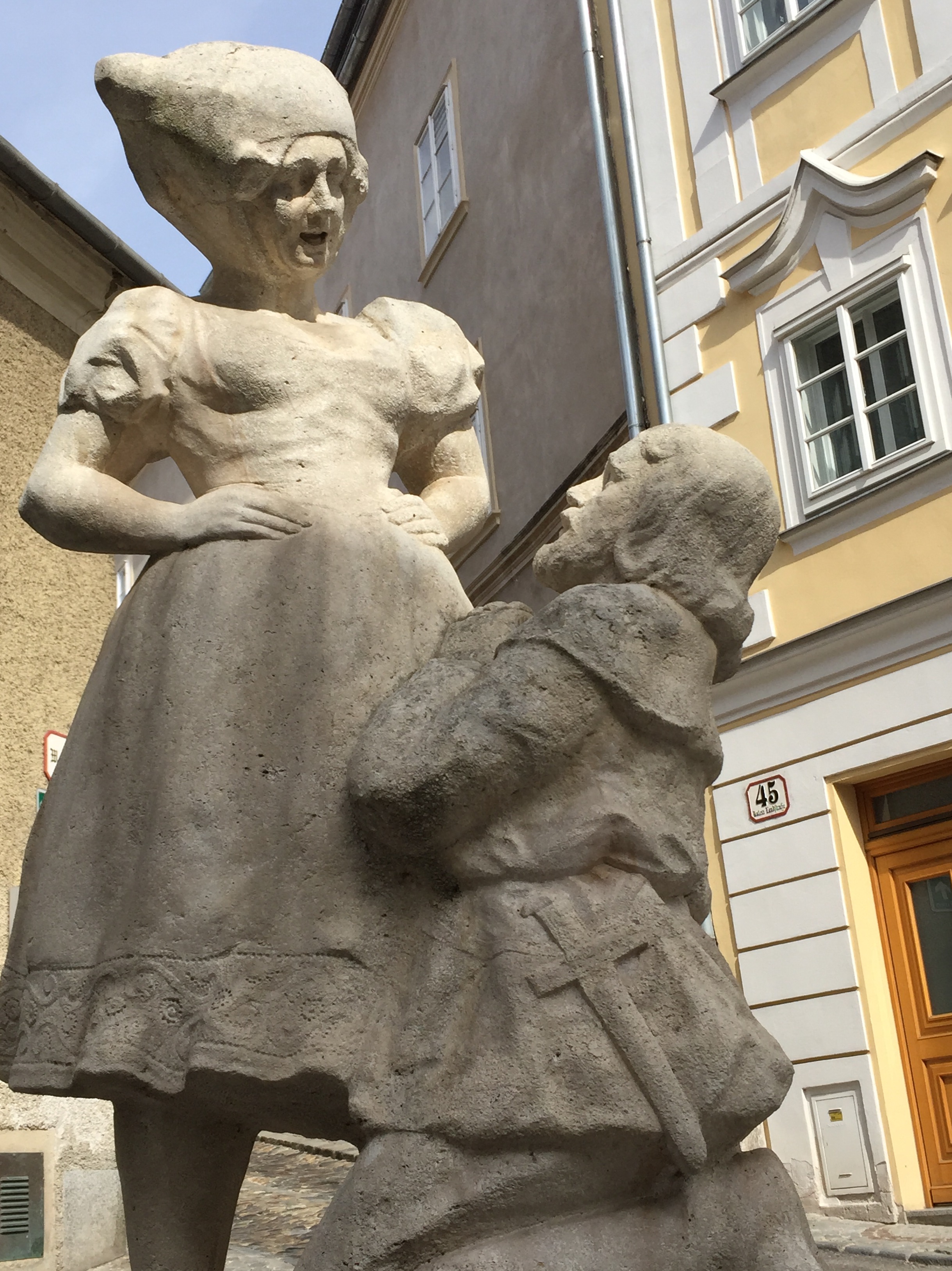
The status Simandl is about the hen-pecked husband begging for the house keys so he can stay out late with the boys
The statue “Simandl” is about the hen-pecked husband begging for the house keys so he can stay out late with the boys
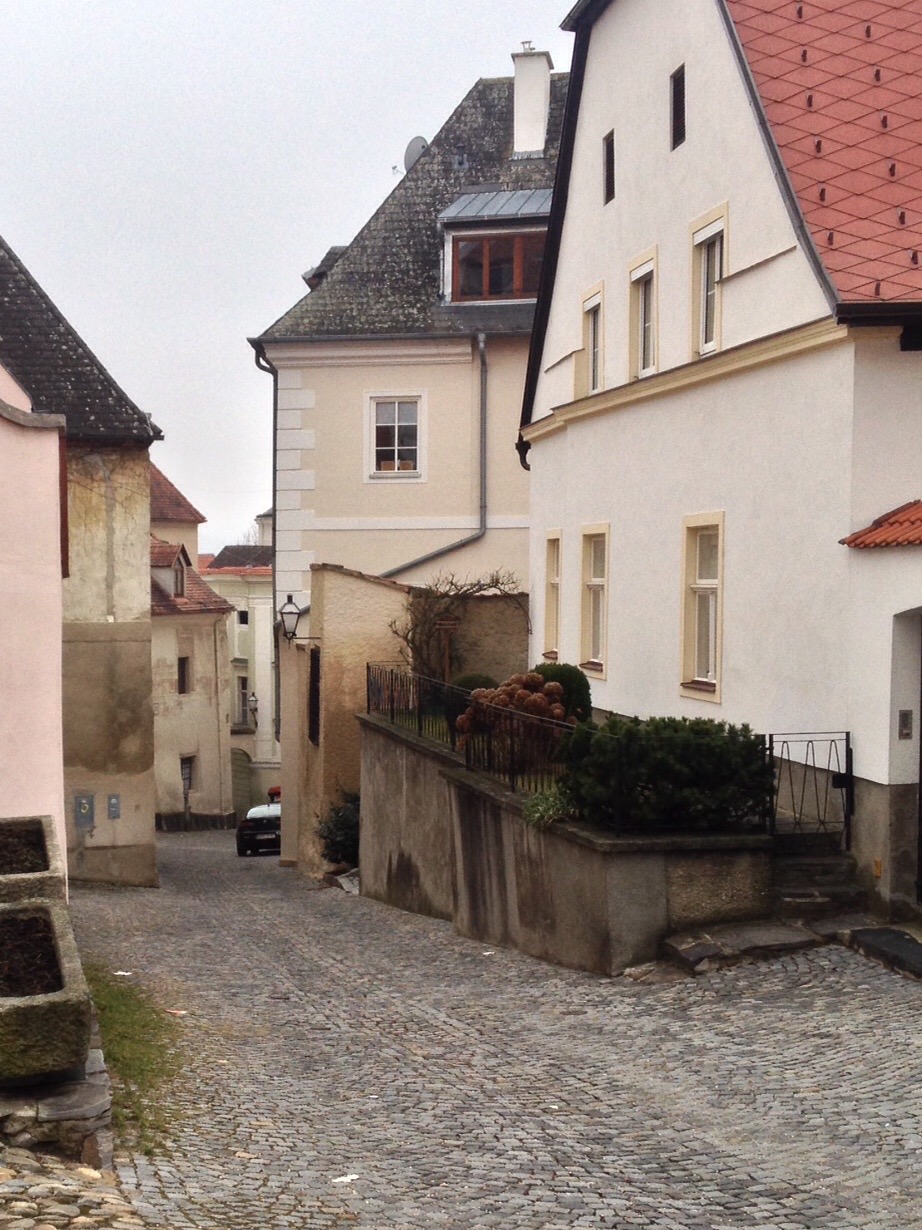
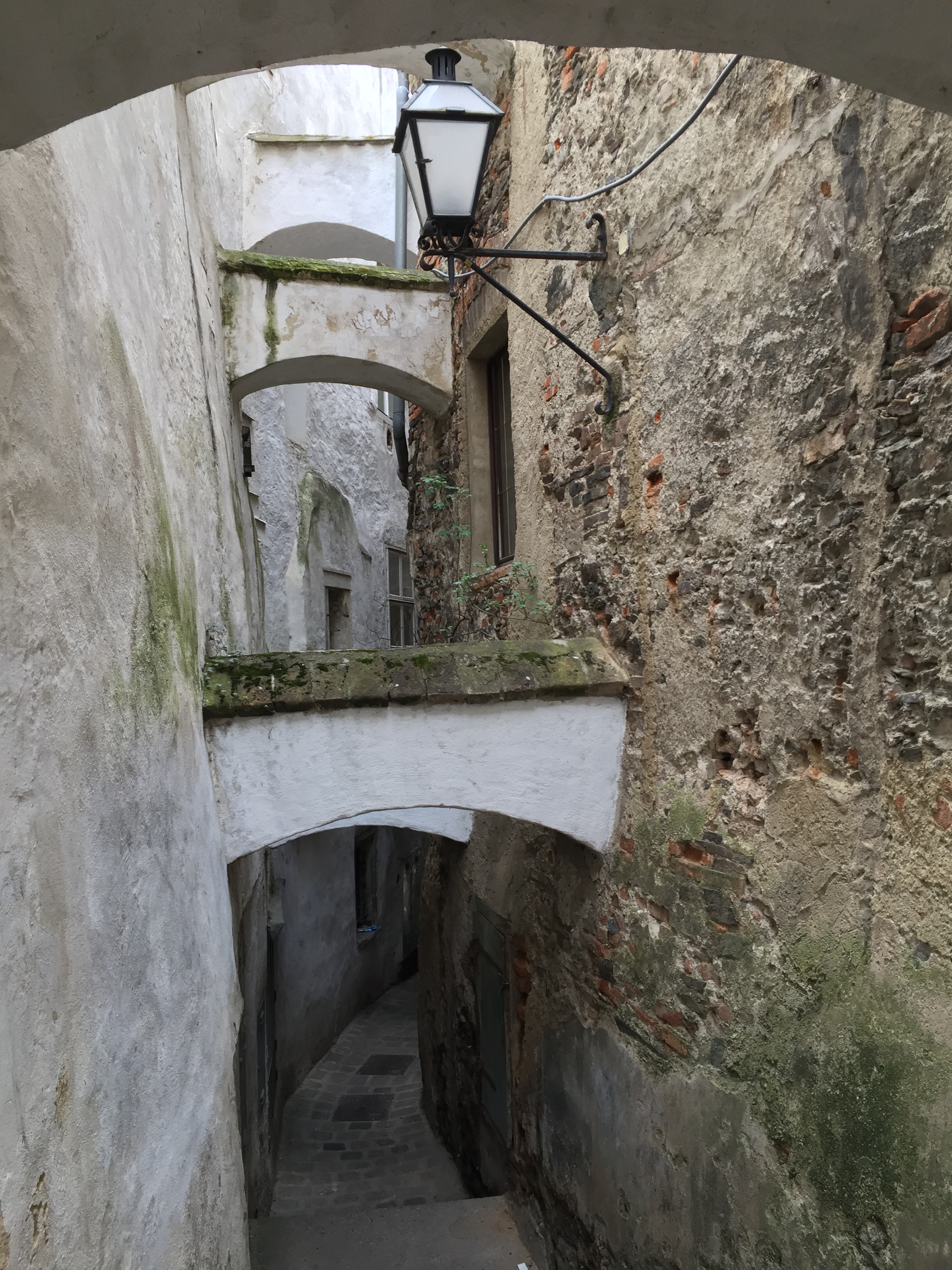
Typical alley in Krems