One Too Many

Sometimes I think of my blog as just a place to ramble on about things that are interesting or curious to me. I write it for myself and if others read it, that’s fine but it isn’t why I create it. This story, however, some of my former DuPont colleagues may find interesting. When I worked for DuPont for 23 years I was within a unique corporate culture where safety was of utmost importance. Knowing that, decisions I make (even today) are influenced by the ingrained safety culture. That makes the following story more understandable while the title may have raised your curiosity.

Vines in the Wachau Valley, Austria

Presently, I am in the heart of Austrian wine country. Just about all of the grapes in the Wachau Valley are Gruner Vetliner which makes a dry white wine. Austrian wine is serious business… right at the pinnacle of national culinary importance just above beer, schnitzel, and strudel. Wine is sacred with two millennia of history and strict attention to growing techniques and quality.

So, here I am in wine country. I think it would be reasonable to have a few glasses of wine now and then. Well, my story is titled “One Too Many” for good reason as I describe my following experience.
Cafe
A very nice cafe

Several weeks ago I decided to travel to Rosenburg, Austria. Rosenberg is a tiny community about 60 kilometers from where I was staying in Melk. I wanted to visit a particular castle there. It was a rather humid, hot day around 37 degrees in Rosenberg. I was thirsty but not for a beer and the cafe next to the train station was open. So, being in wine country I thought that there was a possibility to avoid the popular cold white and get a cold sweet red. I know that sounds sacrilegious for those who know about serving a red cold; you must be cringing. But I have known that some Austrian establishments sell a cold red as an alternative for many like myself.
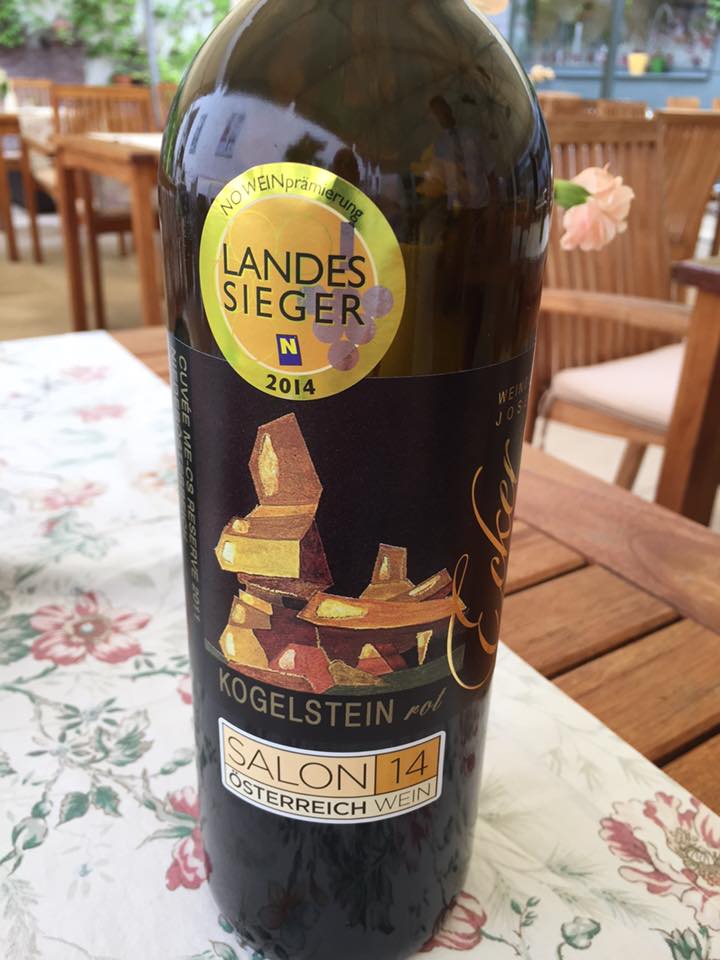
The "Culprit"
The “Culprit”

I enjoyed my robust red wine, paid my bill, and was off to the castle. Even though the castle was right outside on a cliff overlooking the cafe, to get there, one must hike along a highway for about a kilometer and then climb up a sloped hill for about another kilometer. Less than 50 meters into the walk I felt so light-headed that I had to sit on a bench along the highway. Thinking that the situation was ridiculous, I soon got going and could hardly wait to hug the next bench about 50 meters away. I have rarely been drunk but I recognized the feeling!

Fortunately, my DuPont safety awareness kicked in. I ruled out going anywhere near a cliff. Next, I decided to sit for a while… that was really boring! Then I decided that I likely wasn’t going anywhere other than the direction back to the train station, no more than 150 meters. I consciously arrived at the station to find that the next train wasn’t for an hour and forty minutes!

So for the next hour and forty minutes I found myself doing a variety of things. I thought I could walk along the train track to the next train station. Hummm, if a train were to come, there was nowhere for me to escape so I stopped doing that. Then I decided I could take a well-marked hiking trail to the other train station. The trail went over a swaying foot bridge over a rapidly running stream that seemed like Category Five rapids (but really wasn’t). Oh, in case you have never tried it, that’s a bad decision when your stomach is already feeling like you are riding the tilt-a-whirl, so I paused and held onto the swaying bridge for a few moments and went back from where I came and settled in at the train station.
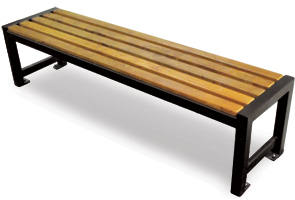
benchI made it to the station once again and I was feeling worse so I sat on a bench. Similar to this photo from the web, the seat was more rustic and made of a series of wood slats of approximately 25 X 50 mm stock with about a 25 mm gap. I sat there and my head began to swirl and throb. Was I going to fall to the ground? Thinking that I might, I put my head toward my knees so that if I were to fall that would shorten the distance (How about that safety thinking?). Fortunately, I didn’t fall but I was beginning to get sick at my stomach (the swirling water on a swaying foot bridge didn’t help) and I was developing a brain-splitting headache. I decided to lay down.
Only OneRecall that the station bench is about 25 mm wide boards followed by a 25 mm gap. Oh, that is medieval-rack-torture uncomfortable to lay on but I stayed there thinking that was best to do. Meanwhile, Johann, a neighbor by the station, must have been amused and came over to check on me. He spoke minimal English and I speak no German (except for a few words) but somehow I understood he was asking if I was okay. About this time I was becoming more cognizant and the spinning and throbbing had ceased. I told him I was okay as he pointed to his house for what I thought was his way of saying “American, if you can’t handle our wine, at least come inside and be safe.”

The train soon came and I made my way back to Melk. I am still here to tell the story of drinking one too many in my adventure. So here is the precious gem in this story. As it turns out on this particular day it was one too many but it was only one! Yes, one too many.
Salzburg: 50 Years After “The Sound of Music”

IMG_1852 (1)
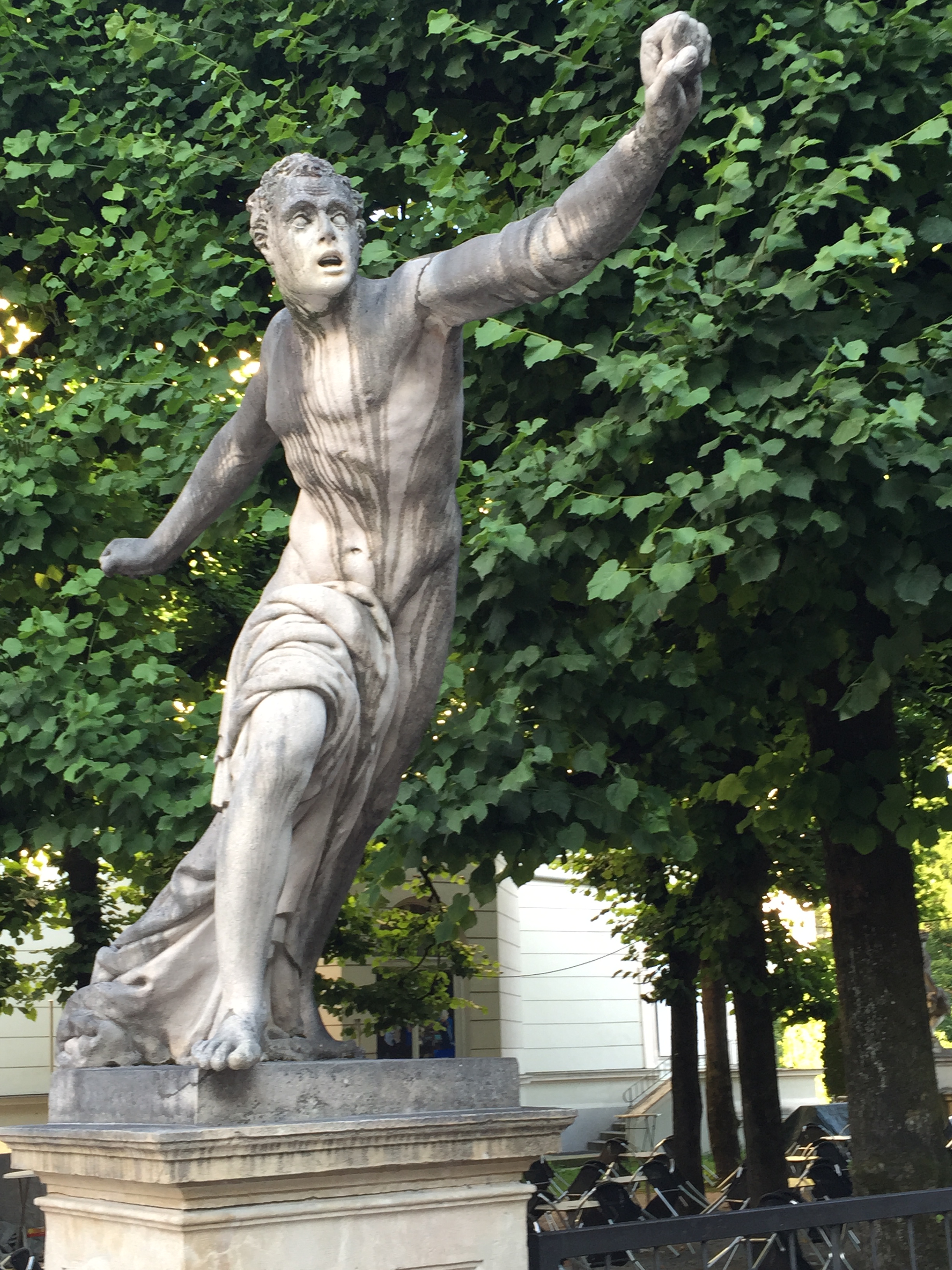
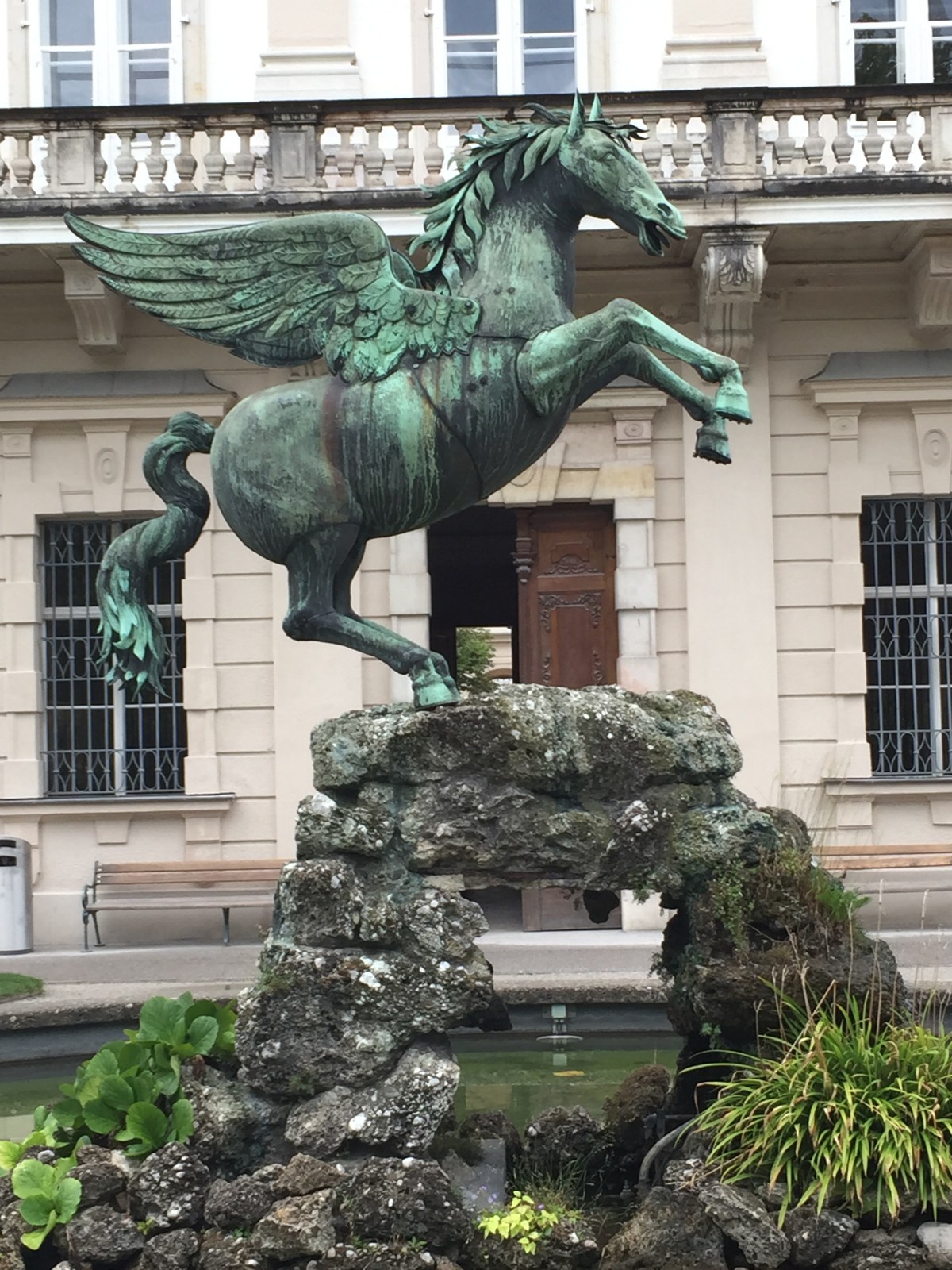
Mirabell Garden Statue (also in The Sound of Music)

Salzburg, Austria is forever etched into our memories as a place of natural and man-made artistic beauty and as a cultural center. The rich history of this city is evident at the turn of every street corner and throughout the nearby lakes and hills. The movie The Sound of Music embraces Salzburg in the late 1930’s. This year we celebrate the 50th anniversary of the film and I have been fortunate to have recently visited Salzburg. In this blog I not only share some thoughts about the movie but also many other things that are evident to me in this vibrant area.

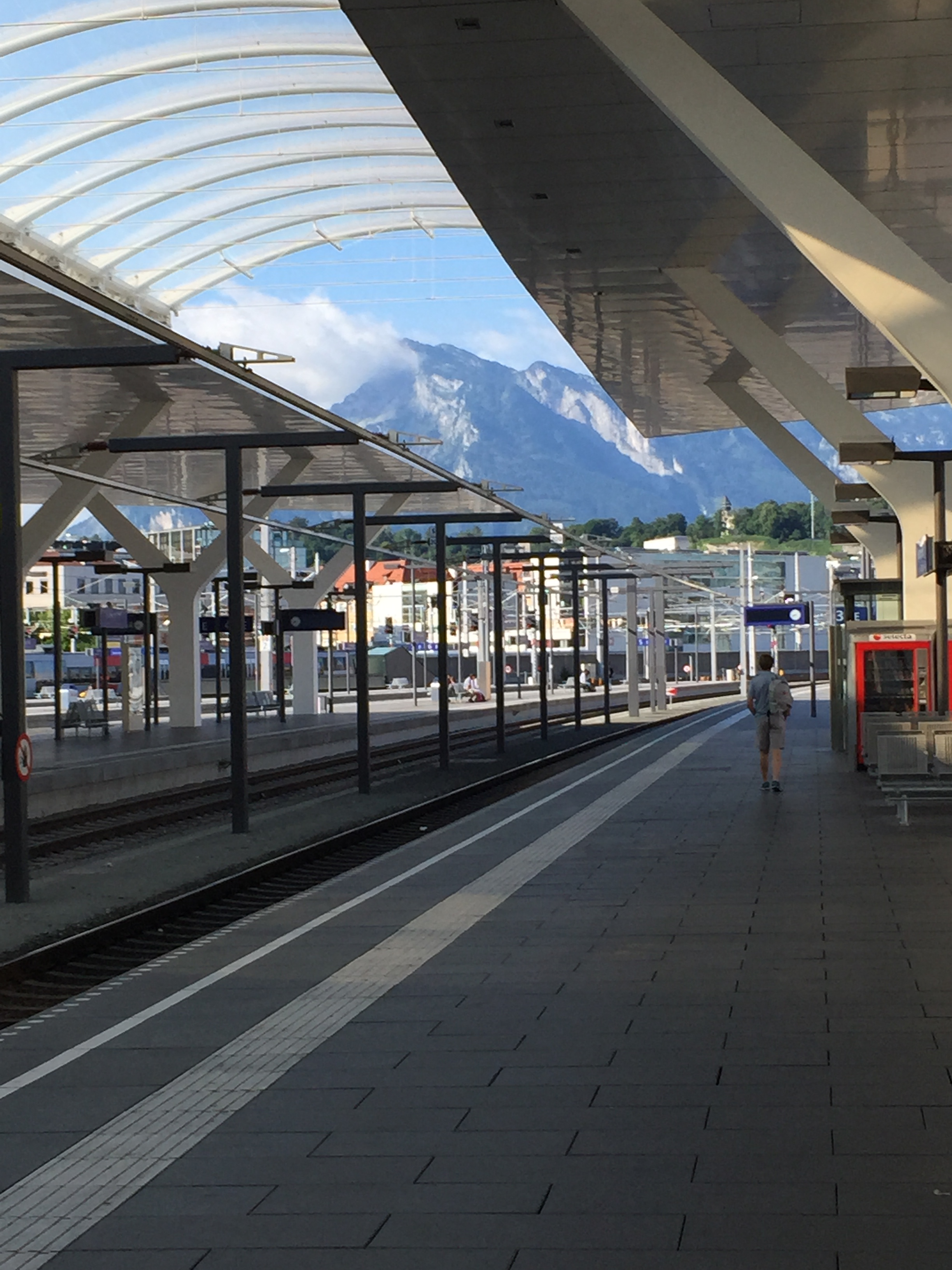
In comparison, much larger ViennaIMG_1853 (1) is majestic and bold but in seeking Austria’s soul, it would be found in Salzburg. On arriving by train, you can immediately look up and sense grandeur in the mountains. Yes, these are the “hills” that Maria sang about in the movie. The hills and the city are alive and in your mind you can hear her singing!

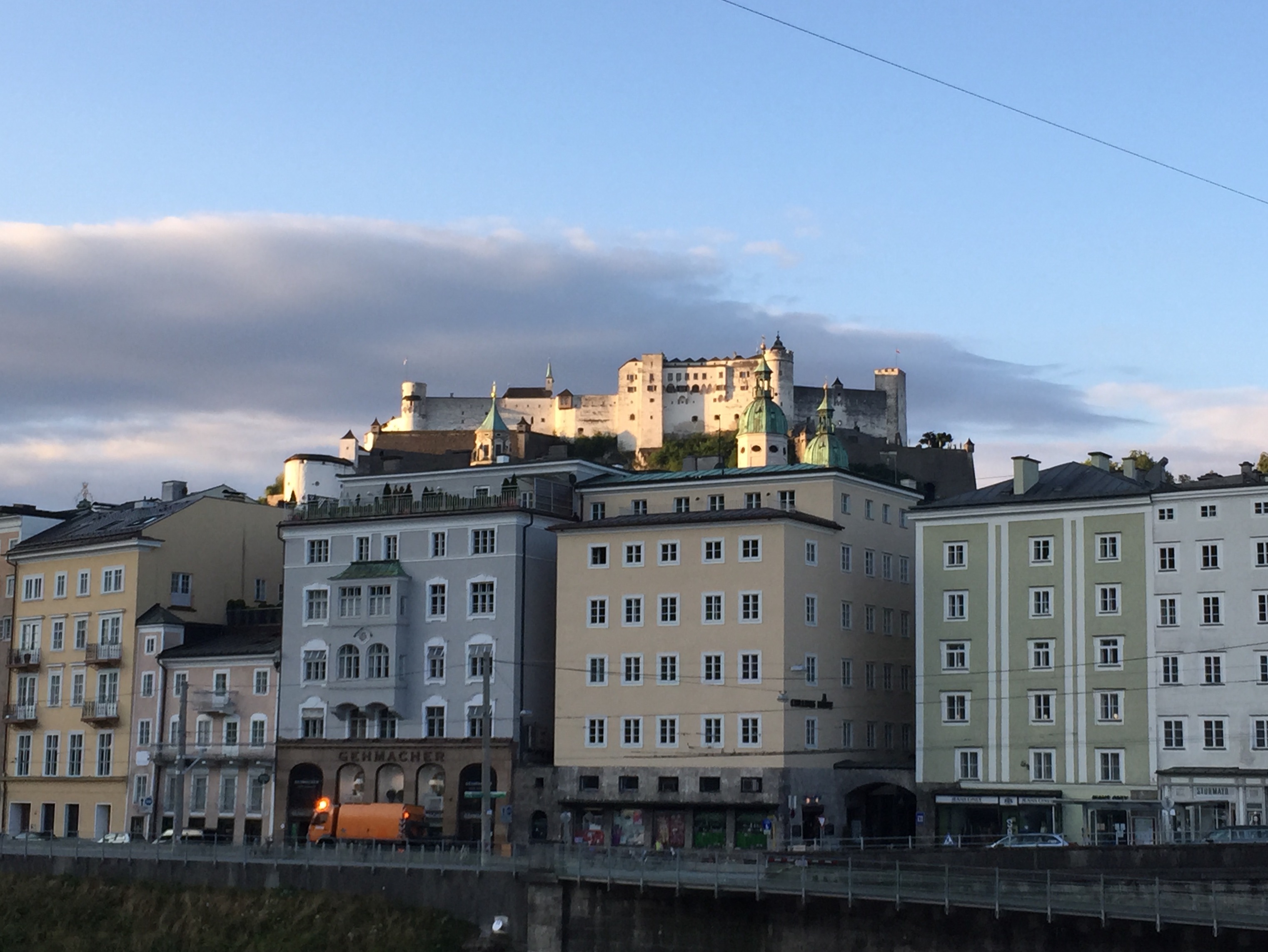
Fortress Hohensalzburg crowns the city

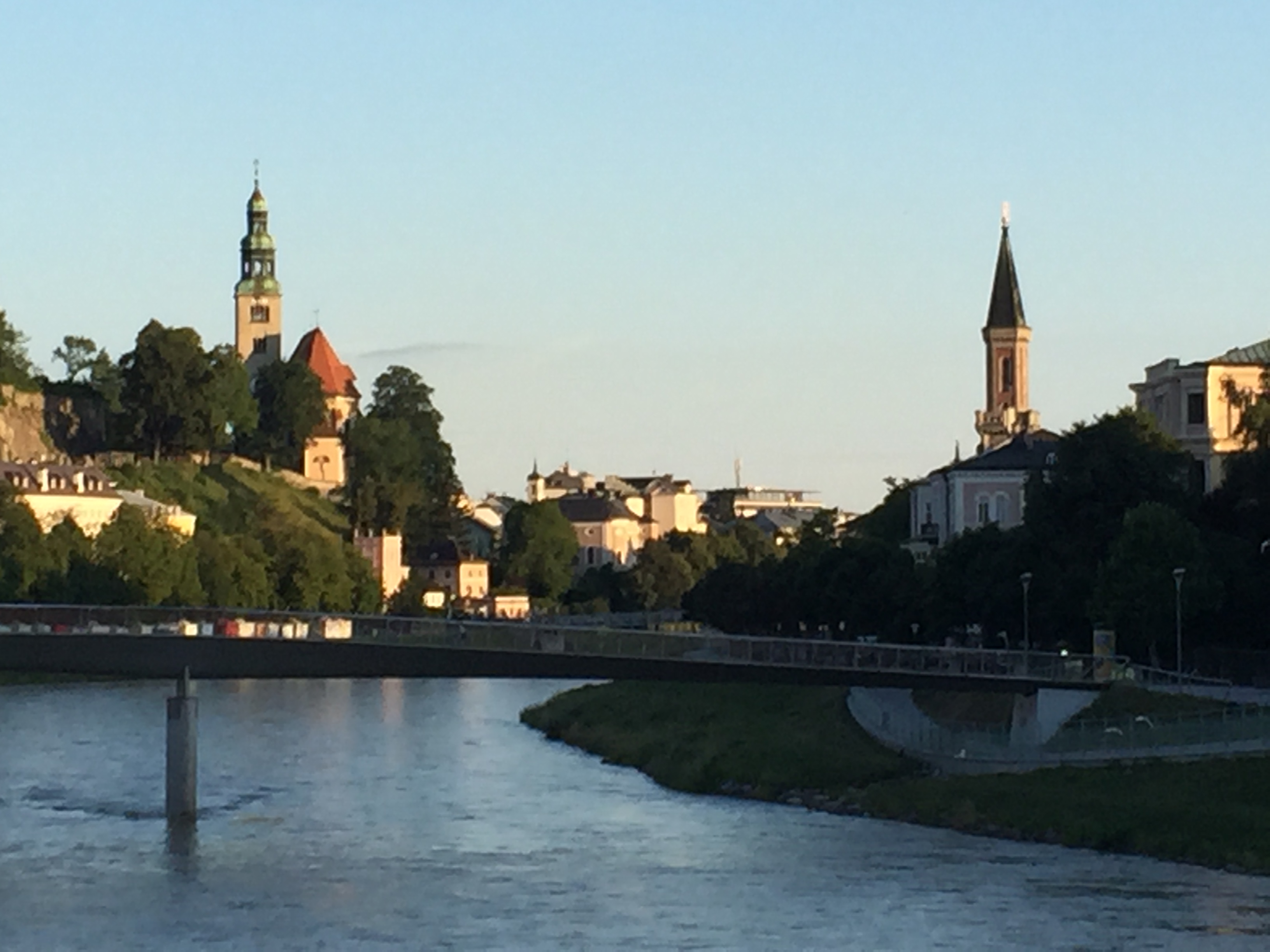
Journeying through the city, one can see boats on the Salzach River, lovers expressing their forever love by attaching their locks to the bridges, Mozart’s birthplace, the Fortress Hohensalzburg crowning “Old Town,” Mirabell Gardens with Pegasus dancing at its center, the Mozart Bridge the children ran across to play, and the small towns of Sankt Gilgen and Monsee on the shores of Lake Wolfgang… everywhere there are visions and sounds from the movie that surge into my memory!

My first visit was to Mirabell Gardens across the street from the hotel. With the Pegasus fountain centrally located, everyone was taking the “perfect” shot not only as reminiscent of the movie but also because it is a beautiful artwork. The garden’s colors just explode and several statues found there are in the movie.

FullSizeRender (42)

IMG_1651

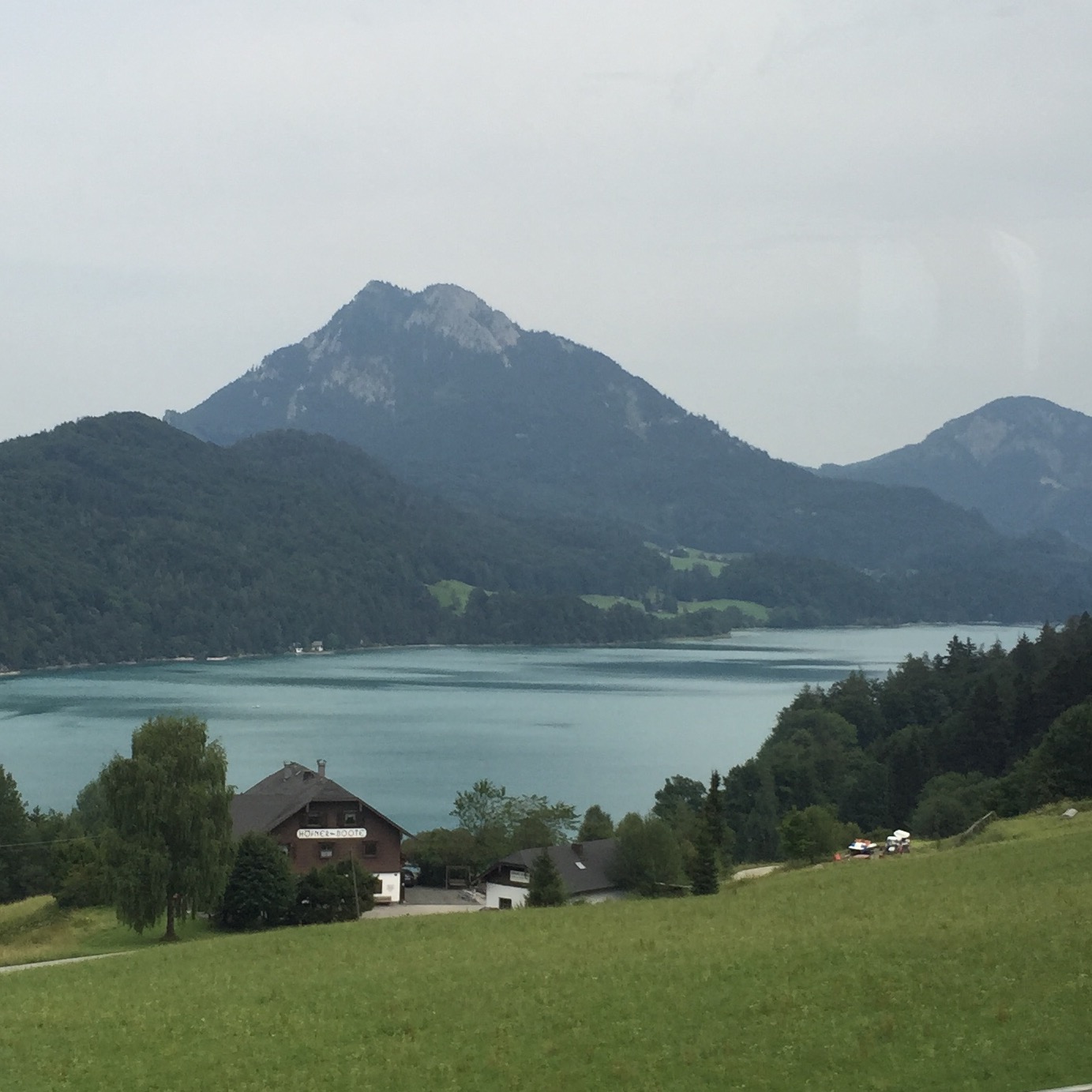
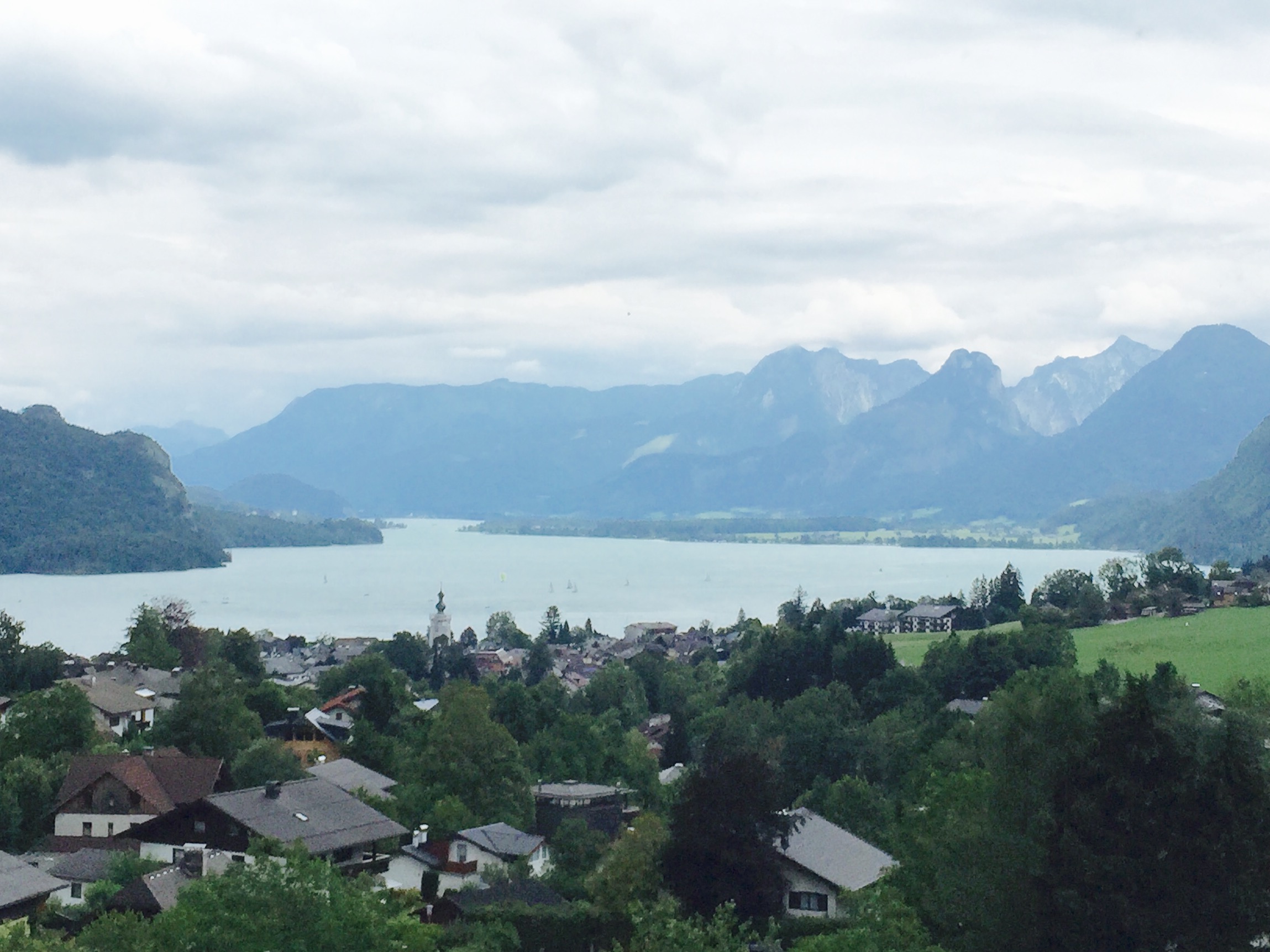
An entire blog could be dedicated to the Mirabell Gardens but I journeyed to the Lake District to see Sankt Gilgen, Sankt Wolfgang, Monsee, and Lakes Fuschl and Wolfgang. Each of these locations were included in The Sound of Music.

People were camping around, sailing on, and swimming in Lake Wolfgang and Lake Fuschl. The mountains around the lakes provide a perfect backdrop for a superb holiday in the region. And who can forget the sweeping images of these places at the beginning of the movie?

FullSizeRender (44)
Lake Fuschl as in the opening scene from The Sound of Music

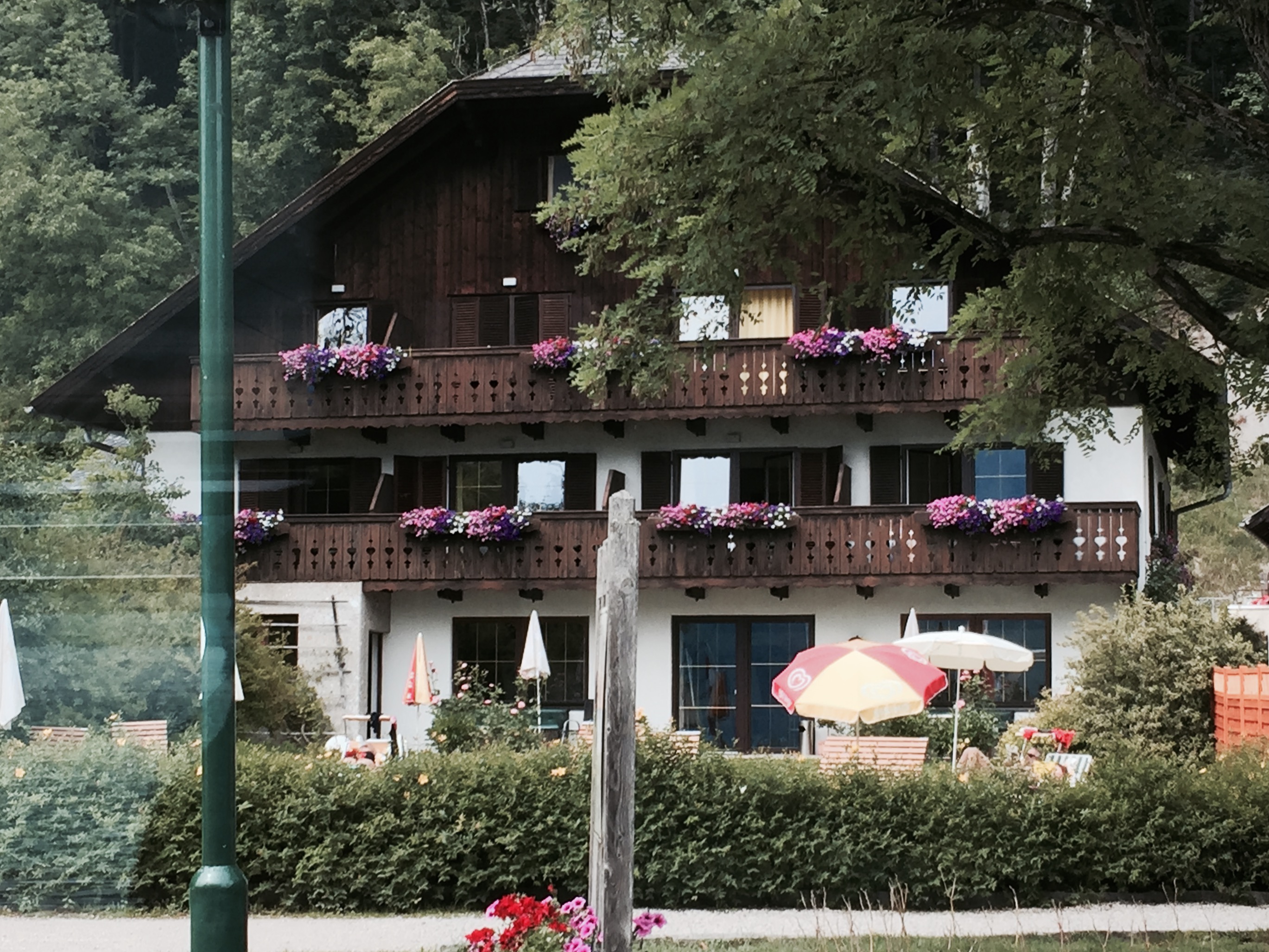
Quaint, traditional buildings in Monsee and Sankt Wolfgang are like time capsules with their large overhanging roofs and decorations of flower boxes attached to the upper levels. Each house has its own large supply of firewood to prepare for heating during the harsh Winters that come to this area. The mountains and the lakes are breathtaking and it is easy to see why these places were chosen for the movie.

FullSizeRender (48)
Traditional House at Sankt Wolfgang

Of course the city and area have so much to offer as they pose for the camera’s eye. I endeavor to keep my blog entries to a reasonable length and know that this one doesn’t adequately recount my memories of this vibrant city, the home to The Sound of Music and Mozart.

Looking Downriver at Sunrise

Salzburg is one place that I highly recommend be included in your travel bucket list. Salzburg is an extravaganza for your soul!

There are so many more places to see from The Sound of Music and I know that these few memories of the city will be just my initial ones as I will return several more times.

FullSizeRender (39)
Sankt Gilgen on Lake Wolfgang as in The Sound of Music
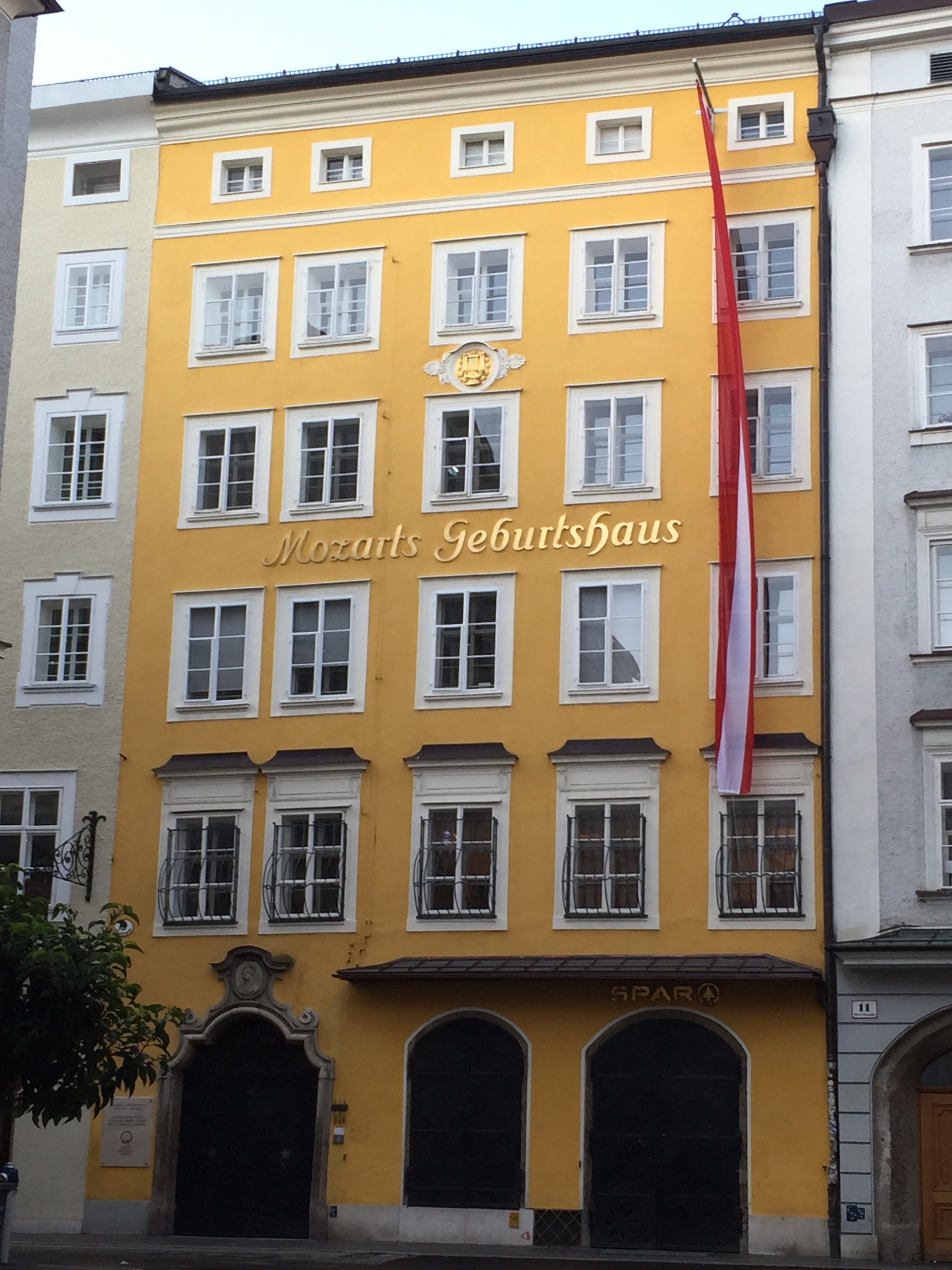
Mozart's Birthplace
Mozart’s Birthplace

I hope you enjoyed sharing in my adventure to Salzburg and that it encourages you to want to come and visit!

My Visit to Hitler’s Kehlsteinhaus “Eagle’s Nest”

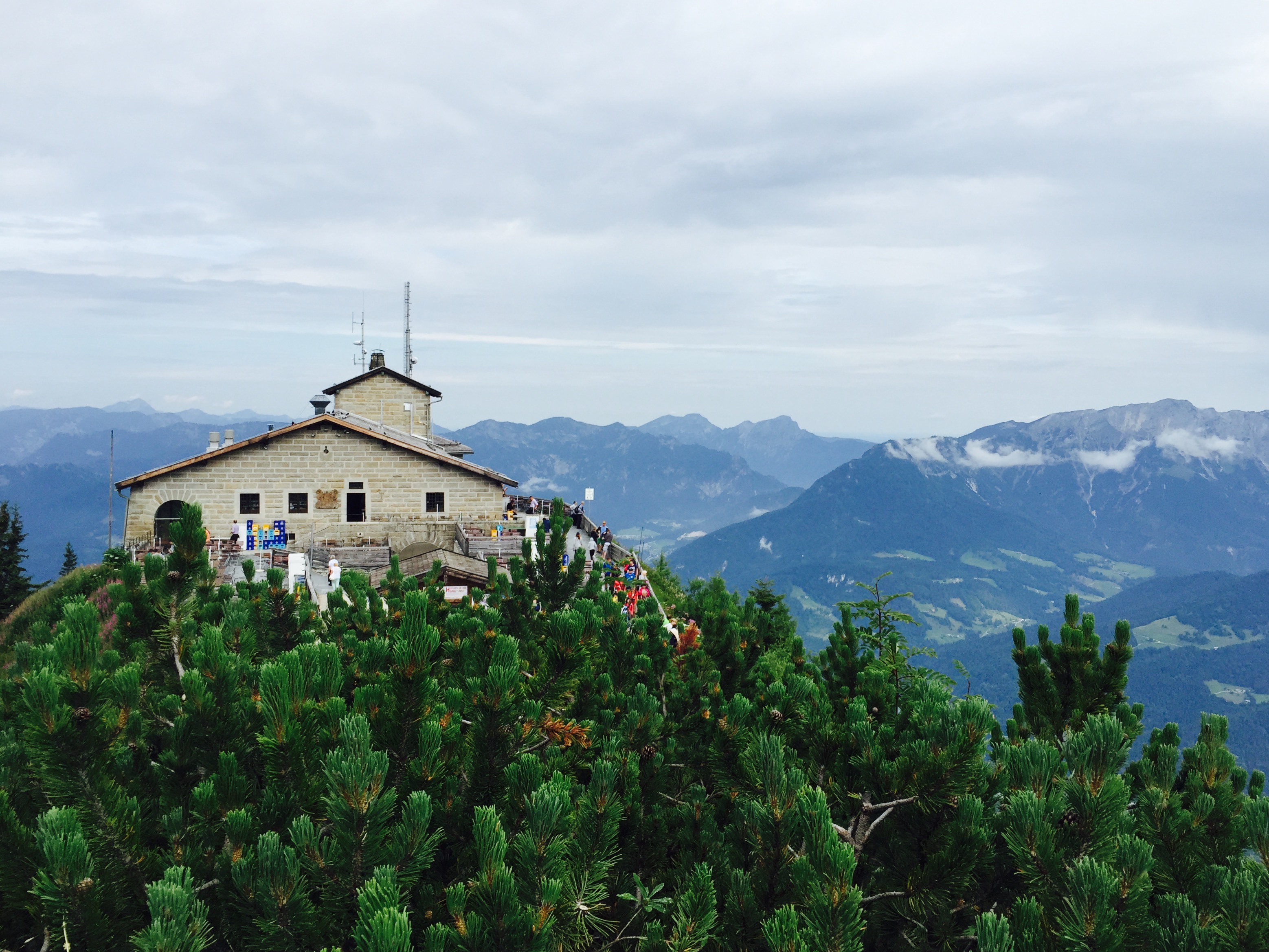
Eagle's Nest from Outside
Kehlsteinhaus from the Outside

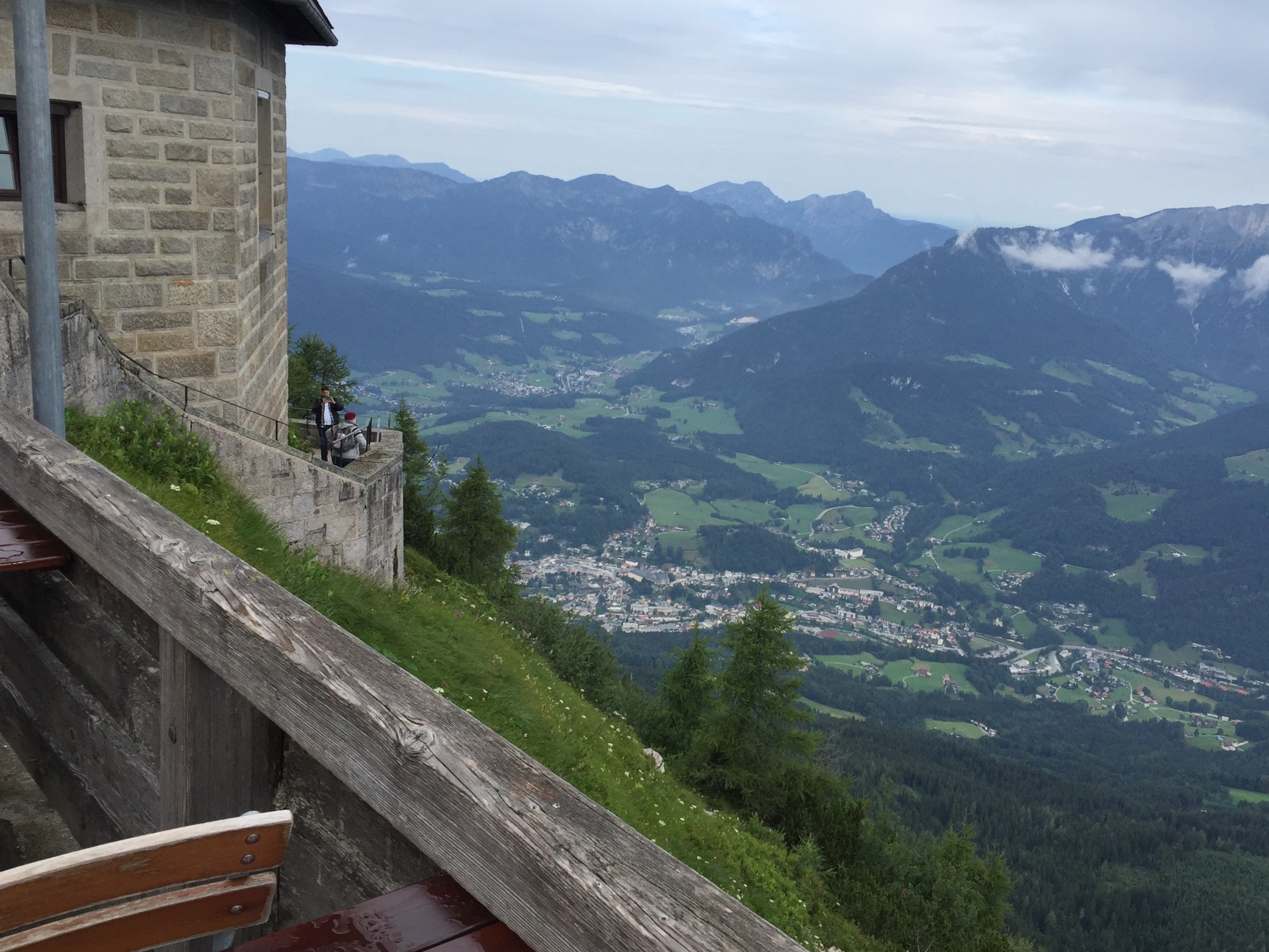
Last week I traveled to Salzburg, Austria because I had heard so much about its beauty, artistic value and historic significance. One of the historic places I am attracted to is Hitler’s “Kehlsteinhaus” (a.k.a “Eagle’s Nest” by English-speaking people) overlooking Berchtesgaden, Germany in the Bavarian Alps.

FullSizeRender (27)
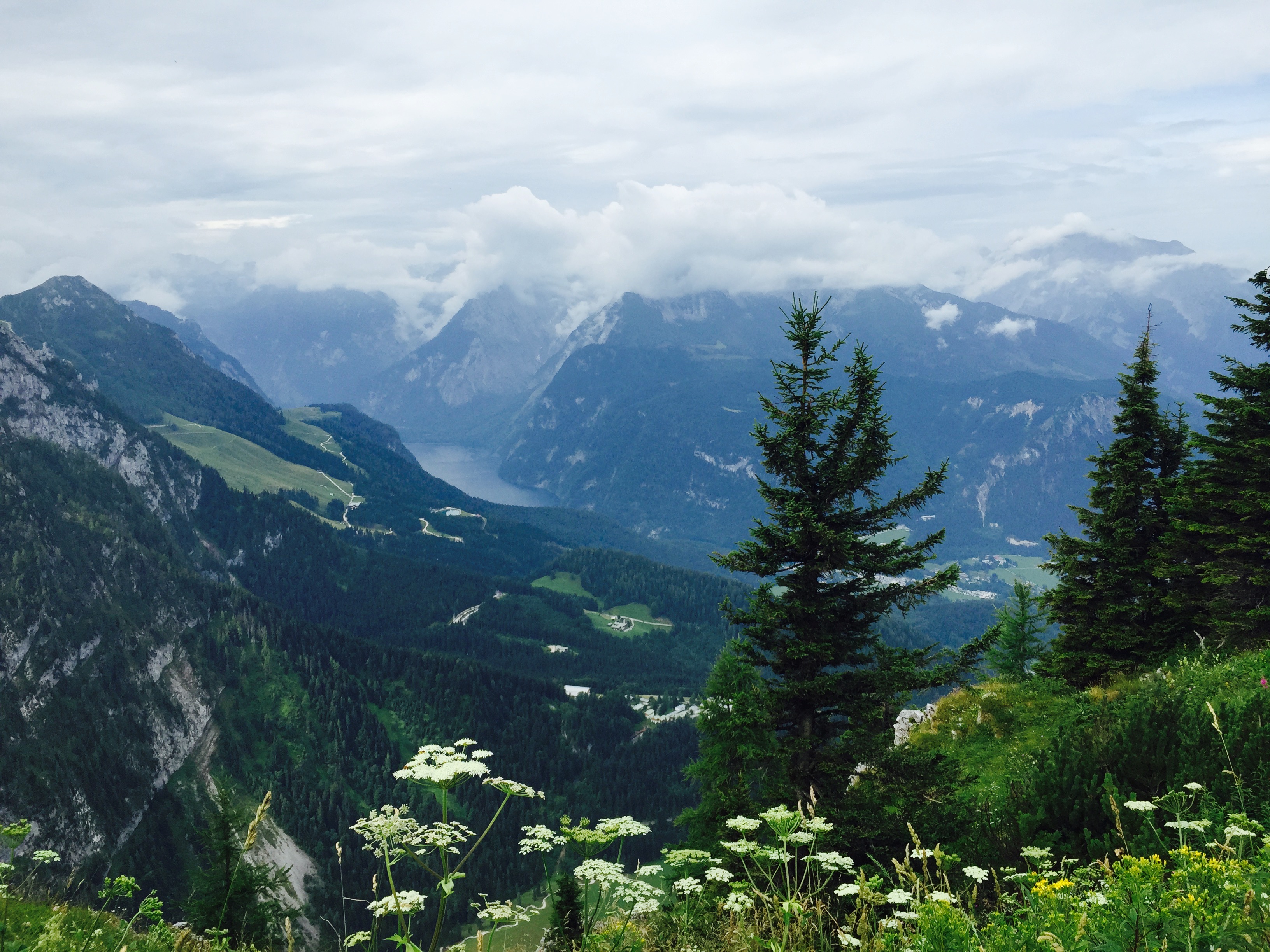
View from Eva Braun’s Tea Room where she entertained diplomatic spouses

Kehlsteinhaus was intended to be a diplomatic reception place for dignitaries and general planning. In 1938 the NAZI Party paid for constructing Eagle’s Nest as a present for Adolph Hitler for his 50th birthday. It is a bit odd to give Hitler such a present because he was afraid of heights and at over 1800 meters above sea level, Eagles Nest is at a significant height with astonishing views. Supposedly, Hitler used Kehlsteinhaus less than 15 times and usually for very brief periods less than an hour. Other than for the guards, there are no sleeping accommodations. There was then a full service kitchen as there is today. Now, Eagle’s Nest is primarily a tourist attraction with spectacular views, a magnet for history buffs, and a restaurant that is open except in Winter.

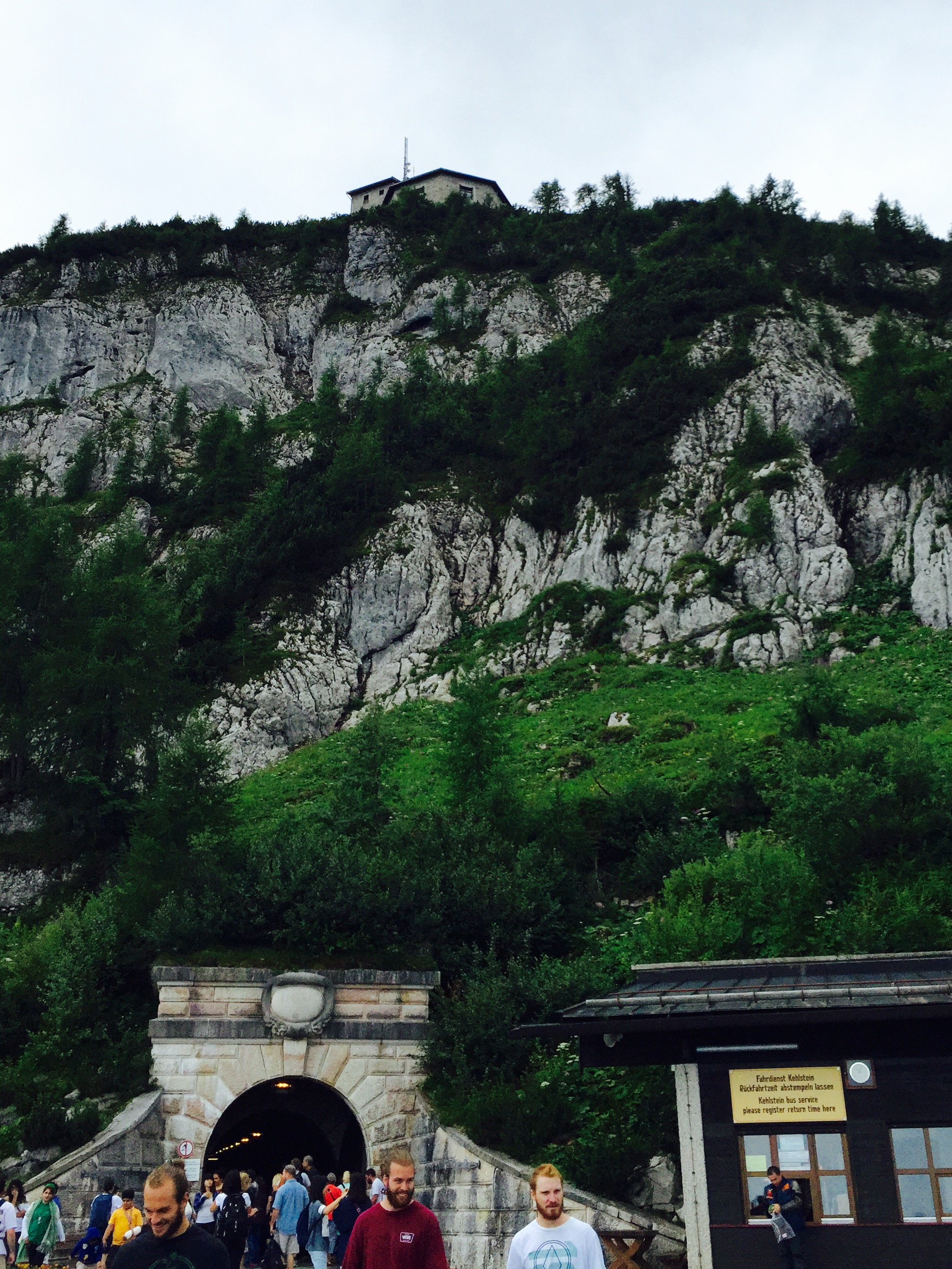
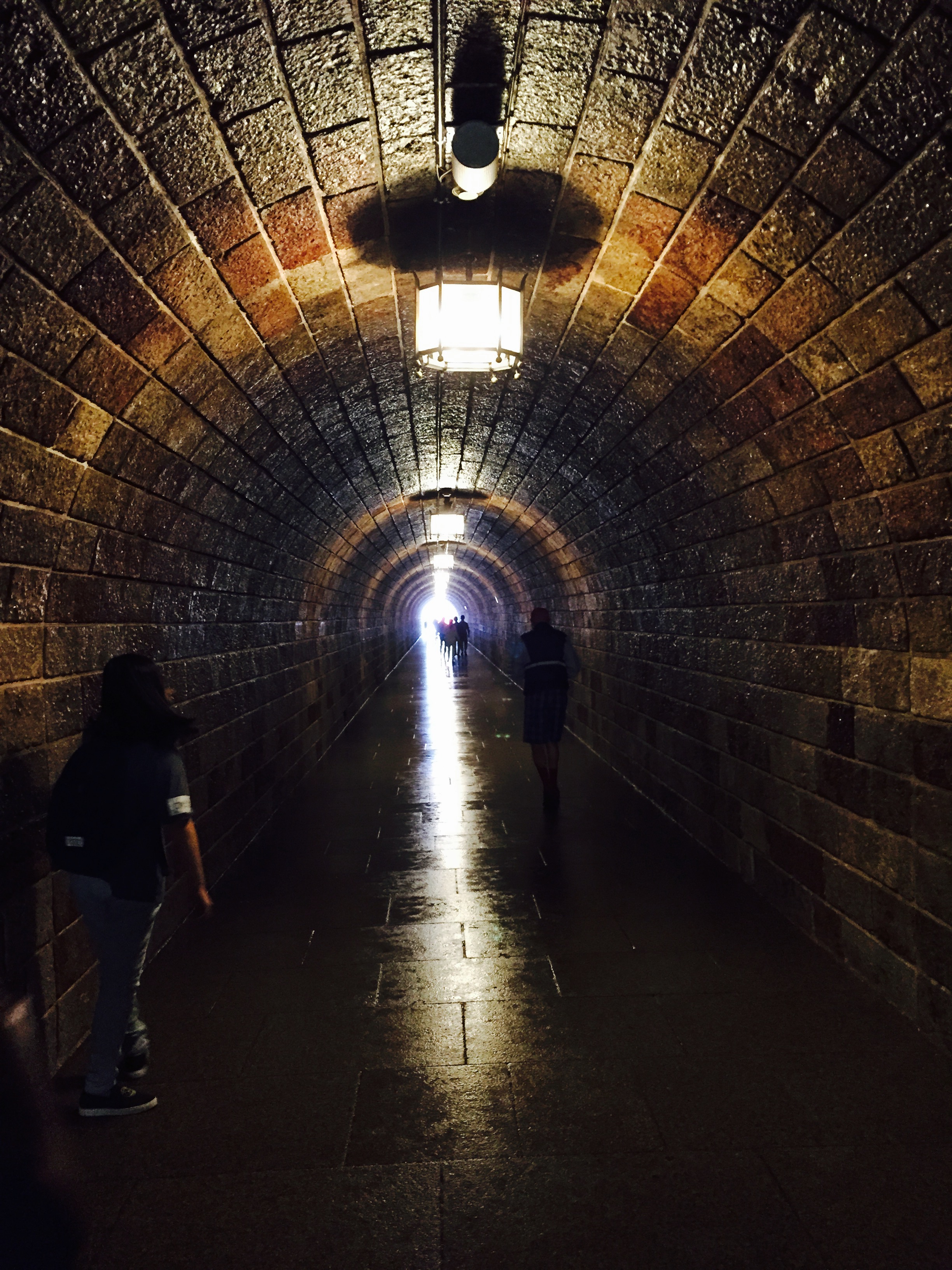
Tunnel access to the elevator to go up into Eagle's Nest
Tunnel access to the elevator to go up into Eagle’s Nest from the upper parking lot

Access to Eagles Nest from the lower parking lot is by bus to the upper lot and then through a tunnel to get to the elevator for the final 124 meters. Constructing the building and creating access to get to it was a substantial achievement. And the stone work done by Italian masons for the building and tunnel is exceptional. The single lane road to the upper lot is up to 26 degrees which is really steep (I seem to recall that the original section of the Pennsylvania Turnpike is no more than 4 degrees). Each bus goes up or down in a group because the road is only 4 meters wide and the drop off is sheer. Given Hitler’s concern with heights, this narrow road with five tunnels and a switch back must have been problematic for him.

Looking to the outside through the elevator tunnel

I found it interesting to have an elevator to get into the building. The access tunnel from the upper lot is wide enough for a car and when Hitler came, the driver took the car directly into the tunnel to the elevator, backed out after Hitler got out, and then backed in to be ready when Hitler was to depart. Hitler also was apparently claustrophobic so the walls in the elevator are polished brass that makes a mirror effect that the elevator inside is much larger than it really is. The elevator moves quickly and traverses the final 124 meters in 46 seconds.

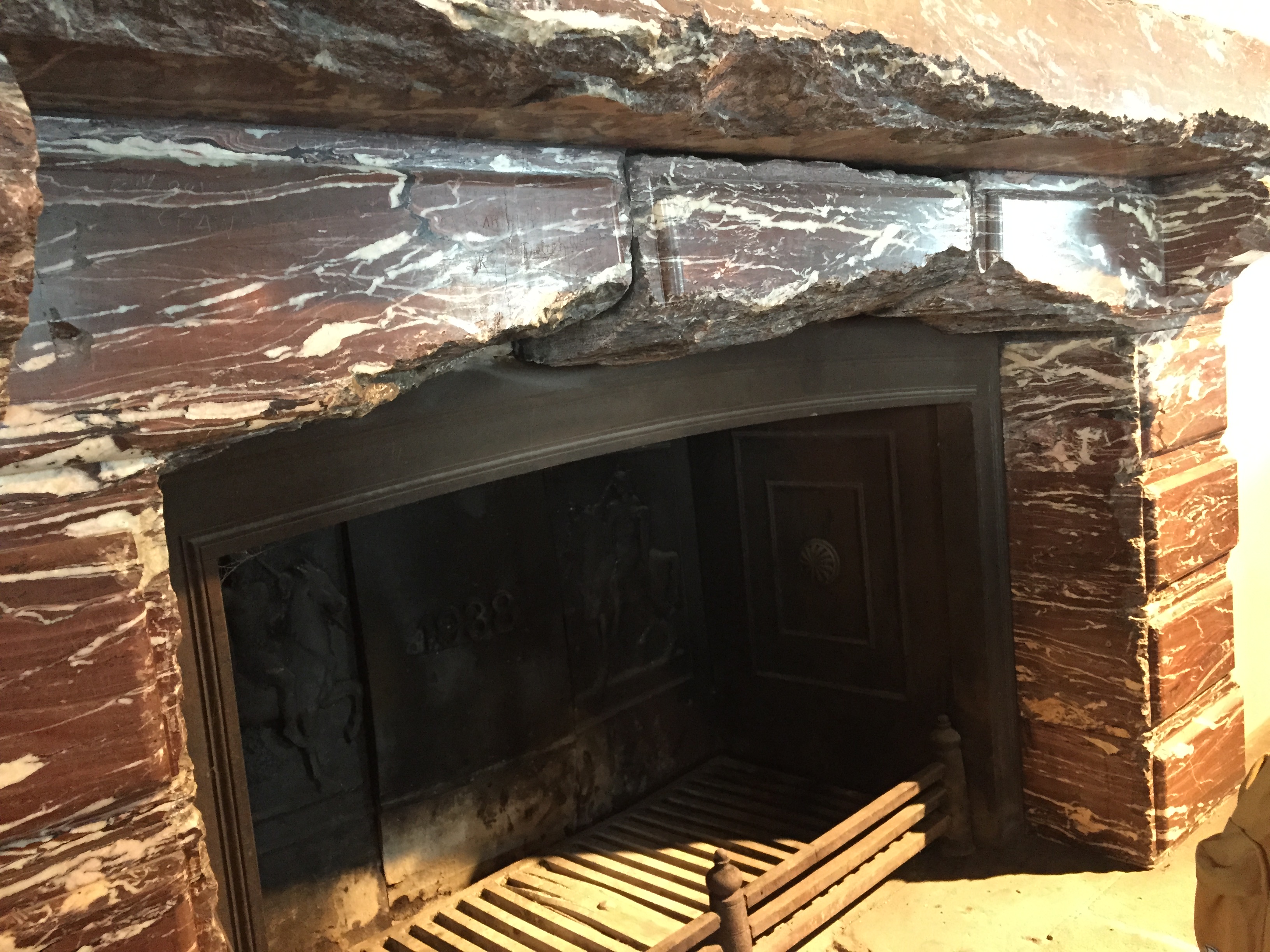
The fireplace given by Mussolini is at the head of the conference room, today a restaurant

In today’s restaurant you can see the fine Italian marble fireplace which was given by Italian dictator (and Hitler’s ally), Benito Mussolini. The restaurant formerly was the main conference room. The large fireplace has been severely damaged by American soldiers smashing off pieces as war souvenirs and etching names and graffiti into the stone. The damage is evident in the photo.

Damaged Marble Fireplace

Which military unit was first to reach Eagle’s Nest? Contrary to the movie “Band of Brothers” in which the U.S. 101st Airborne “Screaming Eagles” were first to arrive, it is not precisely known but it is believed that on 4 May 1945 that the U.S. 7th Army, the U.S. 101st Airborne, and the French 2nd Armored all seem to have been there.

A view from Outside
A view from Outside

Recently I found out that PFC Benedict Vinzani, Senior’s (from my hometown and parent of two of my Facebook friends) final duty station during World War II was in Salzburg. He was a member of 33rd Armored which is recorded to have been part of the 101st. It is unknown if he went to Eagle’s Nest but he served in the area as a member of the “Greatest Generation.” I think it is important that we remember those who contributed to Hitler losing the war and how different the world would be had that generation not risen to the need and challenges. I am forever grateful for them.

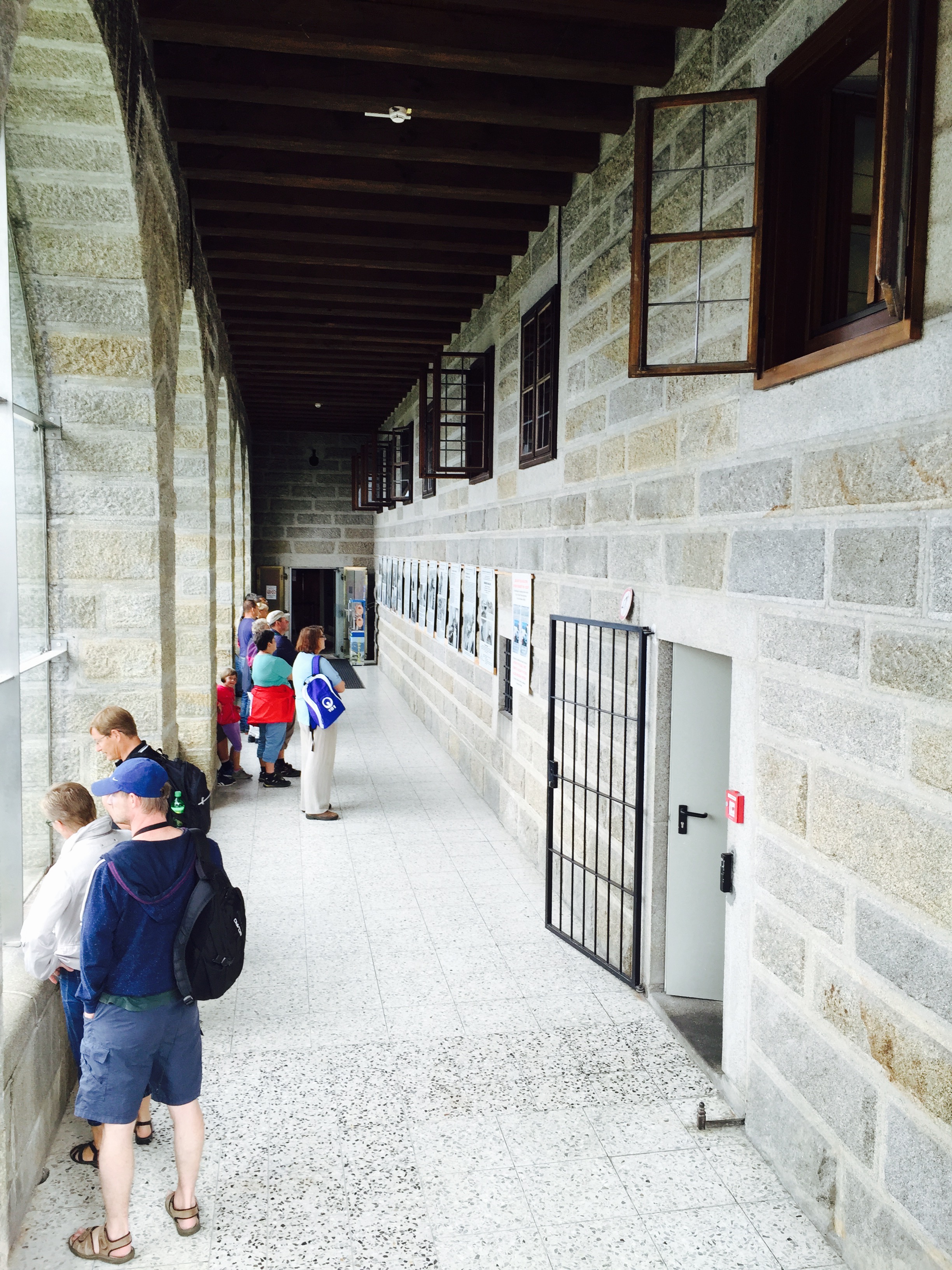
Inside view on a walkway

Today, Kehlsteinhaus it is operated by the Bavarian German State and revenue generated in excess of operating expenses is given to charity.  Last year more than 300,000 people visited Eagle’s Nest. Hitler was an awful, evil, cruel man. I am pleased that charity is benefiting from a remnant of that time. Eagle’s Nest could have been obliterated in the final days of the war but it was spared and I hope that it remains as a reminder of lessons from a very tragic time in history

Are You “Regular?”

Okay, everyone… I am sure this is a topic that few blog about and I do understand the very personal nature of the subject. I will endeavor to keep this blog story at an appropriate level of discretion.

I am certain that many of you recall TV commercials in our youth about Ex-Lax,  the likely parental discussion we had as children about what it meant to be “regular,” and the specific purpose of a laxative. I recall my dad putting it into terms that I would readily understand… “A laxative helps make you poop!”

Indeed throughout our lives, we of a certain age have learned that our bodies respond to different FullSizeRender (24)foods in curious ways. Gone are the days in which we discuss these effects only attributed to prunes! Some could say there is a movement beyond that created by prunes. The laxative responses we get to various fruits and other foods leads me to conclude that doctors and others giving medicinal advice have their favorite remedies to keep us “regular.”

In February I had hernia surgery in Spain. My care was excellent and very efficient. That is certainly a topic for another blog as my surgical experience was quite different from what is done in the U.S. Regardless, the prescription from the Mijas town doctor following surgery was to eat two kiwis a day even though I told him that orange juice would work just as well! He is a determined, friendly man so I enjoyed two kiwis a day as well as a glass of orange juice!

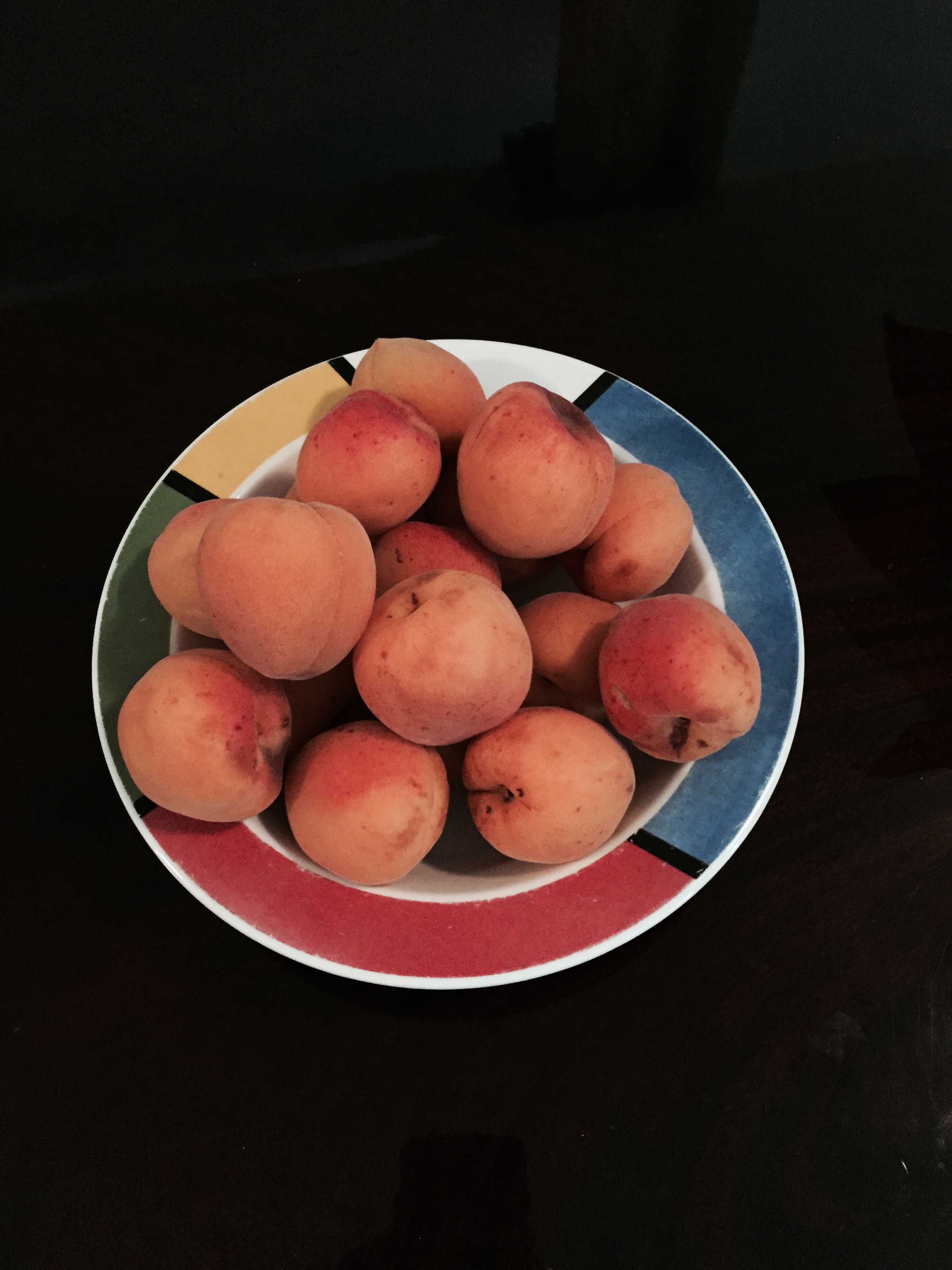
My fresh apricots
My fresh apricots

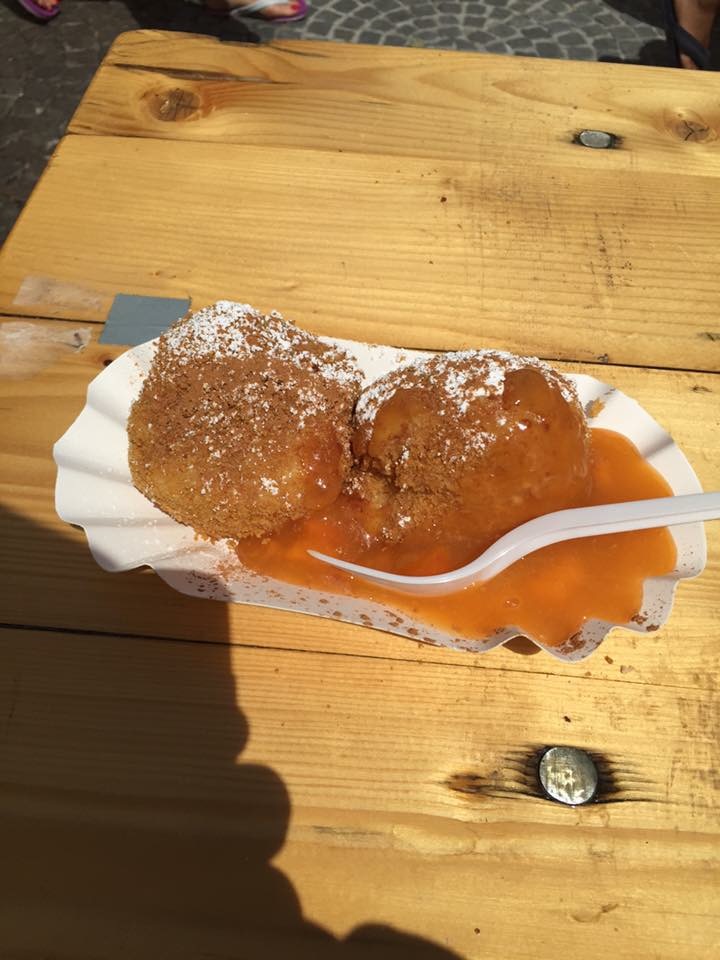
I have discovered a new fruit that also does the trick!! It was a bit difficult to narrow it down as there is currently an abundance of fresh strawberries and cherries at the end of their season and the beginning of apricot time in Austria. However, through process of elimination (I proudly chuckle at my choice of words) I have found the magical properties to exist with apricots! Yes, they keep me “regular” and running (I chuckle once again) to the nearest toilet. Last week as I enjoyed fresh apricots, apricot dumplings, apricot liquor, apricot jam, and so on, I made sure to always be aware of the location of the nearest toilet…just in case!

Fresh apricots (“marille”) are wonderful and abundant now in Austria.They are sold at weekly town markets in Melk, Spitz and Krems,  in grocery stores, and in roadside stands throughout the Wachau Valley. What a special time to be here and experience the “Apricot Mile” near Rosaatz! I hope you enjoy this story…and I send along my wishes for your regularity!

Apricot Dumplings
Apricot Dumplings

My Melk Holiday

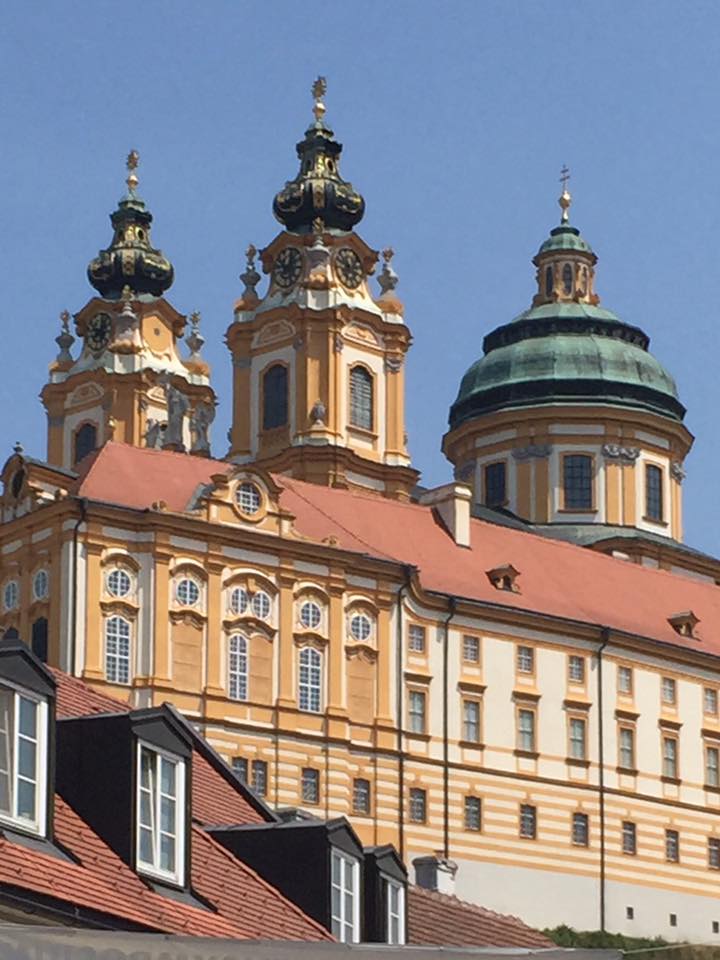
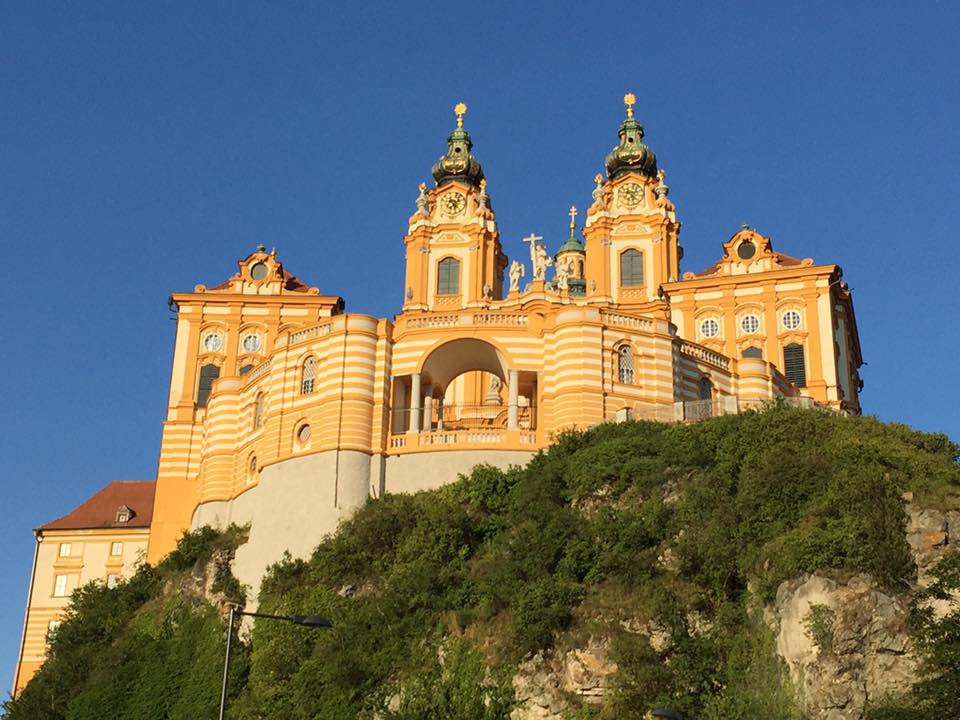
Melk Abbey towers
Melk Abbey towers

I extended my stay in the Austrian Wachau Valley where I am now exploring in and around the town of Melk an der Donau. Melk is at the beginning of the gorgeous Wachau Valley with the Danube River running through it. The Wachau extends about 35 kilometers down river to Krems. Melk is a small community of about 5000 and is dominated by the picturesque 11th century Benedictine Monastery, Melk Abbey (German: Stift Melk).

The Abbey is the principle tourist destination for the numerous Danube River cruise tours that tie-up here enroute from Amsterdam and elsewhere to Vienna, Budapest, and beyond. My apartment is in the older part of the town with the massive Abbey immediately behind me.

Overlooking the Danube, the Melk Abbey has a long history. It was founded in 1089. You can read more about the Abbey and the history of Melk here. For now, though, I am going to share with you some of my pictures and my observations.

Abbey 1
Melk Abbey sitting above the Danube River

The town has a rich history and the town government provides numerous placards (in German and English) throughout Melk that provide the tourist with a great deal of information about the early inhabitants, their relationship to the Catholic church, the influence of the reformation, the first ruling dynasty in Austria, the impact of World War II, the buildings, the town growth, and the flooding of the Danube in recent times as well as the recording of the massive flooding in 1501.

Bakers
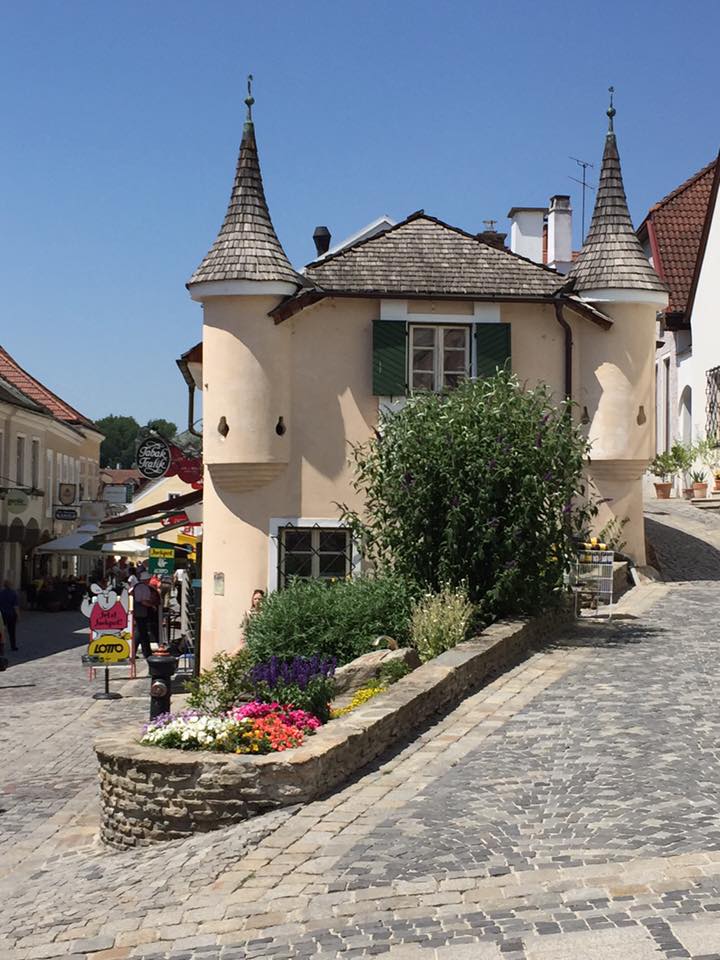
From the 13th century when bakers sold their wares from this little building

Melk is a chameleon. It takes on a typical tourist hot spot in the daytime as tourists flock to the Abbey. There are many places to have a coffee as well as a good wine and schnitzel. In the evenings, however, the tour groups from the river boats are mostly gone and those in town are residents and numerous bicycle riders who have stopped for the night.

Weekly there are band concerts with participants in traditional Austrian dress playing music on the Rathausplatz. This is when the community just sits back and relaxes with a large beer-in-hand and listens to the music and occasionally sings along.

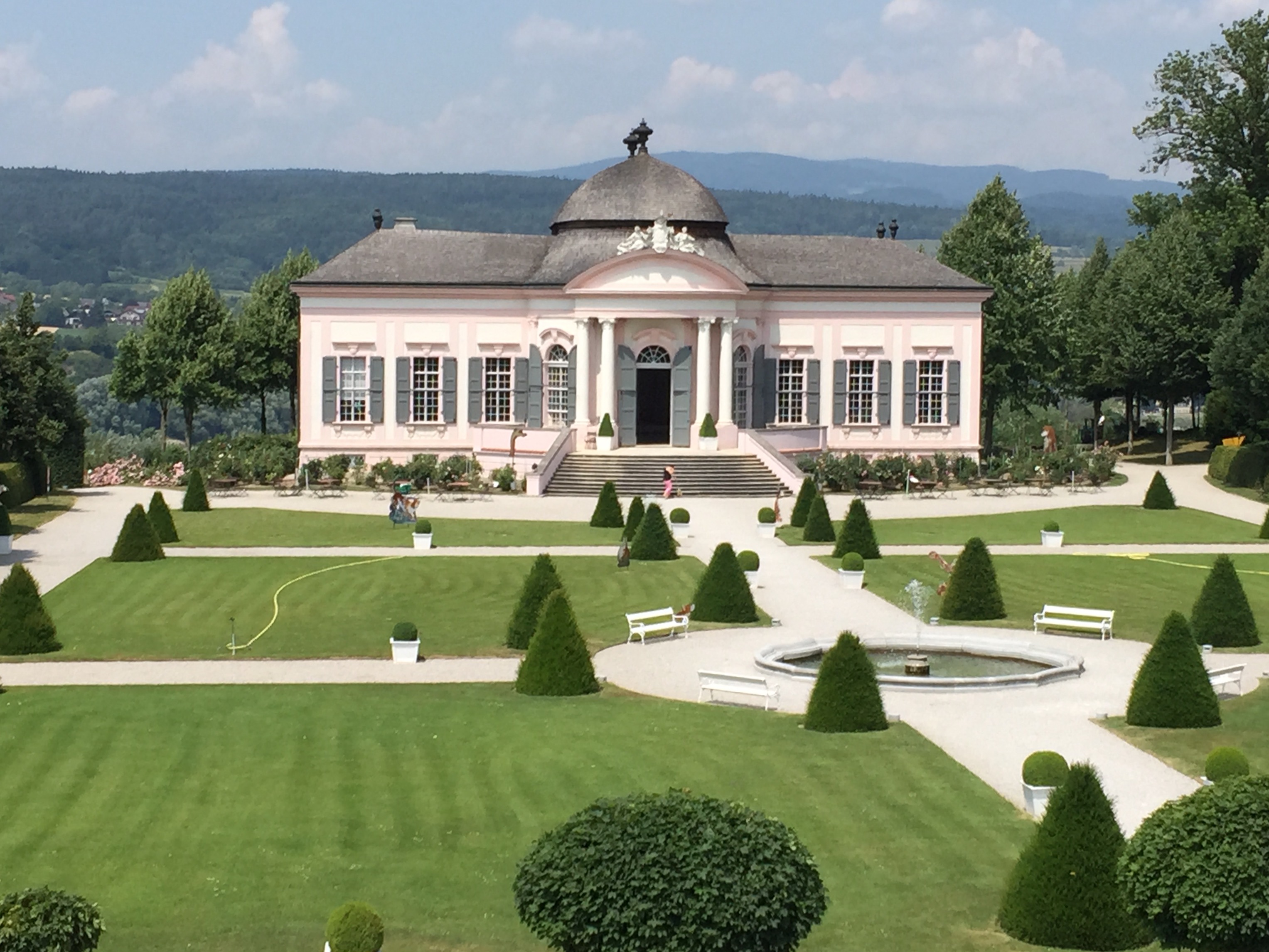
Abbey tourists enjoy the massive old library, paintings of royalty and old world leaders, statues, and the beautiful artwork of the church interior. The Abbey is beautiful both on the interior as well as the exterior. With a bit of luck you can hear musical rehearsals which in themselves are spectacular. But for me, the exterior gardens are quite special and a place that is often overlooked by the tourists who are visiting with very limited time to absorb the grandeur of the Abbey, the town and the area.

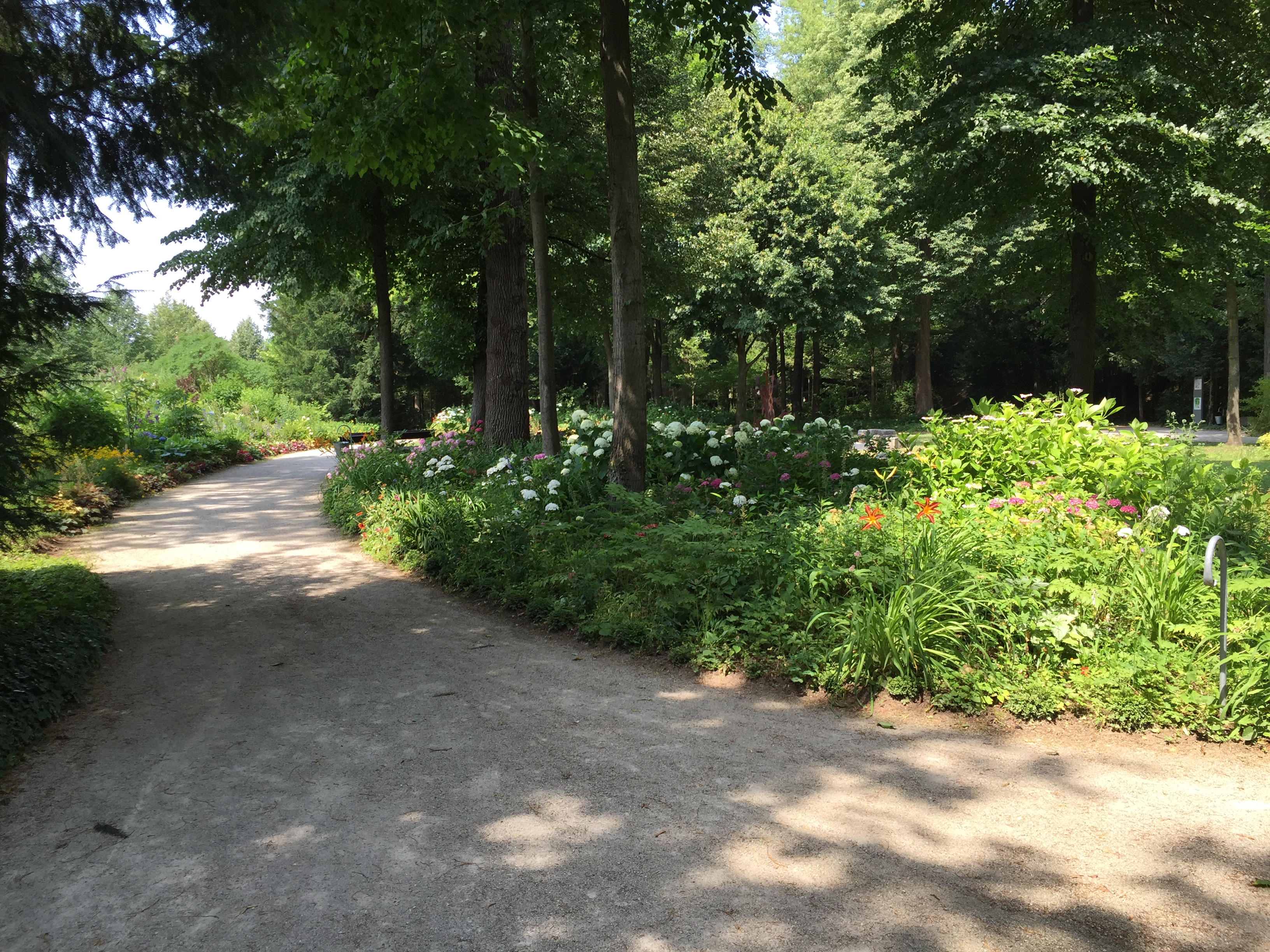
I have found the groomed walkways in the Abbey gardens to be nice but the peace and solitude FullSizeRender (22)found in the garden woods is very special. The smell of evergreens add to this place high over the Danube River flowing by. It is an ideal spot for me to contemplate, listen to nothing except for a few birds and the breeze in the trees. It is a great place to relax in the shade… my next destination.

IMG_1429

My Kremser Experience

IMG_0181
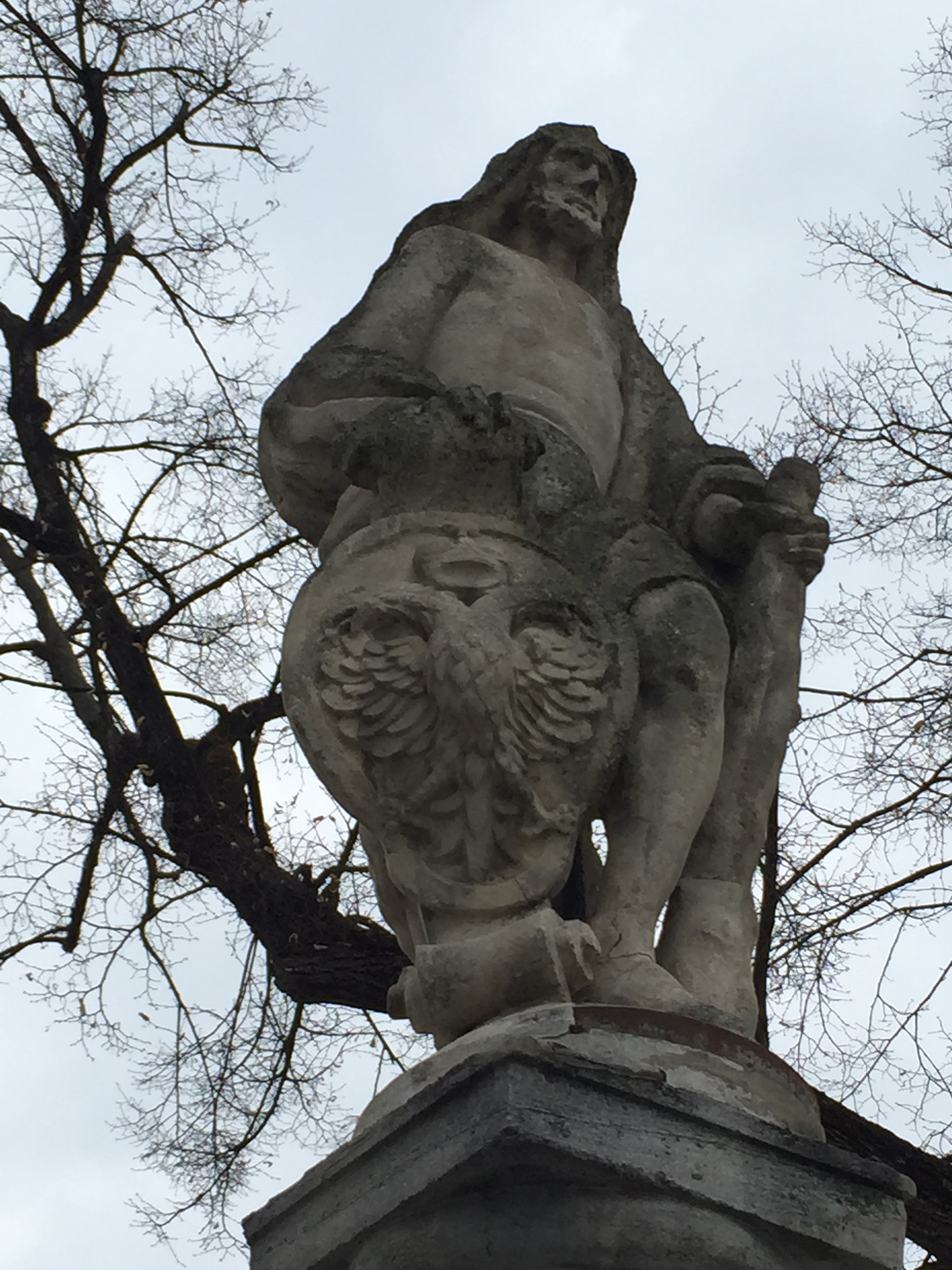
Statue (1682) to returning crusaders

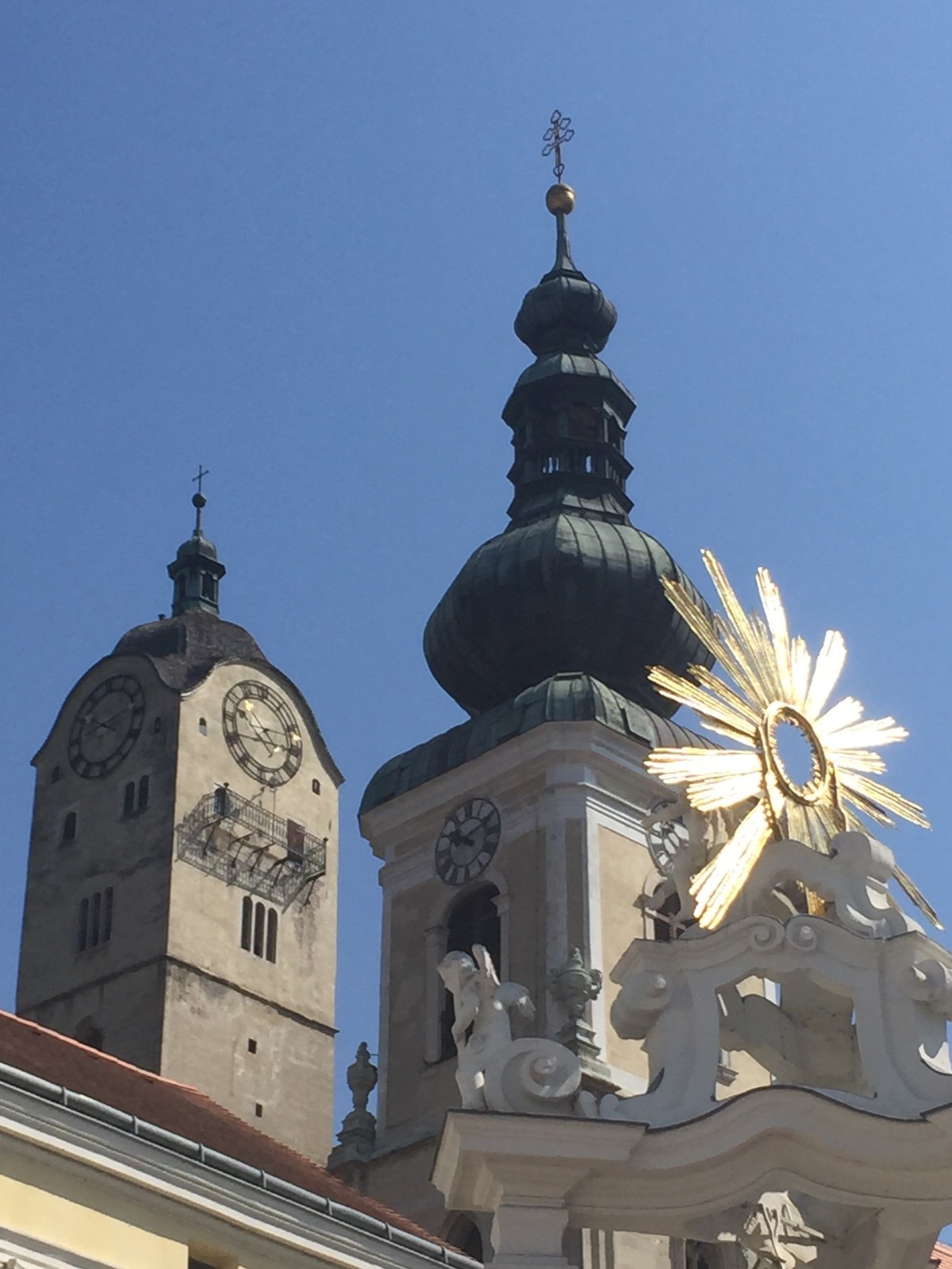
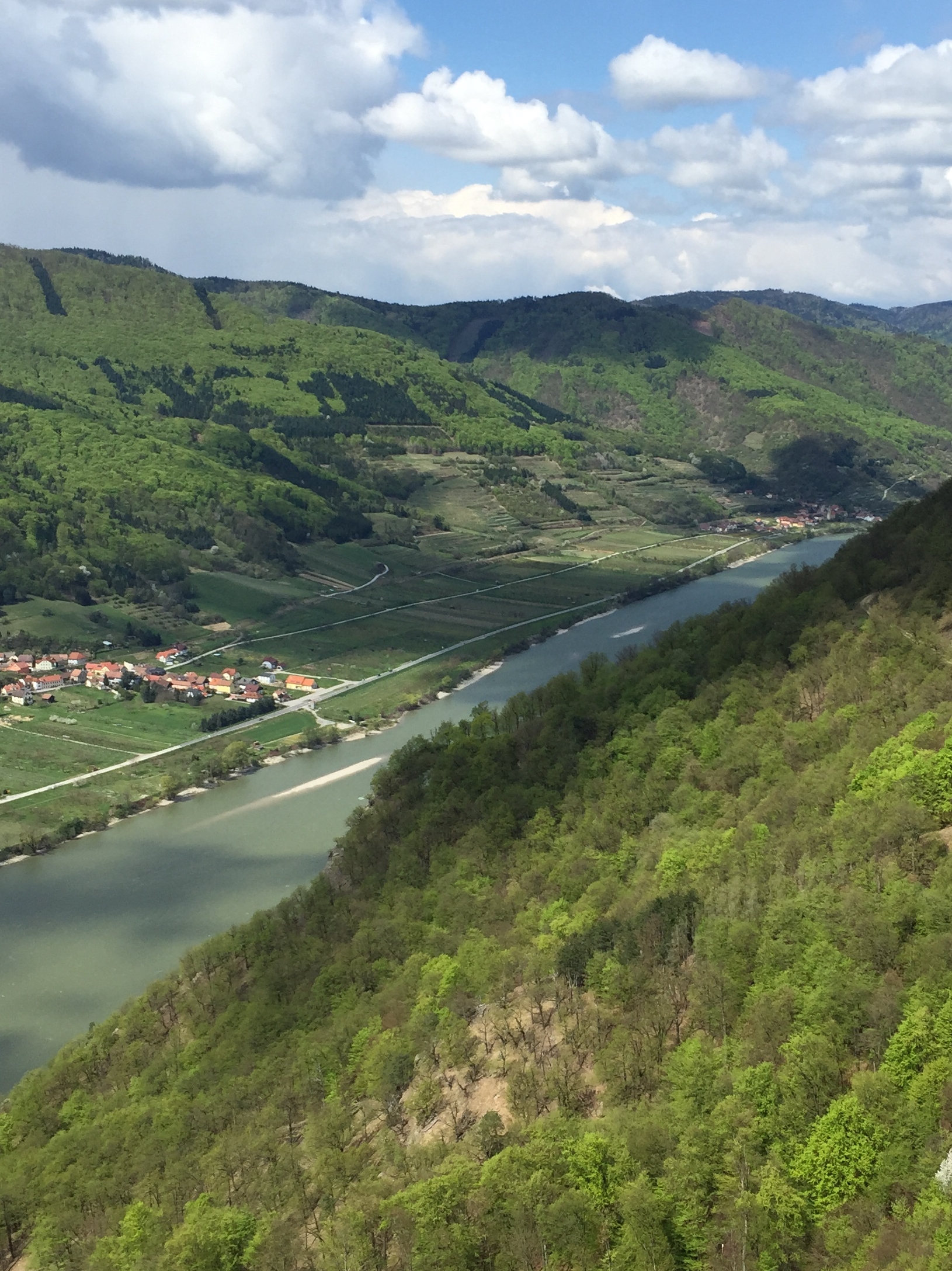
Stunning medieval architecture and extraordinarily beautiful countryside is found throughout Lower Austria. Captured in photos of Aggstein, Durnstein, Rosaatz, and Melk I have shared on Facebook many of the old structures, castle ruins, monuments, stone-terraced vineyards, and the picturesque Danube River that make the World Heritage Site of the Wachau Valley unique and special.

While many find the charm of Austria to revolve about Vienna, I have opted for a more rural area in which to holiday for the past three months. My residence has centered on Krems an der Donau, maybe the oldest of communities in all of Austria. Here people are referred to as “Kremsers.”

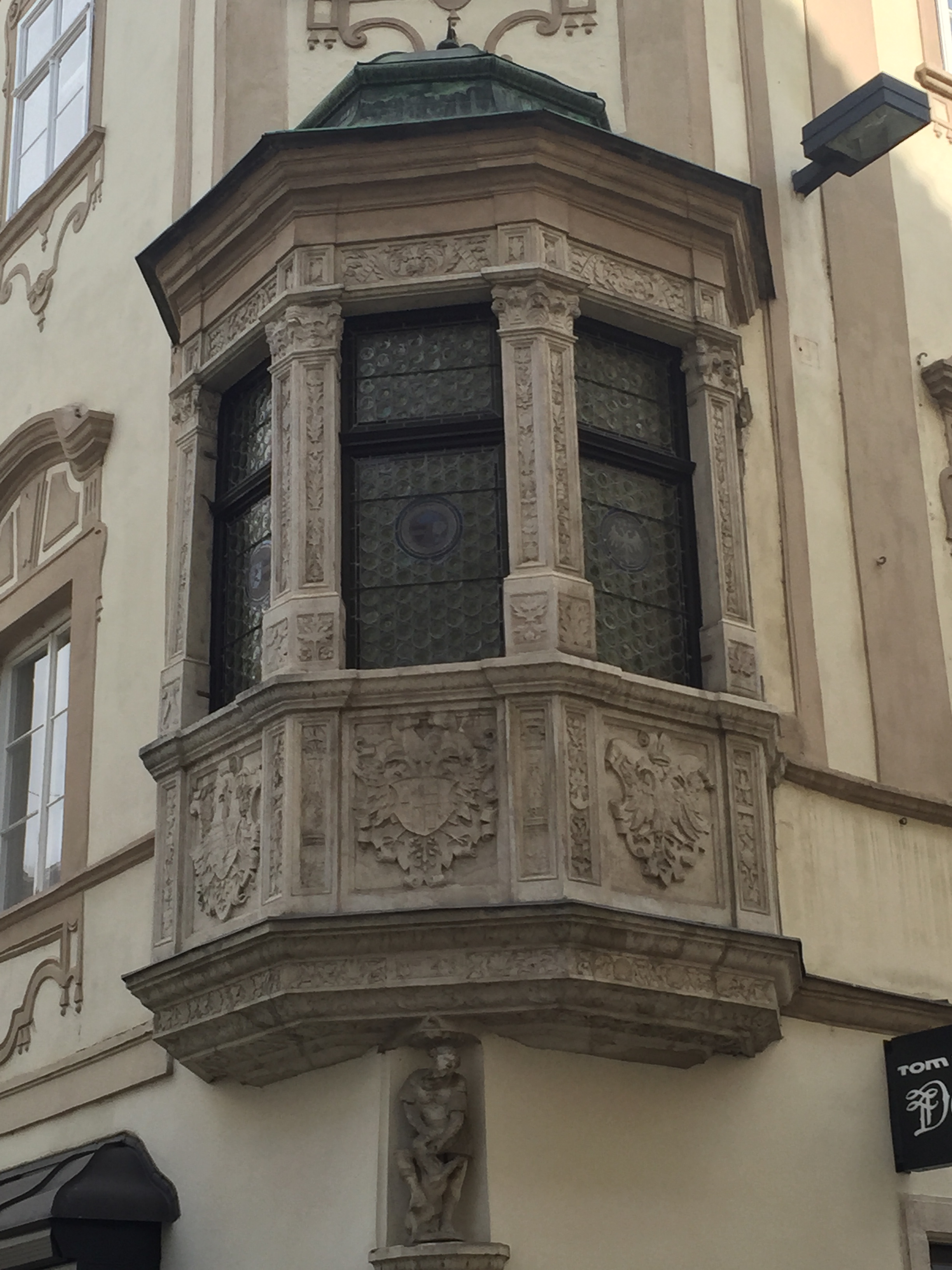
Part of the Rathaus 1452

Located down river at the end of the Wachau Valley, the town of 25,000 inhabitants even today remembers and celebrates ancestors from the Middle Ages and their influence in creating Krems. The town is very long on memory, pride, and tradition including personal dress, food, wine, religion, and music.

In this blog I am primarily sharing photographs. While I can tell stories, the photos speak! They shout of the history and pride that Kremsers feel for their community, their ancestors, their architecture, their food and drink, their traditions…their way of life.

As I enjoy a slice of cinnamon-sweet apple strudel at my favorite outdoor cafe, I pause to listen to the chimes of the Steiner Tor. I hear the commuter trains in the background. I see lovers holding hands and smell roasted coffee which beckons me to sip a caramel latte. I hope you enjoy my reminiscences about Krems and can envision the beauty that makes Krems a wonderful place to feel the past while in the present.

Old Testament scenes etched in 1561

I have deeply absorbed Krems’ preservation. It is there for the taking by Kremsers, me, and future generations. The soul of this community is in, and its voices come from, its landmarks, traditions, and people. So gathered here is my collection of photographs that I have found particularly interesting to these ends as I explain in captions.

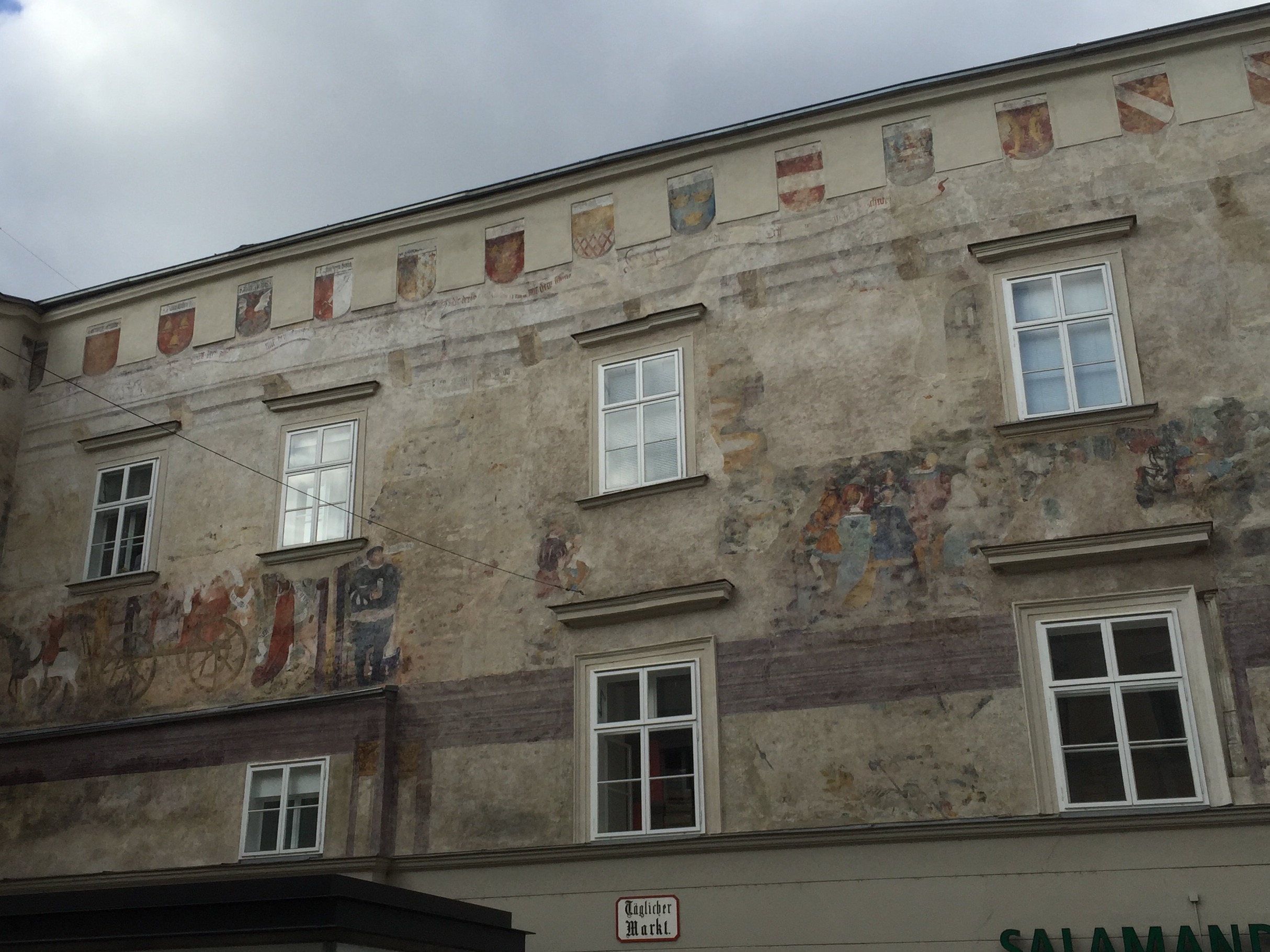
Medieval mural in Krems center
Bell tower in Krems Stein
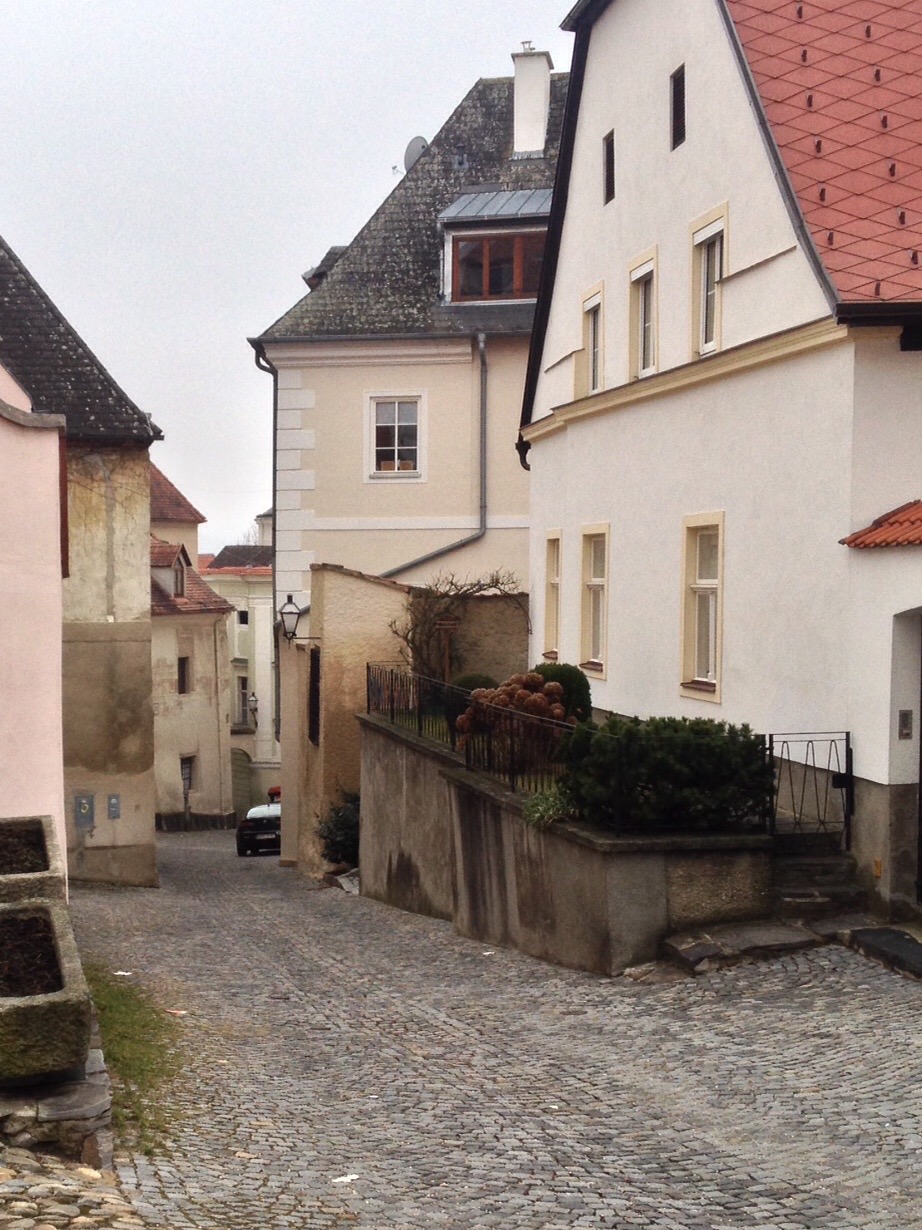
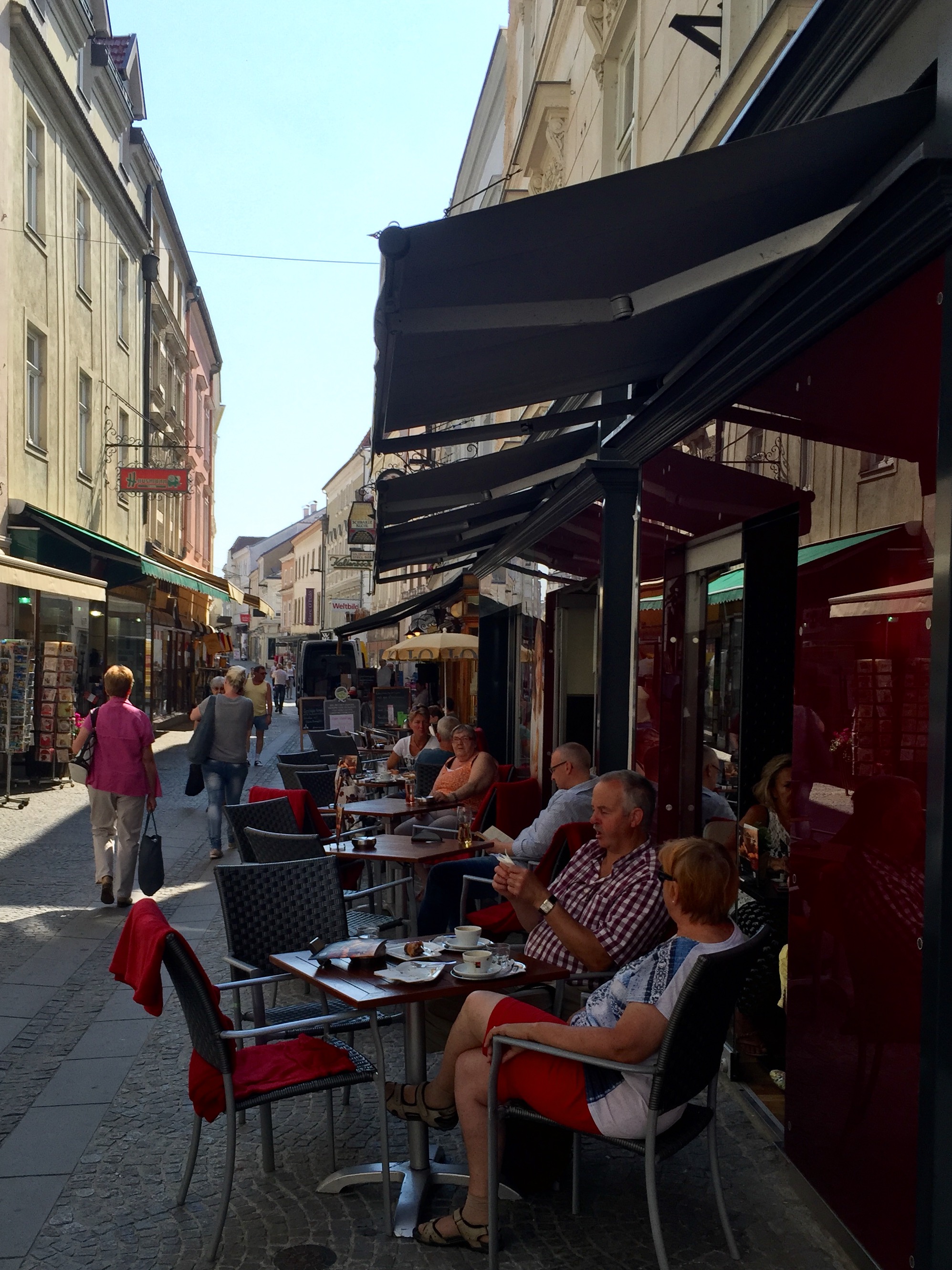
A typical Krems street
A favorite stop for coffee and strudel
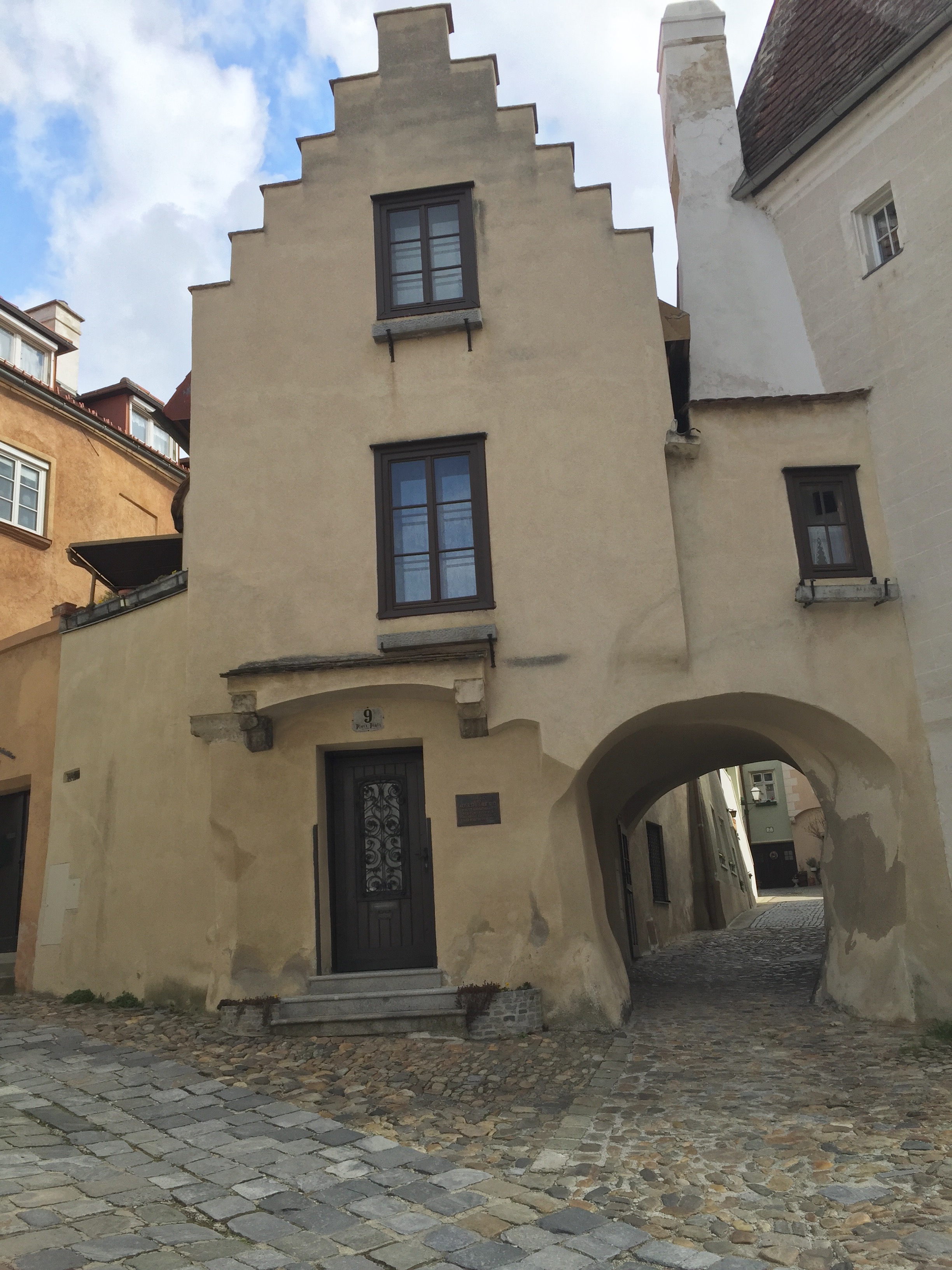
House built in 1210
House built in 1210
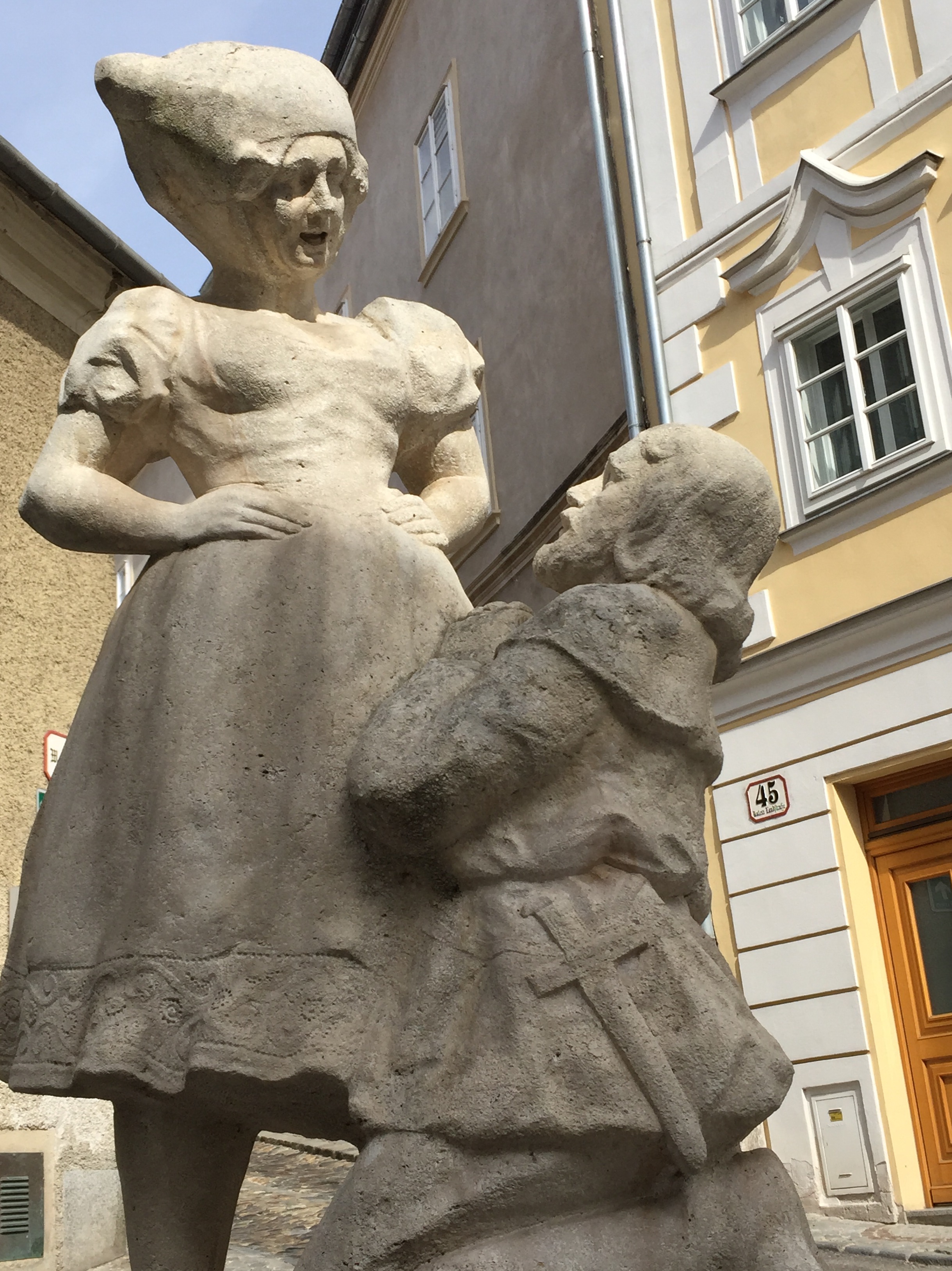
The status Simandl is about the hen-pecked husband begging for the house keys so he can stay out late with the boys
The statue “Simandl” is about the hen-pecked husband begging for the house keys so he can stay out late with the boys
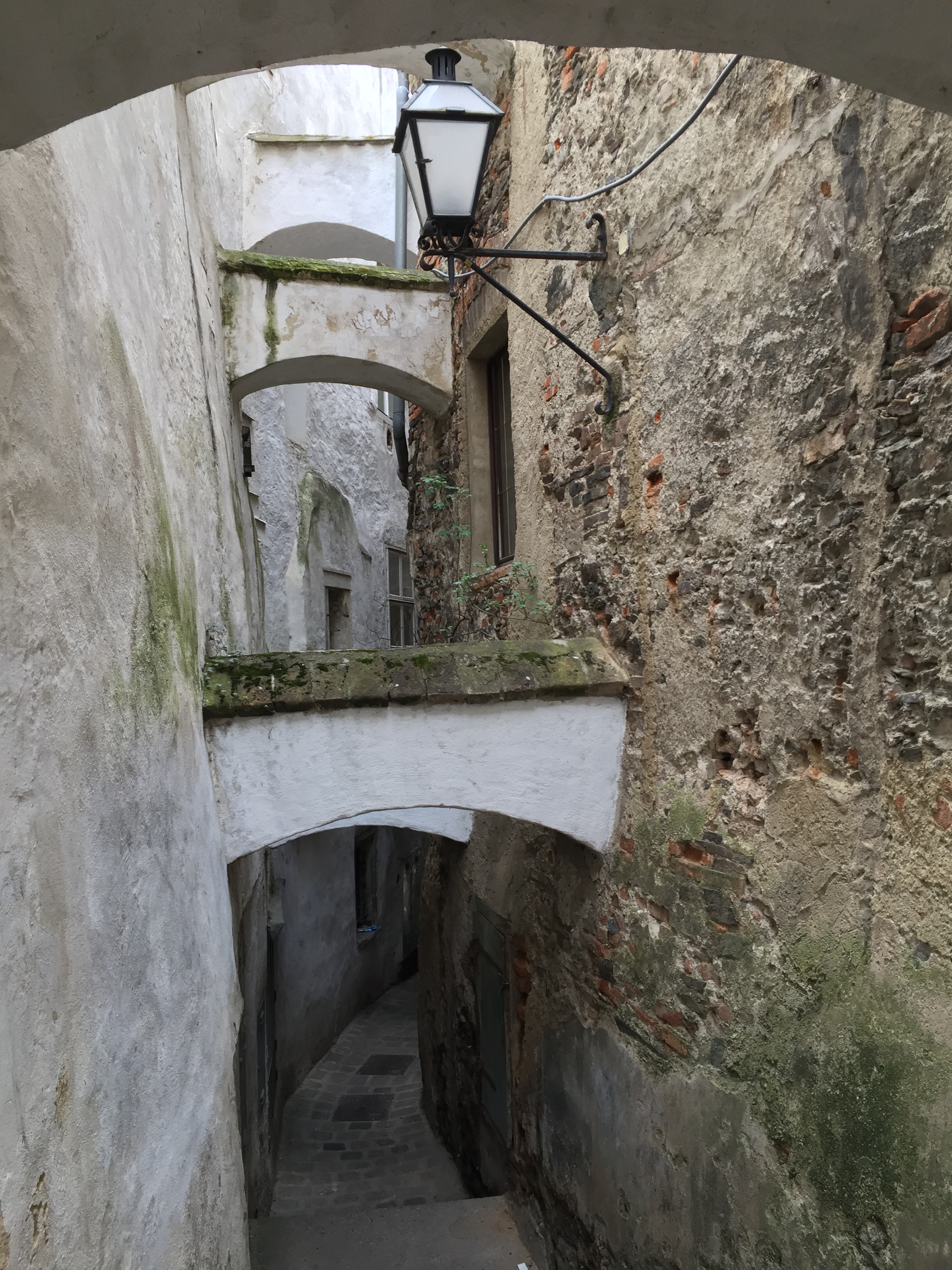
Typical alley in Krems

Nude in the Sauna

Hello, friends! I thought that the title of today’s blog may catch your interest and bring you here to find out what I have been up to!image4

Last week I ventured by train to the foothills of the Alps to the town of Semmering in Lower Austria. As you may recall, I don’t have a car anymore and I have been walking everyday since I arrived in Mijas Pueblo, Spain in October.

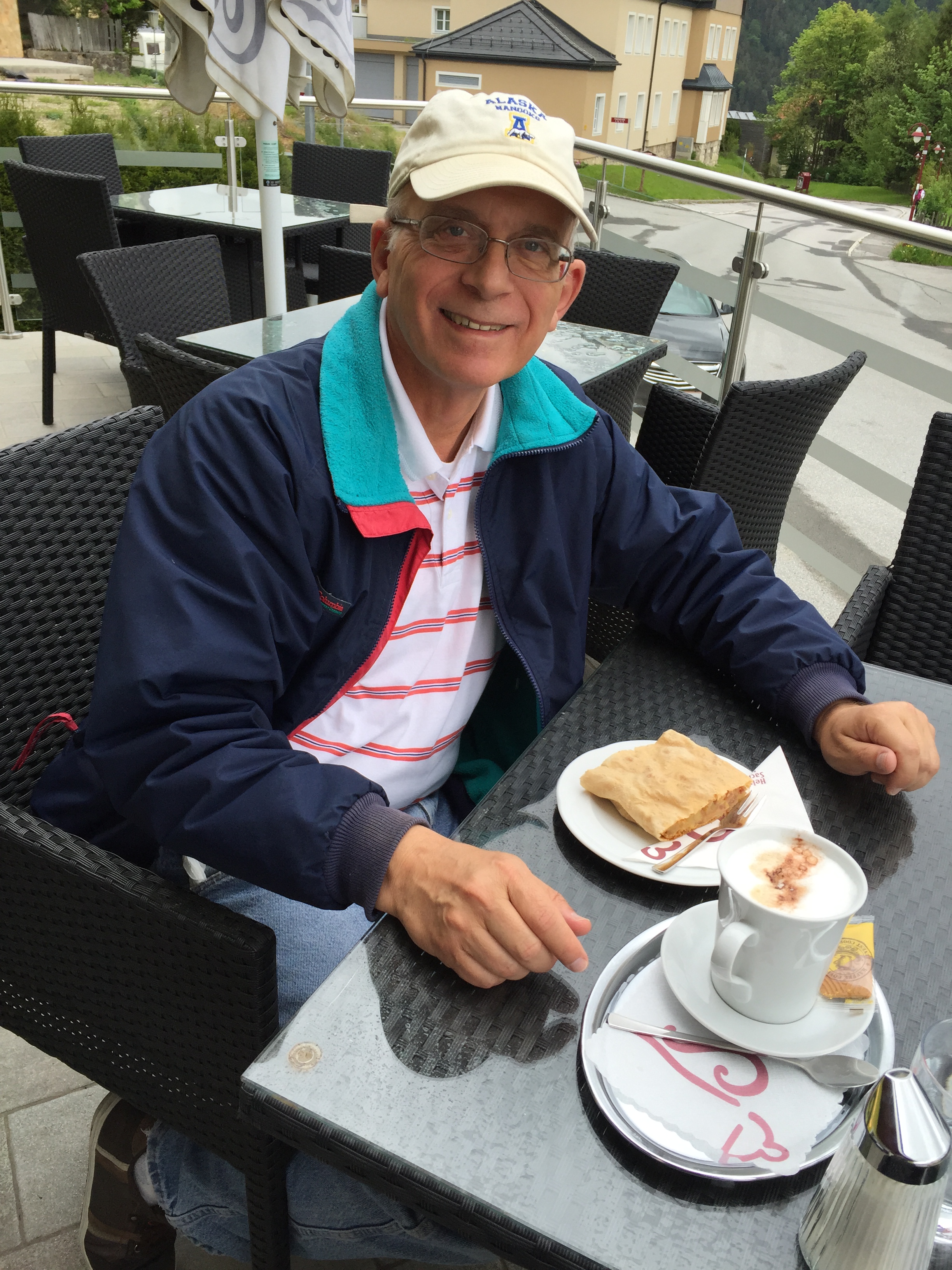
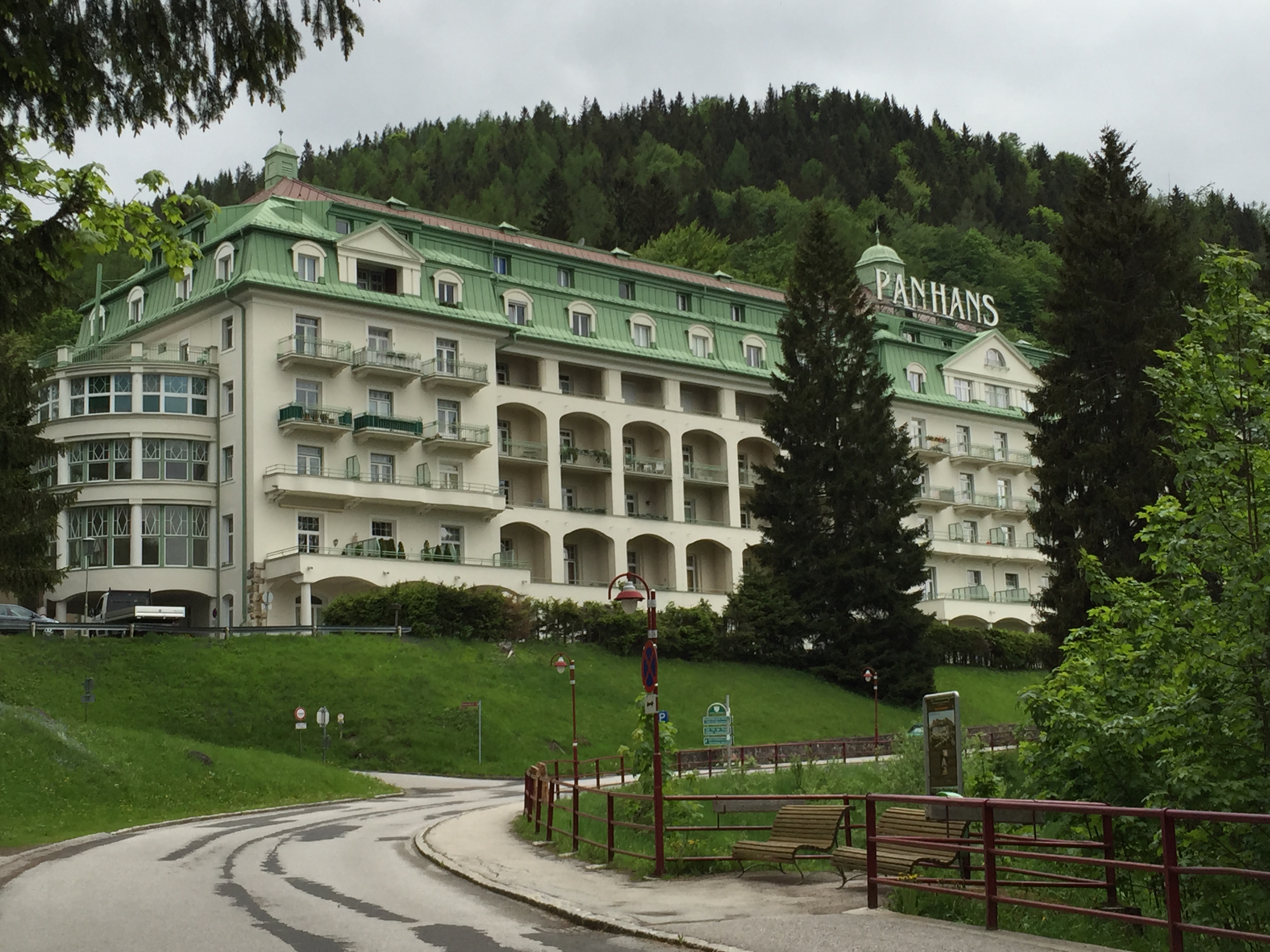
image9The walking has built up my leg muscles and that really paid off as getting to my hotel at 3000 feet required a hike on highway and following marked trails through the woods. With backpack and water, I set out for the Hotel Panhans from the Semmering train station in what seemed to be at a minimum a 30 degree angle (which I am sure it isn’t). Had I not been doing so much walking since my arrival in Europe, it is questionable if I could have completed the trek. But I did! On arrival it was wonderful to relax with a coffee and some strudel.

I found Hotel Panhans on a web travel site and really didn’t know anything about it. On arrival I could tell that this was going to be special, image6Everything was spotless and well maintained. The staff provided service the way one would imagine it to be at a first class hotel from the 1800’s… which is exactly Hotel Panhans! My room was front-facing and the view of the mountains was breathtaking from my over-sized balcony with table and chairs on a tiled floor. The hotel has wonderful accommodations for their guests. One feature is the spa with sauna, pools, etc…. Actually there are three saunas and three pools each set at different temperatures.

When I went into the sauna I wore my swimming trunks without giving it a thought. I spread my towel on the hot wood planks and immediately the sweat oozed from my forehead and then the rest of me as my body began to turn pink. So this is what it feels like for a salmon to bake on a plank! Soon others arrived BUT none of the six people in their 30’s had anything on! I mean not a stitch! I was a bit uneasy and the heat in the room wasn’t just caused by the sauna’s thermostat settings! I found it difficult to find a place to fix my eyes and not be offending anyone! Soon I left and came to learn that in many places in Europe that my experience was not unique and that wearing something wasn’t considered to be appropriate. Who knew!

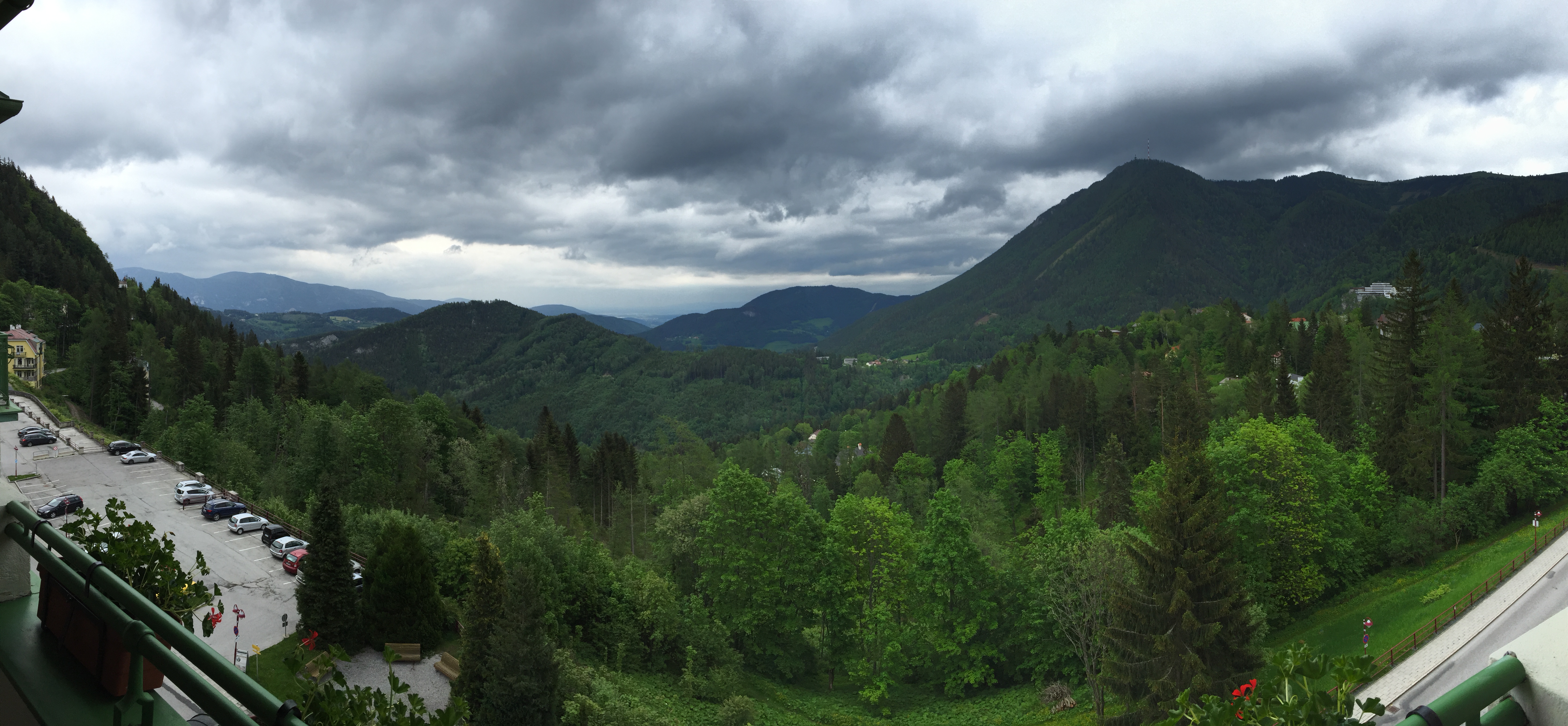
image5So that’s my story today from the mountains in Semmering where food delicacies abound and are complimented with new experiences in the sauna!  Semmering is a beautiful, fairy tale place and I am enclosing above a panoramic photo of the view of the mountains from my balcony.
Gladiators

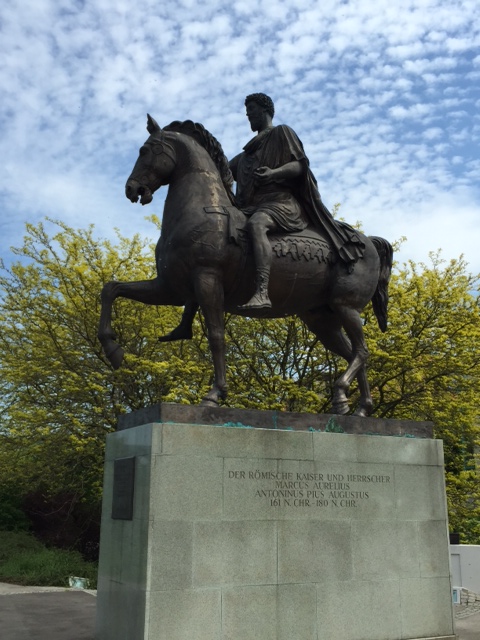
gladiator_movie_russel_crowe_3_1024x1024_wallpapername.comIn the movie Gladiator, Russell Crowe plays the role of Maximus, son of Emperor Marcus Aurelius. Maximus’ life is relegated to fighting for his life as a gladiator after Commodus takes power and strips Maximus of his general officer rank. By several historical accounts, however, Maximus, as portrayed in the movie, is largely fictitious and a composite of several individuals. But Emperor Marcus Aurelius is real and died in 180 AD in a Roman camp in modern-day Vienna, Austria which is about an hour and a half from my apartment in Krems. Roman influence is still sometimes felt throughout the region. Last weekend I went to Tulln (a past Roman settlement) and was reminded of the Roman influence as modern-day gladiators with Maximus’ desire, determination, and dedication competed. More about that later.

photo (15)

Tulln is located on the right bank of the Danube River between Krems and Vienna and I have journeyed by train there three times in the past couple months. Tulln was settled well before the Romans arrived over 2000 years ago. The Roman Empire had an outpost in present-day Tulln and the Danube at one time was a boundary for the Empire. Near the Danube, in the area where the Roman fort was located, is a statue of Emperor Marcus Aurelius and an excellent museum with artifacts and items attributed to Tulln’s Roman past. There are few visible, physical remnants of the town’s Roman-period existence except those excavated and now preserved in the museum.

I certainly enjoy visiting such historic places like Tulln and museums dedicated to their history. This museum is especially good with numerous artifacts and explanations of them. But on my post-retirement adventure in Europe I also crave several things that are simply American like pancakes with real maple syrup, eating hamburgers with real beef (think about that for a minute and you will understand), and so on…. One such craving is my passion for American football. That is what lured me last weekend to Tulln to see modern-day gladiators with the Tulln Air Force Hawks competing against the Blue Hawks from Asperhofen in a real American football game! It is wonderful that here in the middle of Europe I can experience watching the game I enjoy and witness things that have been incorporated into the game day.
American football in this area is what Americans would call a “club sport.” The players come from all over Lower Austria and are playing for the love of American football. Where football (soccer) is king, these gridsters may eye being discovered for an opportunity to play on an American college football team or may envision a professional career as the NFL in Europe gains traction. Regardless, they are modern-day gladiators.

The announcer spoke in German and added color in English like “Oh my God, quarterback sack!” Each team’s starting players ran onto the gridiron through “smoke” out of a large inflatable helmet as their names were announced. The officials marched onto the field (although out of step) photo (17)and there was real respect  for them. There were cheerleaders too! They came from the Vienna Wildcats and cheered for the Tulln Air Force team. There was a lot of fan noise throughout the game with horns, drums, clappers and other devices to support their hometown team! Noise was unending and only stopped at halftime and during injury time-outs. About 300 faithful fans attended. There was no halftime show and I observed that halftime was like a social outing among friends.

On the initial kick-off a player was injured. Every player on the manicured grass field and sidelines and every cheerleader went on a knee for this and each time a player was injured. I thought it to be respectful and almost like they were jointly sending a prayer that the injury not be serious. The food at the concession stand was interesting. Remember, this is Austria. The choices on the chalk menu were grilled frankfurters, grilled hamburgers (see note above), and, of course, grilled pork. Beer, wine and Coke were also sold along with cigarettes which were permitted to be smoked anywhere other than in the bleacher area.

photo (19)Finally, Tulln’s gridsters just didn’t have an adequate passing quarterback and lacked a punter so they ran on every fourth down (including a 4th and 20 from their own 20!). Asperhofen’s Blue Hawks had a dominating defense and at the end, the hometown gladiators lost the contest. However, I give them and the game a “thumbs up” as each of the modern-day gladiators, the fans, and I enjoyed the day of American football.

Wine, Pork, Apricots, and Apple Strudel in Lower Austria

IMG_0358
Danube River in the Wachau Valley

Lower Austria is a state in Austria where the Danube River flows through the country. The state is in the northeastern part of Austria and is named “lower” to indicate elevation which is lower than in the mountainous regions of the country. I am presently residing in Krems which is at the end of the Wachau Valley in Lower Austria and have previously documented the beauty of the region in other blog posts.

In this entry I want to tell you more about the food and wine. Food and wine are very serious topics for which there is great pride in heritage, taste and visual effects. Principle meat products in the region come from pigs. Beef is extremely expensive. In addition, chicken is available but overall pork wins out as the primary dietary meat component. Roasted and smoked pork products are in huge demand and are sold in grocery stores, markets and are everywhere during festivals. Pork is on every menu and it appears to me to be in just about every lunch and dinner. I like eating the roast pork and schnitzel.

FullSizeRender (13)
Terraced Vineyards in Spitz, Austria
220px-Gruener_Veltliner_Weinsberg_20060909
Gruener Veltliner Grapes

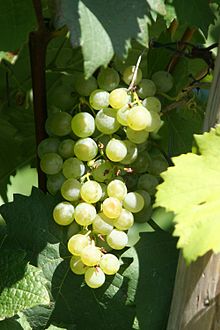
Wine is sacred in the Wachau Valley! Vines are grown all along the Danube River in the terraced slopes on the hillside in the Wachau. The stone terraced slopes (pictured) are traditional everywhere in the Wachau. Gruener Veltliner (picture copyright Wikipedia) is the main grape grown here and makes up about 35% of Austria’s wine production. That is more than any other grape in the country. It dates back to Roman times and makes a dry white wine that white wine lovers enjoy… I personally prefer a red. I have been on two winery tours since arriving in Austria and they were both very worthwhile. In the tours you obtain a sense of the wine production methods, quality control and how intensely important wine production is to the people who live in Lower Austria.

marillehupft_neu
Apricots (marilee) are another main crop in the Wachau Valley. They were introduced to the region before the Romans arrived, more than 2000 years ago. While wine grapes are mainly grown on the slopes of the left bank of the Danube, the largest apricot growing region comes from the right bank near Rossatz. The area orchards are often referred to as the “apricot mile.” So far, I have enjoyed the jam and liqueurs that are made from them. Soon, though, there will be an abundance of fresh apricots on sale everywhere here. I will be stuffing myself with them!

Just as wine is sacred to the residents of Lower Austria, apple strudel is sacred to me!!! Every restaurant and bakery has an abundance of sweet apple strudel, served warm and enhanced by vanilla sauce and / or real whipped cream. I enjoy the strudel any time of the day but especially at breakfast with a nice, aromatic coffee. Frankly, I haven’t found an apple strudel that I didn’t enjoy!

That’s the update from Austria today. I hope you enjoyed my observations about local wine and foods!

Saving Money and Living Well in Lower Austria

Hi, everyone. It has been a few weeks since I last updated you about my adventures in Austria. I have several things to share about Lower Austria and will write more in the future. Meanwhile, today I am going to give you a few tips to save money should you ever want to venture here.

LeeMy Uncle Lee lived most of his life in Europe. Our family always thought he was a bit odd (actually very much so) and must have been fairly rich to live in Europe. But I have found that I can live very well (and less expensively) here and have found several smart ways that enable me to enjoy the area and significantly reduce my expenses. So, for the moment journey with me as we pass through an alleyway where surprises are always found. Here are some of the surprises I have found that save money for my adventure in Europe..

Mobile phone calls using  American phone plans are expensive and need to be ditched right away! If you have an unlocked smartphone, there are local providers of SIM cards that are really inexpensive. Coupled with Skype or MagicJack on your phone you can greatly reduce costs for voice and data. For example, Verizon international charges in Europe are around $25 for each 100MB. At T-mobile I replaced the SIM card in my Apple iPhone and get 10GB of data for about $17. That’s astonishing and is saving me about $300 per month!image (1)

There are discounts everywhere! Public transportation is incredibly fantastic! In Austria I applied for a discount for the national OBB railway since I am over 60 years old. The card cost around $20. With the card the discount on rail and bus fares is 40%. I recovered the cost of the card on my first round trip to Vienna and now am saving everywhere I travel.

Local grocery stores, just like in the U.S., have discount cards. But in Austria, the discounts are also on travel and other things. I also bought a “Niederosterreich Card” for about $58. With it many attractions are free in Lower Austria. I have cruised up the Danube free ($28 without the discount), taken the Wachau train, visited numerous museums and wineries at no additional expense.

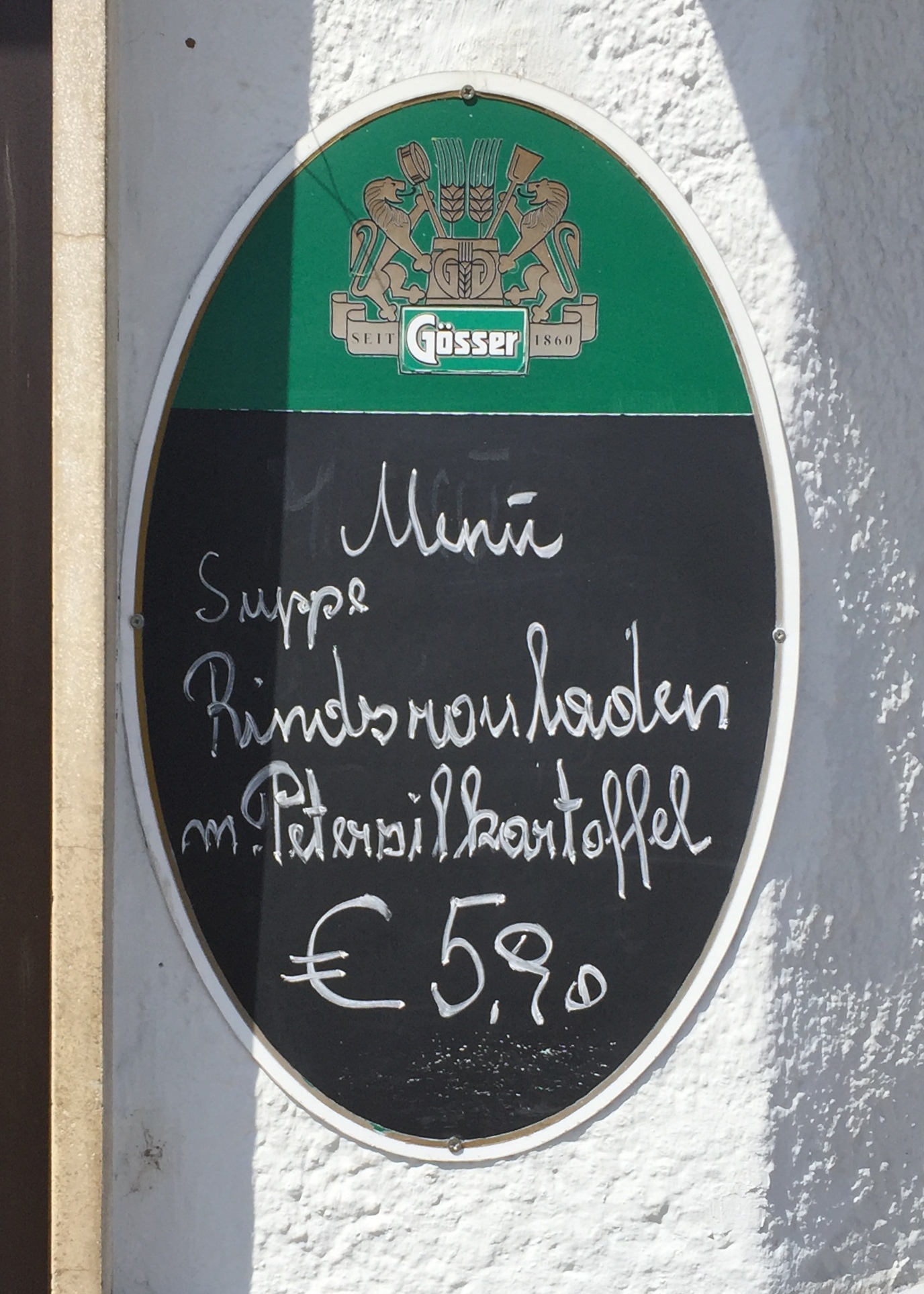
imageJust about every cafe has a daily special to attract customers. These are called “Menu” items and are usually posted by the door or on a placard in the street. They offer superb deals for great breakfasts or lunches. In the evening, prices go up so if I am eating out for lunch,  I eat a relatively inexpensive meal where a drink is often included! The photo is for a meal for 5.90 Euros or about $6.25.

I was able to book my apartments online through Airbnb or Home Away but couldn’t find a place to stay in June. However, I found a solution at the local Tourist Information office where I was directed to the Danube University in Krems. When school isn’t in session, the university rents dorm rooms very inexpensively (about half of what I would otherwise pay in renting an apartment) to tourists and many bicycle riders. I can also get breakfast for 5 Euros! What a bargain. So I will stay there in June.

So my Uncle Lee was pretty smart living in Europe and I hope that the tips I have provided may be useful should you venture this way!

.