Exploration at Aquincum – a Roman Empire Outpost

IMG_3100
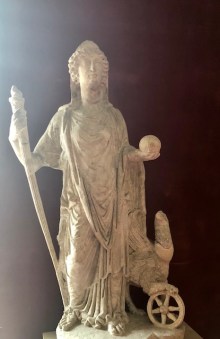
Nemesis, Goddess of Fate

In a few months I will have lived in various places in Europe for four years. My explorations have spanned geography from the Iberian peninsula in the west to the mountains of Transylvania in the east. One thing is consistent in every location, the Romans have been there.

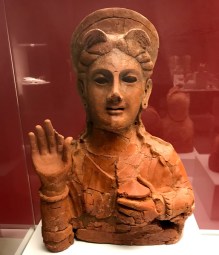
The vastness of the Roman Empire is difficult for me to comprehend. In the history of mankind, their story is relatively recent. Even so, I find it to be more than a simple curiosity. And such it has been in my exploration of Aquincum, the Roman provincial capital of Pannonia Inferior. Aquincum is a treasure trove of antiquities such as the limestone statue of Nemesis, the goddess of fate, created in the 2nd century.

Continue reading “Exploration at Aquincum – a Roman Empire Outpost”
My Exploration of Hungary’s Ópusztaszer National Heritage Park

IMG_3035
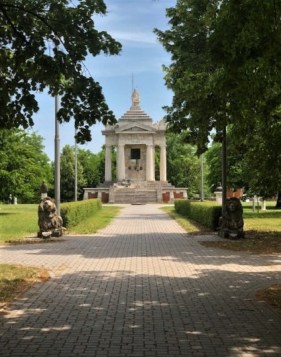
Arpad Memorial

Rise and shine! My morning began very early on the day I had planned to visit Ópusztaszer National Heritage Park in Hungary. The neighbor’s rooster “went off” at 4:30 am at dawn’s first light so I got up and prepared for the day. The hotel’s cook-to-order breakfast was a wonderful start to a day I knew would include a significant amount of walking in the large park.

My primary reason for wanting to visit this specific park was to explore more about Hungarian history, specifically Arpad. The park is located on the grounds where the Magyar chiefs founded Hungary in 896. I also was interested in several other facets about this place.

Continue reading “My Exploration of Hungary’s Ópusztaszer National Heritage Park”

Exploring for My Hungarian Ancestors

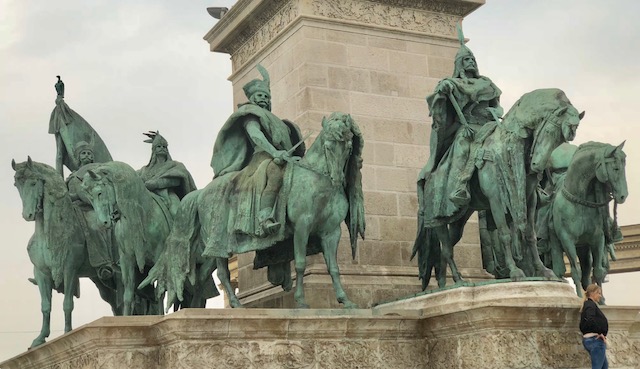
Chiefs
Arpad Leading Magyar Chieftains (Heroes’ Square)

During my explorations of individuals in my family tree, I have often discovered several interesting characters. I have written about some of them in blog stories such as  “My Ancestor the Witch,” a convicted Salem sorceress.

About 10 years ago while doing additional research in my mother’s family tree I surprisingly discovered some Hungarian heritage. While I am presently in Hungary, it has become very exciting to obtain more insight into this part of my family lineage from the National Museum and further Internet searches. Surprised once again, the lineage goes directly to the foundation of Hungary in 896 AD!

This story is about my adventures discovering memorials for Arpad, “First Prince of the Magyars” and memorials for Bela IV, King of Hungary, and one of Arpad’s 11th great grandsons.

Continue reading “Exploring for My Hungarian Ancestors”

“Taking the Waters” in Budapest

Many things in Budapest interest me. I find the history and architecture to be incredibly fascinating and portions of the city along the Danube River banks are gorgeous. The Parliament building is, in my opinion, the most beautiful building in the world.  And Chain Bridge, Matthias Church and the Royal Palace are spectacular sites along (or over) the river. It is no wonder that these banks of the Danube have been designated a UNESCO World Heritage Site.


The heritage in this rather small area involves several civilizations, violence, wars, and occupations. These are remembered in wonderful museums, statues in Heroes Square, or dark times at Terror House. The marks of these civilizations are found in many places in Budapest… not only in the art, music, and food but also in what is referred to as “taking the waters” associated with the numerous spas with heated water from thermal springs in the city and across Hungary.

Continue reading ““Taking the Waters” in Budapest”

Exploring Budapest’s Lions Without Tongues

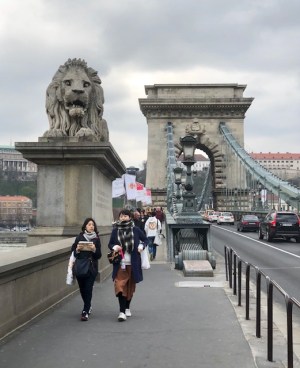
IMG_2272
Crossing Chain Bridge in Budapest

Legend persists in Budapest that the four stone, sculpted lions at the corners of Chain Bridge have no tongues. There exists no particular authority about the public perception of the lions placed in 1852, a few years following completion of the bridge between Buda and Pest.

Some even say more than 15 decades after their creation that their sculptor, János Marschalkó, after criticism for omitting the tongues, hurled himself into the Danube River. The legend goes on that he didn’t survive the leap and thus became the first suicide from jumping from the bridge!

Continue reading “Exploring Budapest’s Lions Without Tongues”

Asheville, North Carolina – The Weird City Wannabe

Recently I and my brother and his wife visited Asheville, North Carolina. Asheville is a beautiful “Southern” city situated on the edge of the beautiful Blue Ridge Mountains in the western part of the state. There are aspects of Asheville that are quirky or strange. However, I don’t think it has yet demonstrated sufficient quirky qualities to truly be considered “weird.”

Continue reading “Asheville, North Carolina – The Weird City Wannabe”

Architectural Influences in Sevilla, Andalucía, España

IMG_1764
Cathedral Tower in Sevilla

The history of modern Spain is complex. Over periods encompassing many centuries, battles on the Iberian Peninsula for land and power raged between Christians and Muslims. Often conflicts also occurred between Christians as well as among different groups of Muslims.

Food, celebrations, cultural influences, and other facets of life blended or changed. As the powerful changed, so did the architecture of the day. 

The period between 711 AD and 1492 AD is a time of significant upheaval in Spain. The architecture of this period reflects this turbulence in Andalucía in southern Spain. There the new architecture often built onto that of preceding rulers.

This story is about the architectural influences in southern Spain.

Continue reading “Architectural Influences in Sevilla, Andalucía, España”

Images of Love on Valentine’s Day

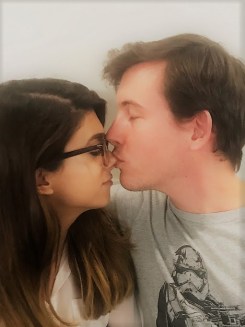
IMG_9256
Vienna, Austria

Over the past few years I have traveled throughout several countries in Europe. Along the way I have been snapping photos of those showing their affection. My plan was in contemplation of posting the photos for Valentine’s Day… the day we think of love, whether good, bad or none at all.

This story is about the photos… those sharing their love in public. I did ask for people to let me take their photo (and use it in the blog) and once I explained what I was doing, almost everyone agreed.

I hope you like seeing the photos and that they bring nice thoughts for you and a smile to your face.

Continue reading “Images of Love on Valentine’s Day”

My Roman Wall Exploration in Lugo, Galicia, España

IMG_1608
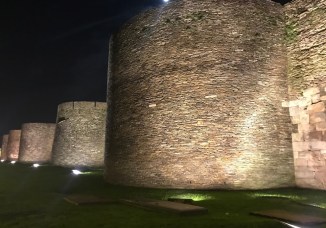
Segment of the Roman Wall in Lugo, Spain, a UNESCO World Heritage Site

Having lived in Andalusia in the southern part of Spain, I was aware of history of Phoenicians, Romans, Moors, historical events related to the Reconquest, etc…. I wasn’t quite sure what to expect when traveling north to the Galician city of Lugo.


Journeying all day by train, olive trees gave way to evergreens and flat land became more extreme with high hills, small snow-capped mountains, and very rocky terrain. My observations, although interesting, were not my motivation to go to Lugo, however.

I had learned about the 1700 year old, completely intact, Roman city wall constructed in Lugo. The wall is a UNESCO World Heritage Site and it was my principle attraction to the city.

Continue reading “My Roman Wall Exploration in Lugo, Galicia, España”

Exploring Phoenicians, Romans and Other Civilizations in Cádiz, España

IMG_1553I find it fascinating that through remnants of past civilizations, archaeologists, sociologists, and historians can piece together, interpret, and explain how our ancient ancestors lived and impacted present civilization. Today we record so much about our history and what’s happening in our lives. But in many cases in the areas surrounding the Mediterranean Sea we still seek to reveal the mysteries of great ancient civilizations.

Throughout my explorations in Europe it has been easy to see that the Romans have been there! And I have only scratched the surface with my stories about Pula in Croatia, Tuln in Austria, Ljubljana in Slovenia, Cluj-Napoca in Romania, Cordoba in Spain, and in Malta.

I was delighted that I found not only remnants of Roman society from the 1st century BC in Cadiz but also excellent artifacts left by ancient Phoenicians beginning in the 6th and 7th centuries BC. This story is about my memories of the Phoenician settlement of “Gadir,” the Roman town of “Gades,” the Moor city “Qādis” (Arabic from which the name Cadiz is derived) and “Old Town” Cadiz.

Continue reading “Exploring Phoenicians, Romans and Other Civilizations in Cádiz, España”